Most homeowners don't think about their driveway until something breaks. A chunk comes loose near the garage, a crack runs across the whole width, or a puddle shows up after a monsoon storm and doesn't leave. By then, the driveway has been sending signals for a long time.
In Las Vegas, asphalt ages faster than it does in most of the country. Desert UV, summer surface heat, and big swings between day and night temperatures all work on the binder that holds your driveway together. The good news is that the early warning signs are easy to spot once you know what to look for, and the early fixes are the cheap ones.
Here are the seven signs we see most often on Las Vegas driveways, in roughly the order they show up, along with what each one means for your options.
1. The Color Has Faded From Black to Gray
Fresh asphalt is deep black. Over a few summers in the Las Vegas sun, it turns charcoal, then a chalky gray. That color change is oxidation. UV light breaks down the petroleum binder on the surface, and the asphalt dries out.
A gray driveway isn't broken yet, but it's brittle. Brittle asphalt cracks under the stress of heat cycles and traffic. This is the stage where sealcoating does the most good. A fresh coat restores the protective layer, blocks UV, and sheds water before cracks have a chance to form.
If your driveway has gone gray but you don't see cracks yet, you're in the best possible position. Act now and you avoid most of the problems on the rest of this list.
2. Loose Stones and a Rough Surface
Run your hand or your shoe across the surface. If small stones roll loose and the texture feels rough and sandy, the binder near the surface has worn away. Engineers call this raveling.
Raveling means the top of the asphalt is coming apart one stone at a time. Water soaks into the rougher surface more easily, and the wear speeds up from there. Sealcoating can still help at this stage if the base is solid, but the window is closing.
3. Hairline Cracks Along Edges and Joints
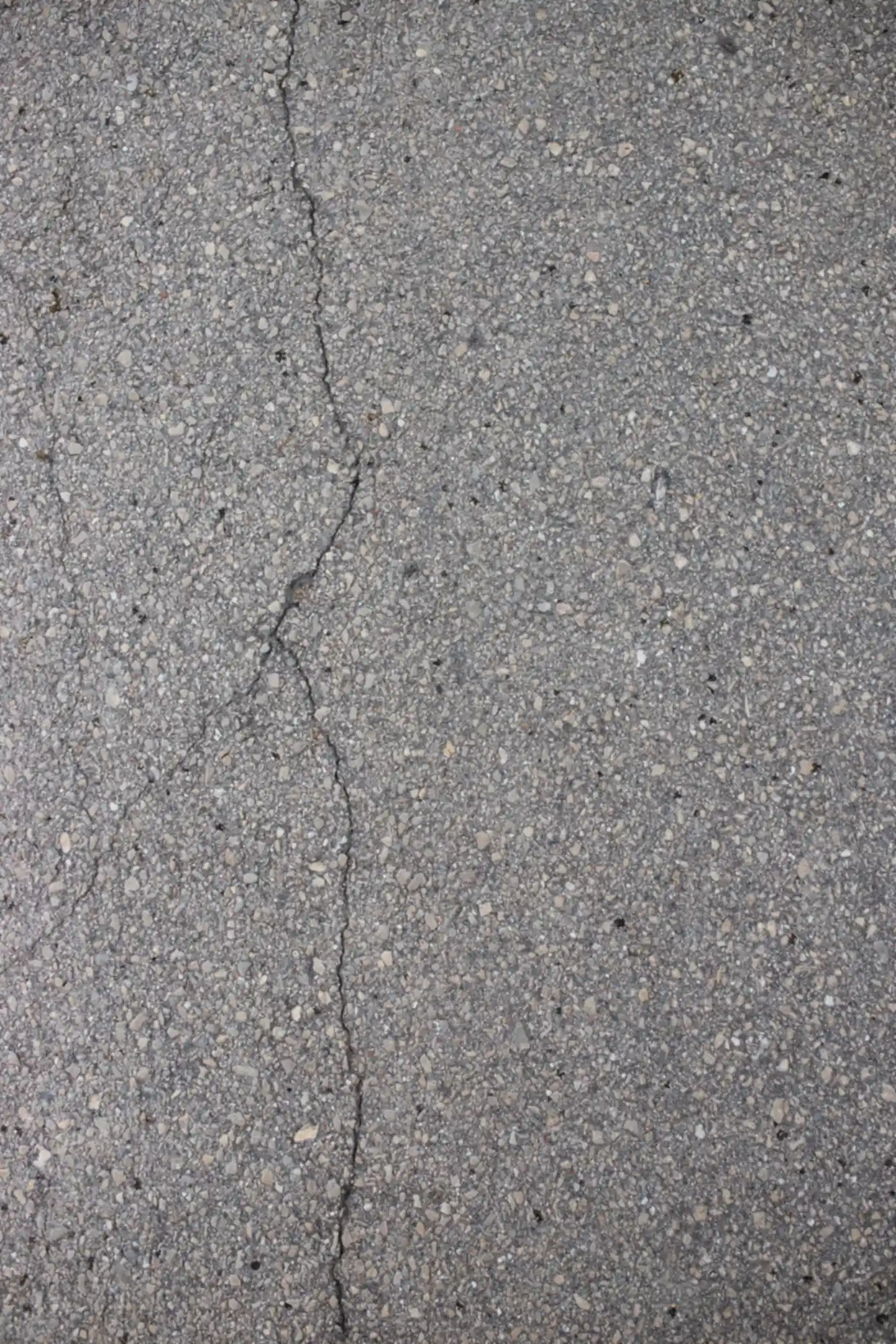
The first cracks usually show up along the edges of the driveway, where the asphalt meets the garage slab, the sidewalk, or the curb. They also show up in long straight lines where the pavement expands and contracts every day.
These hairline cracks look harmless. They aren't. Every crack is an open path for water. When a summer monsoon storm dumps rain in a short burst, the water rushes into those cracks and down to the base underneath.
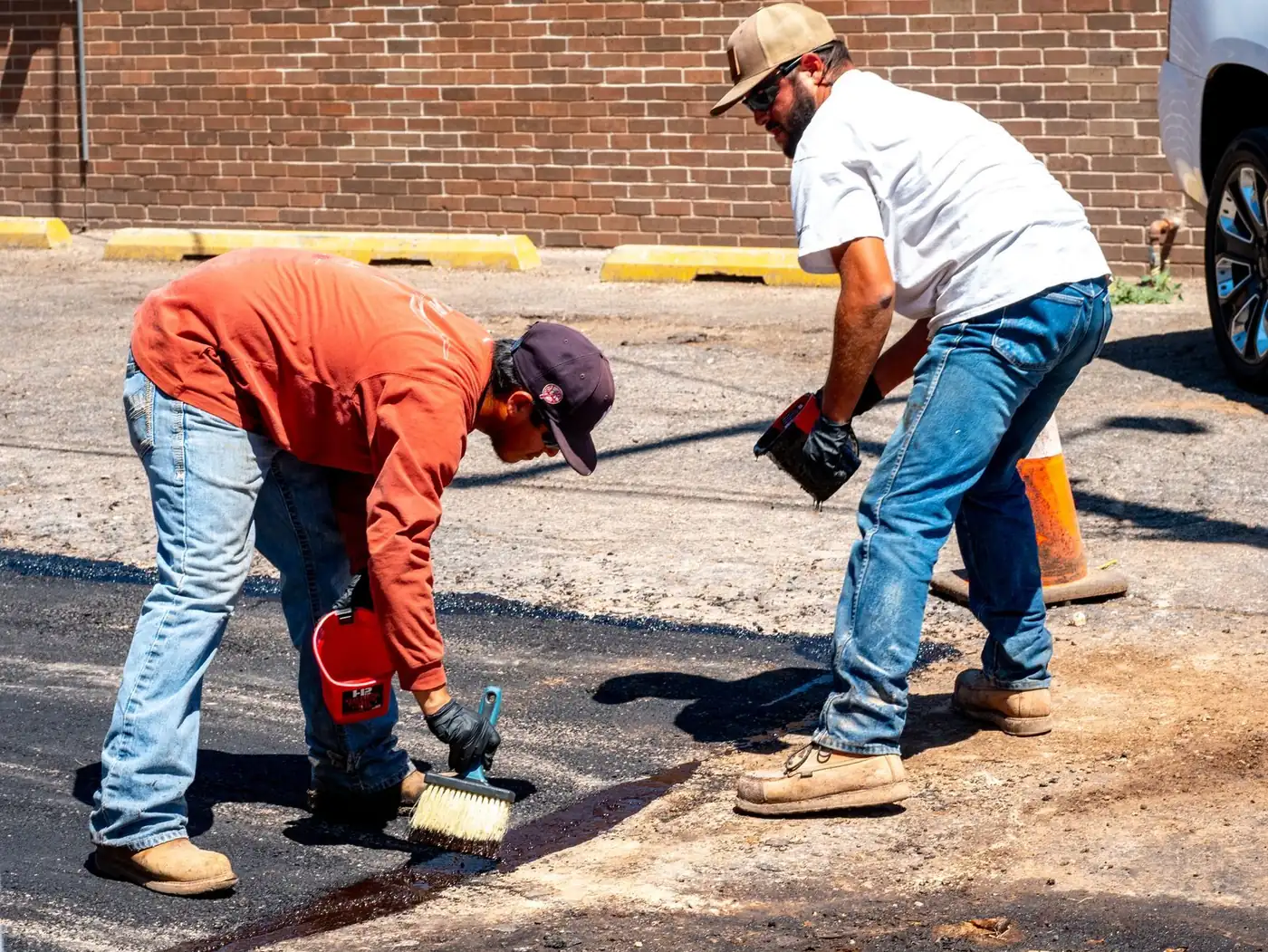
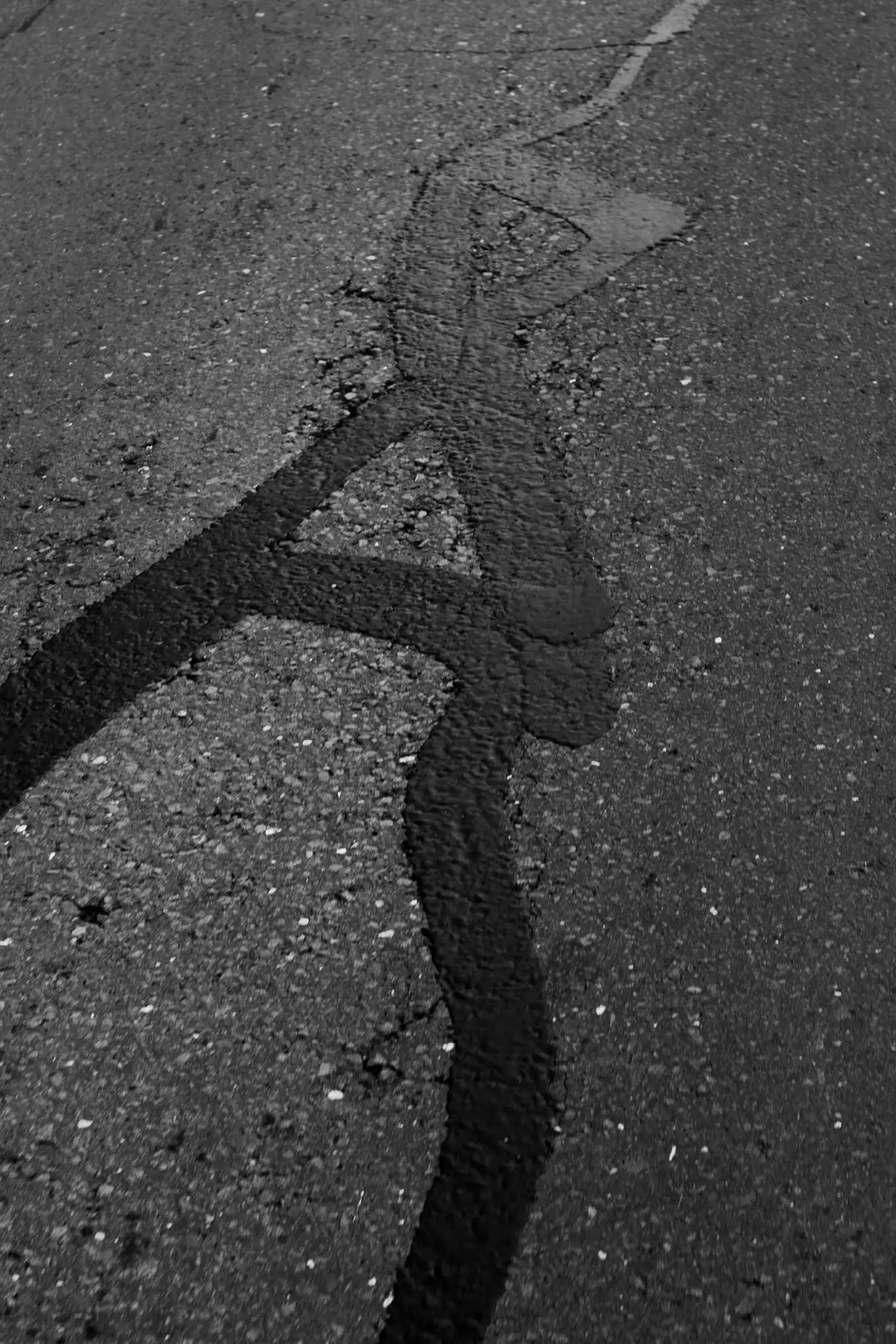
The fix is simple and inexpensive: clean the cracks out and fill them with hot rubberized crack sealant, which stays flexible through heat cycles and creates a watertight barrier. Our crack and pothole repair service handles exactly this, and pairing it with a sealcoat protects the rest of the surface.
4. Cracks That Are Getting Wider
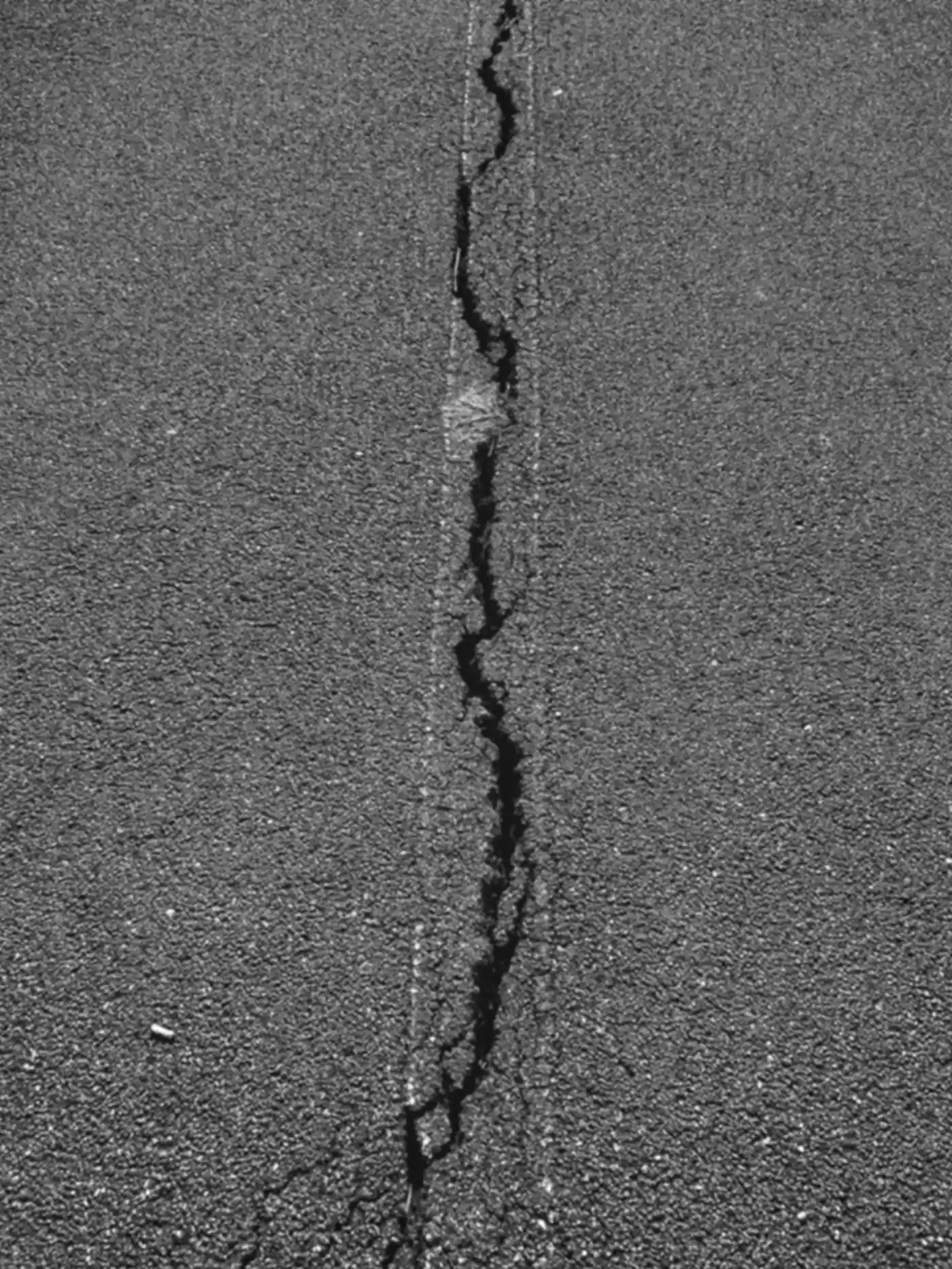
Watch a crack over a few months. If it's wider in the fall than it was in the spring, temperature swings are working on it. Las Vegas asphalt expands on hot afternoons and contracts at night, and each cycle pulls the crack a little further apart.
Wide cracks often have crumbling edges, and weeds or debris start collecting inside them. At this stage, crack sealing is still the right move, but the cracks need careful cleaning first so the sealant bonds to solid edges. Waiting longer turns a sealing job into a patching job.
5. Alligator Cracking
When cracks connect into a pattern of small, interlocking pieces that looks like alligator skin, the problem has moved below the surface. Alligator cracking means the base under that area has weakened, usually because water got into it, and the asphalt is flexing every time a car drives over it.
Sealcoat alone won't fix alligator cracking. The damaged area needs to be cut out, the base repaired, and fresh asphalt compacted in place. The good news is that if the alligator cracking is limited to one or two spots, a targeted repair plus sealcoat on the rest of the driveway can still save it.
6. Potholes or Missing Chunks
A pothole is the end stage of everything above. Water softened the base, traffic broke the surface, and pieces came loose. Potholes on a driveway usually show up first near the street, where the edge is weakest, or in the tire paths where cars park every day.
Here's the mistake we see constantly: a homeowner fills the hole with bagged cold patch, it looks fine for a few weeks, and then it crumbles out again. Cold patch never bonds to the surrounding asphalt and it sits on the same failed base that caused the hole. We wrote a whole article on why pothole repairs fail in Las Vegas if you've been through that cycle.
A proper pothole repair removes loose material, repairs the base if needed, and compacts fresh asphalt for a durable finish.
7. Water Pooling After Rain
After a storm, look for puddles that sit on the driveway for hours. Standing water means a low spot, and low spots usually mean the base has settled or the original grading was off. Water sitting on asphalt soaks in through every pore and crack and speeds up every other problem on this list.
Pooling can sometimes be handled with targeted repairs. If the whole driveway sheds water poorly, the long-term fix is regrading and asphalt paving on a properly prepared base.
What These Signs Mean for Your Budget
The order of this list matters, because the cost of fixing your driveway climbs at every step.
- Fading and loose stones: sealcoating is the fix, and it's the least expensive way to protect asphalt.
- Hairline and widening cracks: crack sealing plus sealcoat, still very affordable compared to replacement.
- Alligator cracking and potholes: targeted base repair and patching, then sealcoat.
- Widespread failure and pooling everywhere: replacement, which is the most expensive option.
Properly installed and maintained asphalt lasts 15 to 20 years. Driveways that skip maintenance in the desert often fail years ahead of that. The difference almost always comes down to whether someone caught the early signs.
Why Las Vegas Driveways Move Through These Stages Faster
In milder climates, a driveway might spend years in the "slightly faded" stage. Here, a few summers of UV and heat can take it from black to gray to cracked. Then the monsoon season delivers the water that turns cracks into base failures.
That's why we recommend sealcoating every 2 to 3 years in Las Vegas, and sealing cracks as soon as they appear. It's also why we use UV-resistant sealants formulated for desert conditions rather than generic products made for places with mild summers. For more on this, read how UV and heat damage asphalt in Las Vegas.
Not Sure Which Stage Your Driveway Is In?
That's what a walk-through is for. We'll look at the surface, the cracks, the edges, and any low spots, then tell you which of these stages your driveway is in and what it actually needs. If sealcoat and crack sealing will do the job, that's what we'll recommend. If a section needs repair, we'll show you where and why.
Seal It Up! Asphalt & Sealcoating is locally owned and serves Las Vegas, Henderson, Summerlin, North Las Vegas, Boulder City, Pahrump, Paradise, and Spring Valley. Call 702-915-6591 or request a free estimate and get a straight answer on your driveway before the next summer adds another layer of damage.
Get a straight answer on your pavement
Call 702‑915‑6591 or request a free estimate. We serve Las Vegas, Henderson, Summerlin, North Las Vegas, Boulder City, Pahrump, Paradise, and Spring Valley. Learn more about our crack & pothole repair service.