You filled the pothole. You tamped it down, maybe drove over it a few times to pack it in. Three weeks later, the patch is gone and the hole is back, sometimes bigger than before. This is not a technique problem. You are using the wrong material at the wrong stage of deterioration, and Las Vegas temperature swings are making sure that mistake costs you twice.
If you are searching for pothole repair in Las Vegas right now, you have probably already been through one round of this. The fix did not hold. This post explains exactly why, and what it actually takes to stop the cycle.
Cold Patch Fills the Hole but Ignores What Made It
Walk into any hardware store and you can buy a bag of cold-patch asphalt. The label makes it sound simple: pour it in, tamp it down, done. What the label does not explain is that cold patch is a temporary material. It never fully cures the way proper asphalt does, and it does not bond to the surrounding pavement.
It compresses under load, but it stays chemically independent from the existing asphalt on all sides. In Las Vegas, October temperatures swing from the high 90s during the day to the low 50s at night. That lack of bonding is fatal in those conditions. The existing asphalt expands and contracts with every temperature cycle. The cold patch does its own thing. The gap between them opens, water gets in, and by December the patch has either crumbled out or created a new edge failure around the original hole.
Cold patch belongs in emergency situations. Not permanent repairs.
The Real Problem Is Almost Always Below the Surface
Here is what we see regularly on properties that call us after a cold-patch failure: the pothole was patched, but nobody looked at why it formed in the first place.
Potholes do not appear because asphalt wears out on top. They form because water infiltrates through cracks, gets under the surface layer, and weakens the aggregate base underneath. Once the base loses support, the surface layer has nothing to carry load. It flexes, fractures, and breaks apart under vehicle traffic. The hole you see is the end stage of a process that started well below it.
If a repair does not address the compromised base, the new patch sits on the same failed foundation. It will fail again, often faster than the original pavement did, because the edges of the patch create fresh entry points for water.
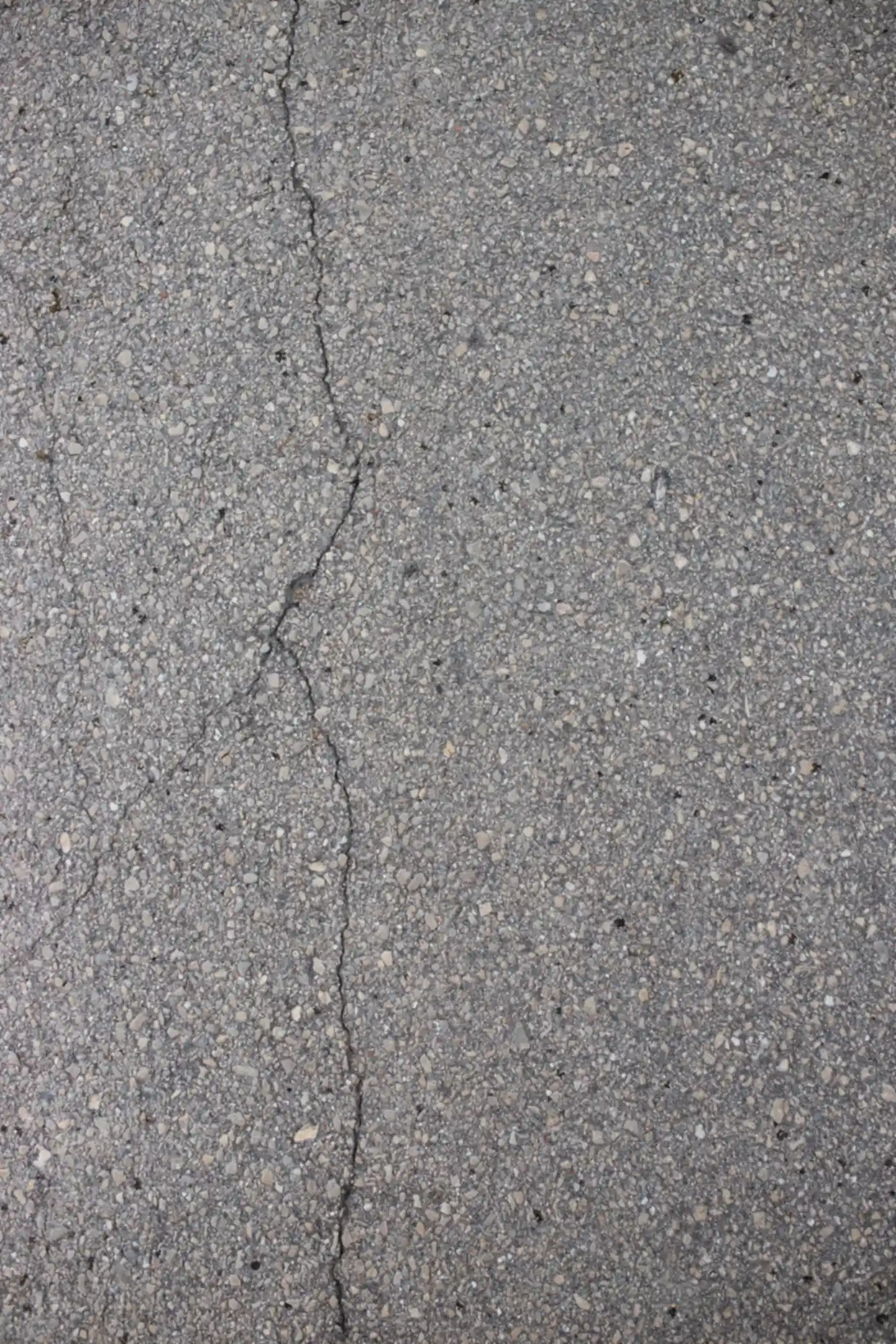
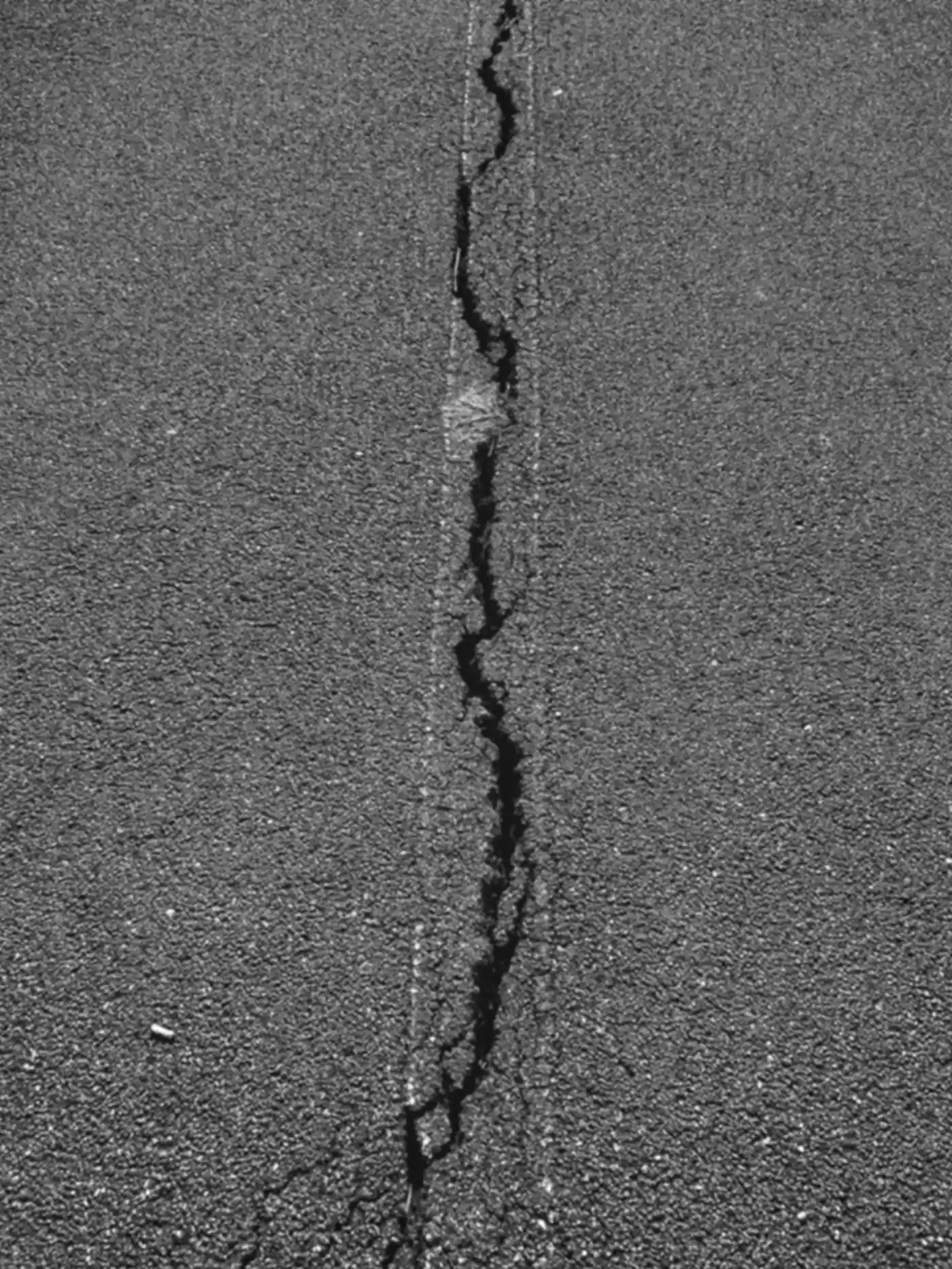
That is why crack sealing matters more than most property owners realize. A crack is the warning. A pothole is what happens when you ignore it.
Las Vegas Temperature Swings Accelerate Every Failure Mode
Most pothole repair guides are written for climates where fall means gradual cooling. Las Vegas does not cool gradually. September through November, daytime highs routinely push into the 90s while nighttime temperatures drop 40 or more degrees. That thermal swing hits asphalt hard.
Asphalt expands in heat and contracts in cold. Every expansion-contraction cycle stresses the edges of any repair that is not fully bonded to the surrounding pavement. A patch placed in October with cold-patch material will go through dozens of these cycles before January. Each one works the patch loose. Each one lets in more water. By February, the hole is larger than the one you started with.
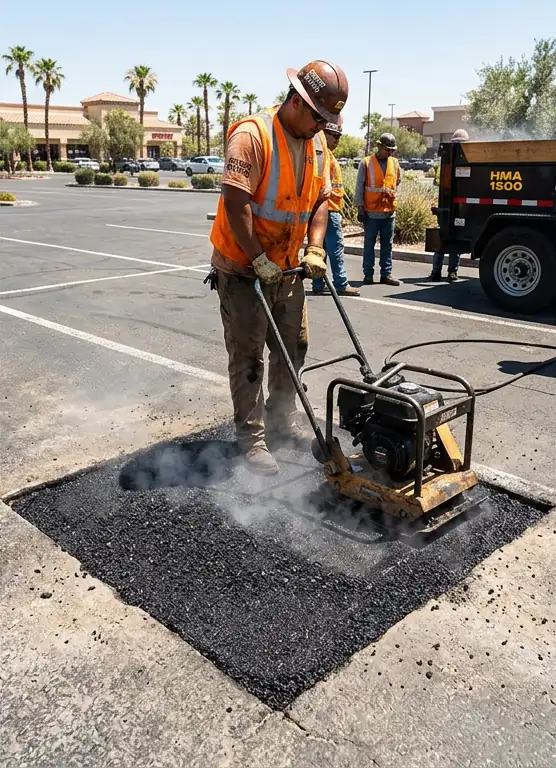
Hot mix asphalt, applied at the right temperature and compacted with proper equipment, bonds to the surrounding material and moves with it rather than against it. In a desert climate with this kind of temperature variance, that is the minimum requirement for a repair that lasts.
Skipping Base Repair Turns a $300 Fix Into a $3,000 Problem
The pattern we encounter most often is a series of escalating repairs on the same spot. A property manager patches the same pothole two or three times over two or three years. Each attempt costs money. None of them hold. Eventually the failure area grows large enough that a simple patch is no longer viable, and the surrounding pavement has deteriorated to the point where resurfacing or full replacement is the only real option.
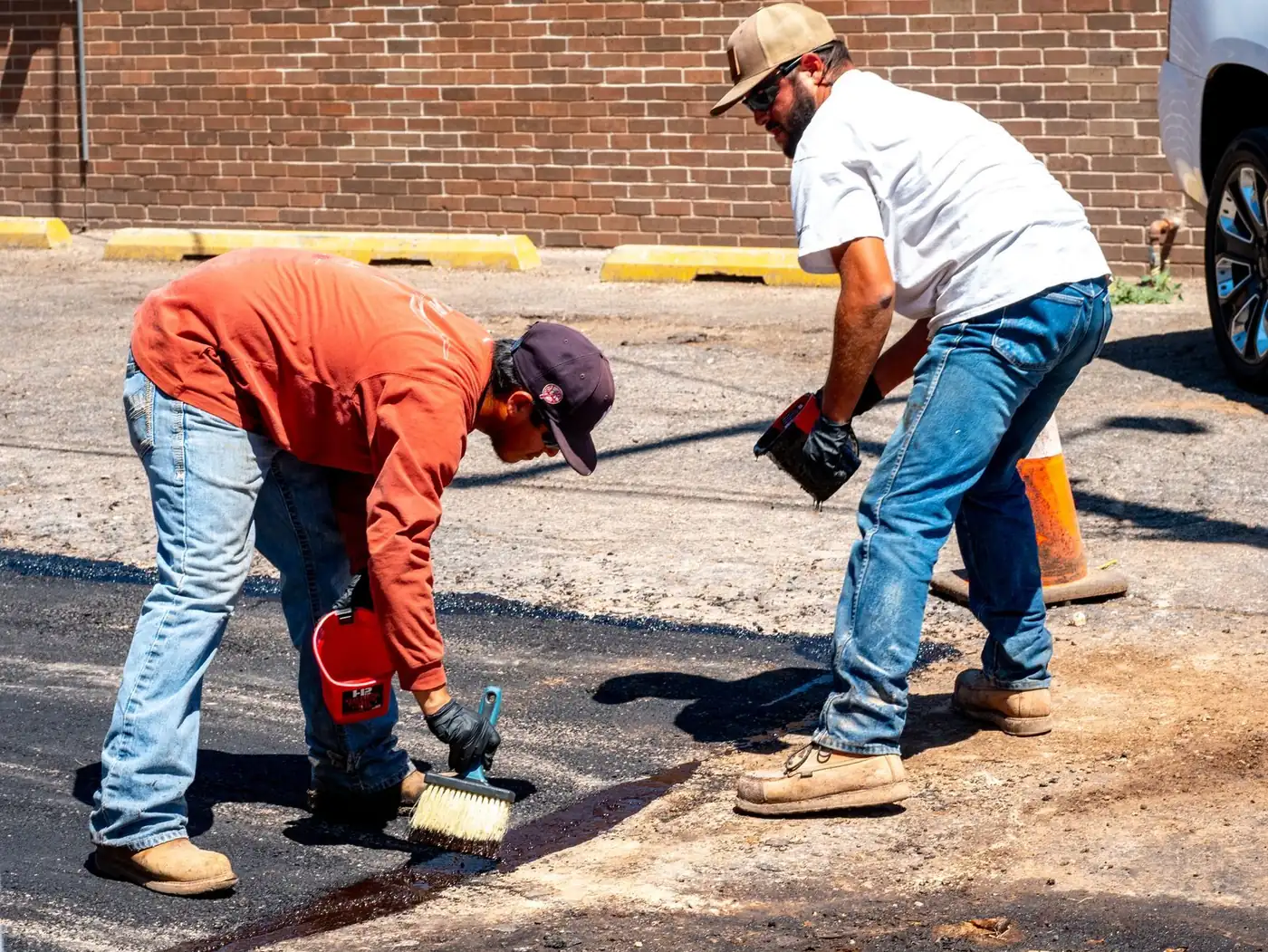
That is a predictable outcome when base repair gets skipped. Removing deteriorated material, addressing the sub-base, and bringing in compacted fresh asphalt costs more upfront than a bag of cold patch. But it stops the cycle.
The longer the repair gets deferred or done wrong, the worse that math gets.
What Property Owners Ask Before Getting This Fixed
I've patched this twice already. Why would this time be any different?
That frustration is almost always the result of the repair stopping at the surface. A proper repair starts by cutting out the damaged area back to stable pavement, inspecting and addressing the base, then filling with hot mix asphalt and compacting it. If the two previous patches skipped those steps, they were covering the problem, not fixing it. This time is different when the process is different.
Can this be repaired in winter, or do I need to wait until spring?
Las Vegas winters are mild enough that professional pothole repair runs year-round. Daytime temperatures in the 50s and 60s are workable for hot mix asphalt to be placed and compacted properly. Waiting until spring does not improve the outcome. It gives the damaged area more time to grow and more thermal cycles to deepen the base failure.
How do I know if it is just the surface or if the base is gone?
If the edges of the hole have been crumbling and the hole has deepened or widened over time, base damage is likely. If water pools in or around the area after rain, that is another indicator. A contractor who does not look at or mention the base before quoting you is not planning to address the actual problem.
My lot looks fine except for this one bad spot. Do I really need to sealcoat the whole thing?
Not always, but here is the honest answer: a fresh patch surrounded by oxidized, unprotected pavement is already losing ground. The same UV exposure and water intrusion that created your pothole is working on the rest of the lot right now. Sealcoating after repair protects the whole surface, gives the patch the best chance of lasting, and costs a fraction of what another round of patching will. In most cases, doing both at once is the smarter spend.
Stop Refilling the Same Hole
Seal It Up! Asphalt & Sealcoating is locally owned and operates across Las Vegas, Henderson, Summerlin, North Las Vegas, Boulder City, Pahrump, Paradise, and Spring Valley. We use materials formulated for desert conditions and we perform repairs correctly the first time so you are not calling us back to patch the same location again.
If your pothole has been filled before and failed, or if you want an honest assessment of whether a patch will hold or something more is needed, call us at 702-915-6591 or request a free estimate. We will inspect the base, explain exactly what the repair requires, and give you a straight answer on cost and expected lifespan before any work begins. The sooner the base gets fixed, the smaller the repair and the less of your pavement is at risk when the next storm rolls through.
Get a straight answer on your pavement
Call 702‑915‑6591 or request a free estimate. We serve Las Vegas, Henderson, Summerlin, North Las Vegas, Boulder City, Pahrump, Paradise, and Spring Valley. Learn more about our crack & pothole repair service.