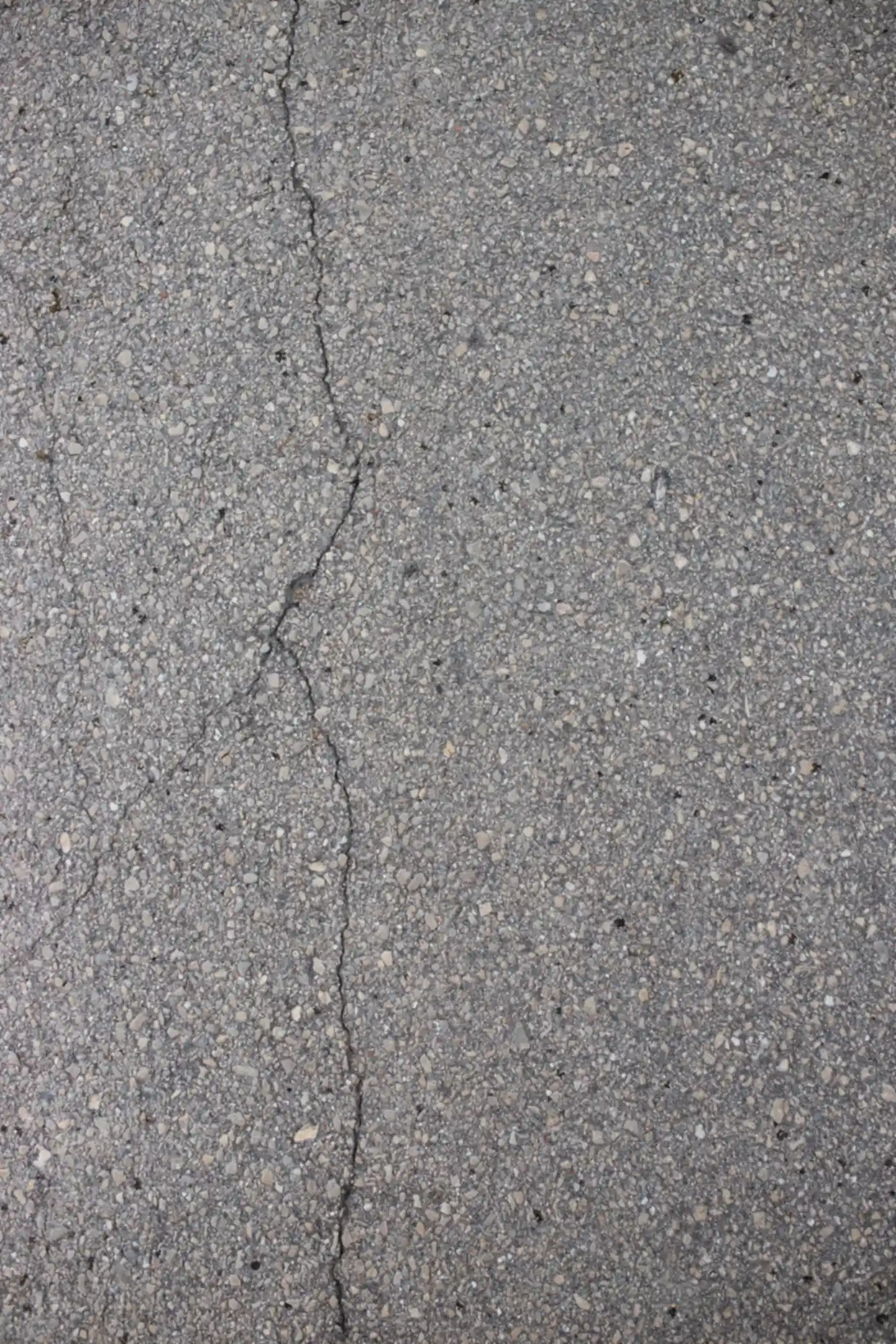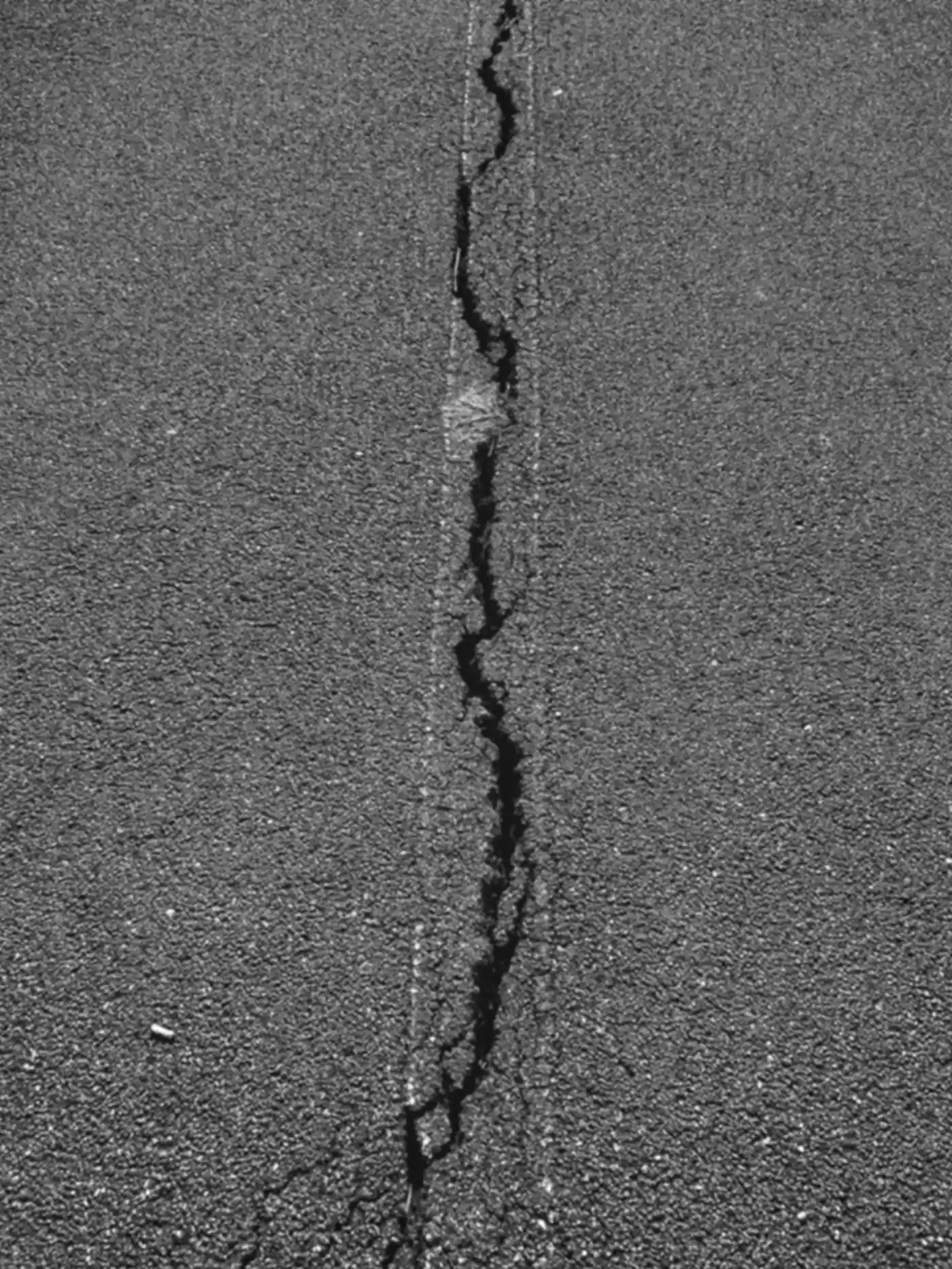
Every pothole starts as a crack. That's not a figure of speech. It's the physical sequence that plays out on driveways all over the valley: a thin crack opens, water finds it, the base underneath weakens, and the surface breaks apart.
The good news is that the crack stage is the cheapest place to stop that sequence. The bad news is that cracks look harmless, so most homeowners wait. Here's why waiting costs so much in Las Vegas and how proper crack repair stops the spread.
How a Crack Spreads
A crack in asphalt doesn't stay the same size. Three forces work on it constantly in the desert:
Temperature swings. Asphalt expands as it heats up and contracts as it cools. In the valley, the gap between afternoon and overnight temperatures can be large, especially in spring and fall. Each cycle pulls on the crack and widens it slightly.
Water. When monsoon storms arrive, rain rushes into open cracks and soaks the aggregate base. A wet base loses strength. The crack's edges lose support and start to crumble.
Traffic. Every time a car rolls over a weakened area, the surface flexes. More flex, more cracks. A single crack branches into several, and eventually into the interconnected pattern called alligator cracking.
Put those together and a crack that was barely visible in March can be wide, crumbling, and branching by October.
The Stages, From Cheap to Expensive
- Hairline cracks: easy to clean and seal. The least expensive fix.
- Open cracks with clean edges: still a sealing job, but more material and prep.
- Cracks with crumbling edges: need careful cleaning, sometimes edge repair.
- Alligator cracking: the base has weakened. The area needs to be cut out and repaired.
- Potholes: full-depth repair, base included.
Each step up the list costs more and takes more work. Crack repair is about stopping the driveway at step one or two.
How Professional Crack Repair Works
Here's what we do on a Las Vegas driveway:
- Inspect every crack. We note width, edges, and whether any areas show base failure.
- Clean the cracks out. Compressed air blows out sand, dust, and debris. Clean crack walls are critical. Sealant can't bond to dirt.
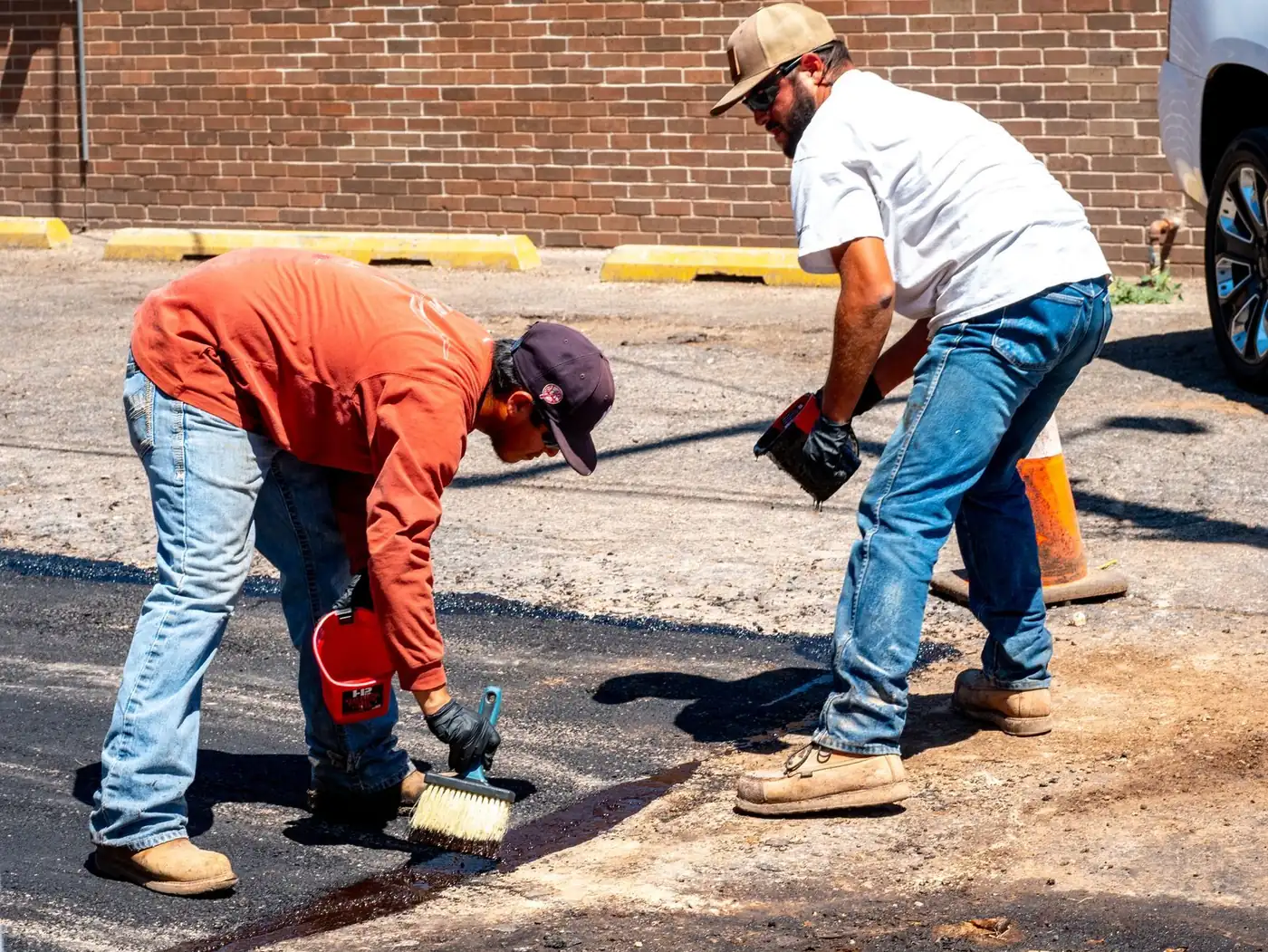
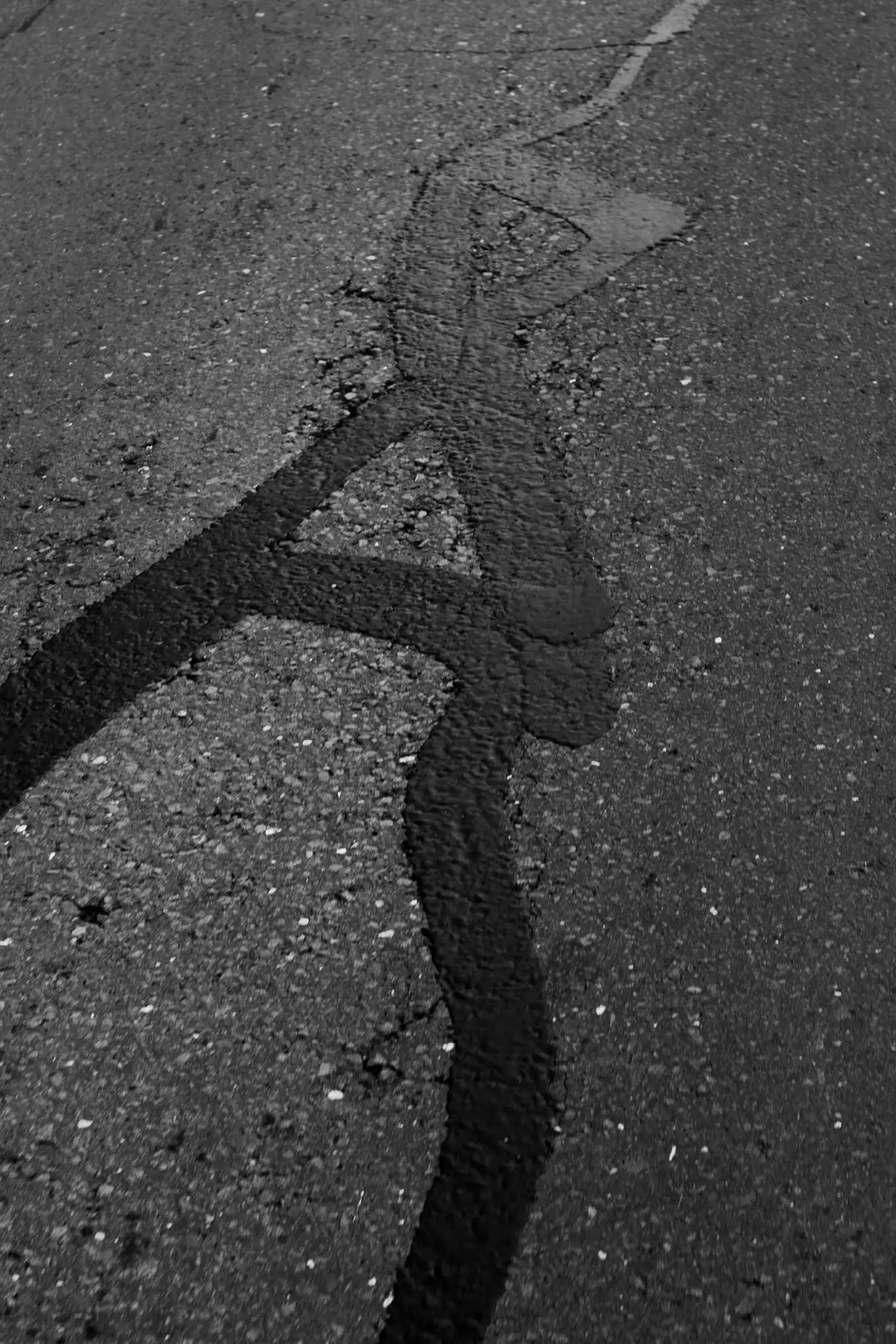
- Apply hot rubberized crack sealant. The sealant goes in hot, fills the crack, and bonds to the walls. It cures into a flexible, watertight barrier.
- Handle failed areas separately. Alligator cracking and potholes get cut out, the base repaired if needed, and fresh asphalt compacted in.
- Sealcoat when it makes sense. A sealcoat over the repaired surface protects the rest of the driveway from the same UV and water that caused the cracks.
Why Hot Rubberized Sealant Matters Here
The crack fillers sold in hardware stores are usually cold-pour products. They're easy to use, but many of them harden and shrink as they cure. In a climate with big temperature swings, the pavement keeps moving and the filler doesn't move with it. It pulls away from the crack walls, and water gets right back in.
Hot rubberized sealant stays flexible. As the driveway expands and contracts through the day and night, the sealant stretches and compresses with it. That's what keeps the seal watertight through a full Las Vegas year.
What Not to Do
A few common mistakes make crack problems worse:
- Sealcoating over open cracks. Sealcoat doesn't fill cracks. They'll show through within weeks.
- Filling dirty cracks. Filler on top of sand and debris doesn't bond.
- Overfilling and smearing. Sealant spread across the surface looks messy and can track.
- Ignoring the base. Sealing a crack in an area that has already failed doesn't fix the failure.
- Waiting for "the right season." Las Vegas allows crack repair year-round.
When Is the Best Time?
Any time you see cracks. If you want to optimize:
- Fall is excellent. Cracks are often widest after summer and easy to fill completely, and sealing them before colder nights prevents more spreading.
- Before monsoon season keeps the first heavy rains out of the base.
- Winter works fine in the valley. See why winter is the perfect time for crack repair.
What isn't a good time is "later." Later is how a crack becomes a pothole.
A Five-Minute Crack Check You Can Do This Weekend
You don't need special tools to figure out where your driveway stands. Walk it on a dry morning and look for these things:
- Edges first. Check where the asphalt meets the garage slab, the sidewalk, and the curb. That's where cracks usually start.
- Tire paths. Look where your cars park and roll in and out every day. Cracks that run in the direction of travel or cluster in those paths point to base stress.
- Width. Slide a coin into the crack. If it drops in easily, the crack is wide enough that water pours in during a storm.
- Edges of the cracks. Are they crisp, or crumbling and breaking into small pieces? Crumbling edges mean the crack is actively growing.
- Patterns. Single lines are one thing. A web of small connected pieces is alligator cracking, and it means the base is involved.
- After rain. Check again after the next storm. Dark, wet lines that stay damp long after the surface dries show you where water is getting in.
Take a few photos so you can compare them in a few months. If you see growth, it's time to call.
Cracks on HOA and Commercial Pavement
Everything above applies to shared lots and commercial pavement too, with a few differences. More traffic means cracks grow faster. Turning traffic at entrances and drive aisles twists the surface and opens cracks in odd directions. Heavy trucks at dumpster pads and loading zones push cracks into failure sooner. If you manage a lot, our guide on parking lot crack repair in Las Vegas covers the commercial side in detail.
How Much Life Does Crack Repair Add?
There's no single number, because it depends on the pavement's age, base, traffic, and drainage. But crack sealing is one of the core steps that lets asphalt reach its full 15 to 20 year life. Combined with a sealcoat every 2 to 3 years, it's the difference between a driveway that ages gracefully and one that needs replacement years early.
For the bigger budget picture, read the asphalt maintenance budget items homeowners miss.
Common Questions
How long does crack repair take on a driveway?
Usually not long. Many driveways are done in a short visit, and if sealcoating follows, the whole job often fits in the same day.
Can I drive on it right away?
Hot rubberized sealant sets quickly. We'll give you specific timing, especially if a sealcoat goes on top.
Will the sealed cracks be visible?
Yes, as dark lines, until a sealcoat goes over them. After sealcoating, they blend in much better.
My cracks came back after I filled them. Why?
Most likely the filler was a rigid product, the crack wasn't cleaned first, or the base under the crack has failed.
Stop It Now
Seal It Up! Asphalt & Sealcoating is locally owned and serves Las Vegas, Henderson, Summerlin, North Las Vegas, Boulder City, Pahrump, Paradise, and Spring Valley. See our crack and pothole repair service, then let us look at your driveway.
Call 702-915-6591 or request a free estimate and stop the spread while it's still inexpensive.
Get a straight answer on your pavement
Call 702‑915‑6591 or request a free estimate. We serve Las Vegas, Henderson, Summerlin, North Las Vegas, Boulder City, Pahrump, Paradise, and Spring Valley. Learn more about our crack & pothole repair service.