Crack sealing doesn't get much attention. It isn't as dramatic as a crew laying fresh asphalt or as eye-catching as a newly sealcoated lot. But if you asked us which single service does the most to keep Las Vegas pavement alive, crack sealing would be at the top of the list.
Here's a behind-the-scenes look at how we approach crack sealing, what happens at each step, and why each one matters in the desert.
Why We Care So Much About Cracks
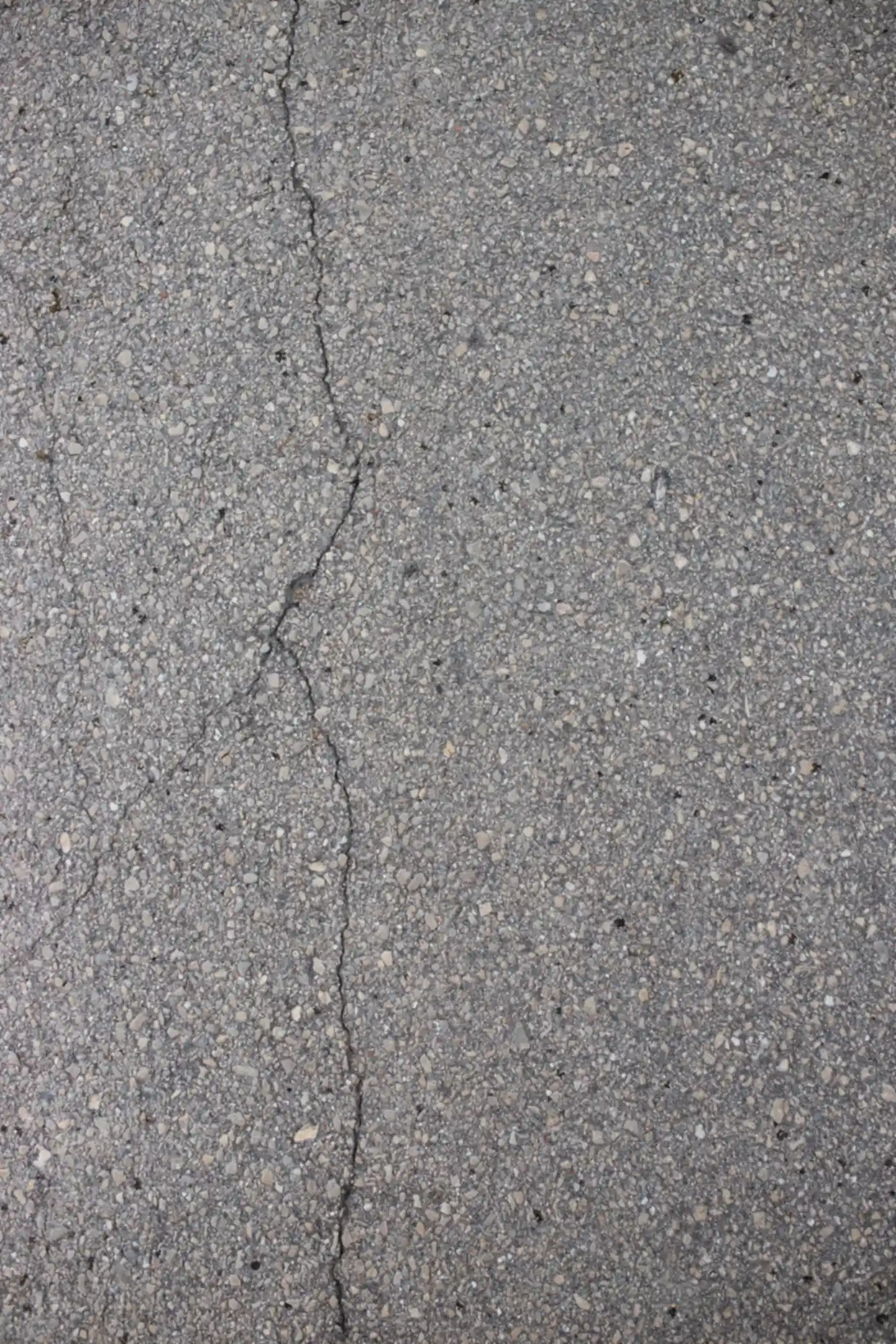
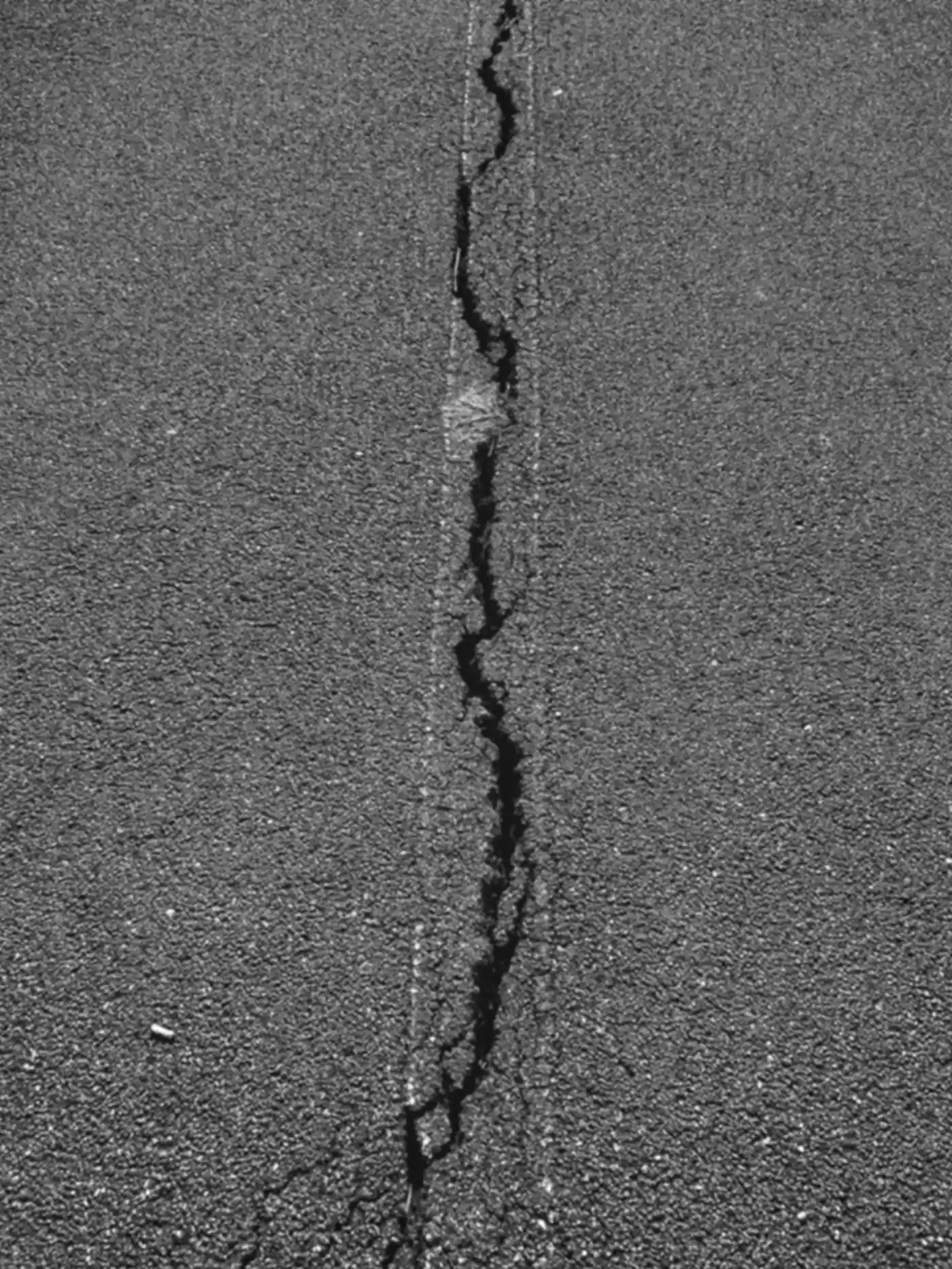
Every crack in asphalt is an open door. In Las Vegas, the things that walk through that door are water and temperature stress.
When monsoon storms hit, water runs straight into open cracks and down to the aggregate base under the pavement. A wet base loses strength. Traffic flexes the asphalt over that weak spot until it breaks apart, and that's how potholes form. Meanwhile, the daily swing between hot afternoons and cooler nights keeps pulling cracks wider.
Seal the crack, and you close the door. That's the whole idea. It's inexpensive prevention against far more expensive repairs later.
Step 1: Reading the Pavement
Every job starts with a walk. Before we touch a crack, we look at the whole surface and ask a few questions:
- What kind of cracks are these? Single lines along edges and seams, or connected patterns?
- How wide are they? Hairline cracks, or open cracks you can fit a coin into?
- Are the edges solid or crumbling?
- Is there alligator cracking? That interconnected pattern means the base has weakened in that area.
- Where does water go after a storm? Low spots and pooling change the plan.
This step decides what the job actually is. Most cracks are sealing candidates. Areas with alligator cracking or potholes are repair candidates, and sealing them would just cover up a failure. We tell you which is which before any work starts.
Step 2: Cleaning the Cracks
This is the step that separates a seal that lasts from one that doesn't. Sealant has to bond to the crack walls. It can't bond to sand, dust, loose stone, or plant debris, and in the desert, cracks fill up with all of those quickly.
We blow every crack out with compressed air to clear debris and expose solid crack walls. Where vegetation has taken root, it gets pulled. Where edges are badly crumbled, we deal with that before sealing.
Skip cleaning, and the sealant sits on top of dirt. It looks fine for a while, then lifts out, and water gets right back in.
Step 3: Heating the Sealant
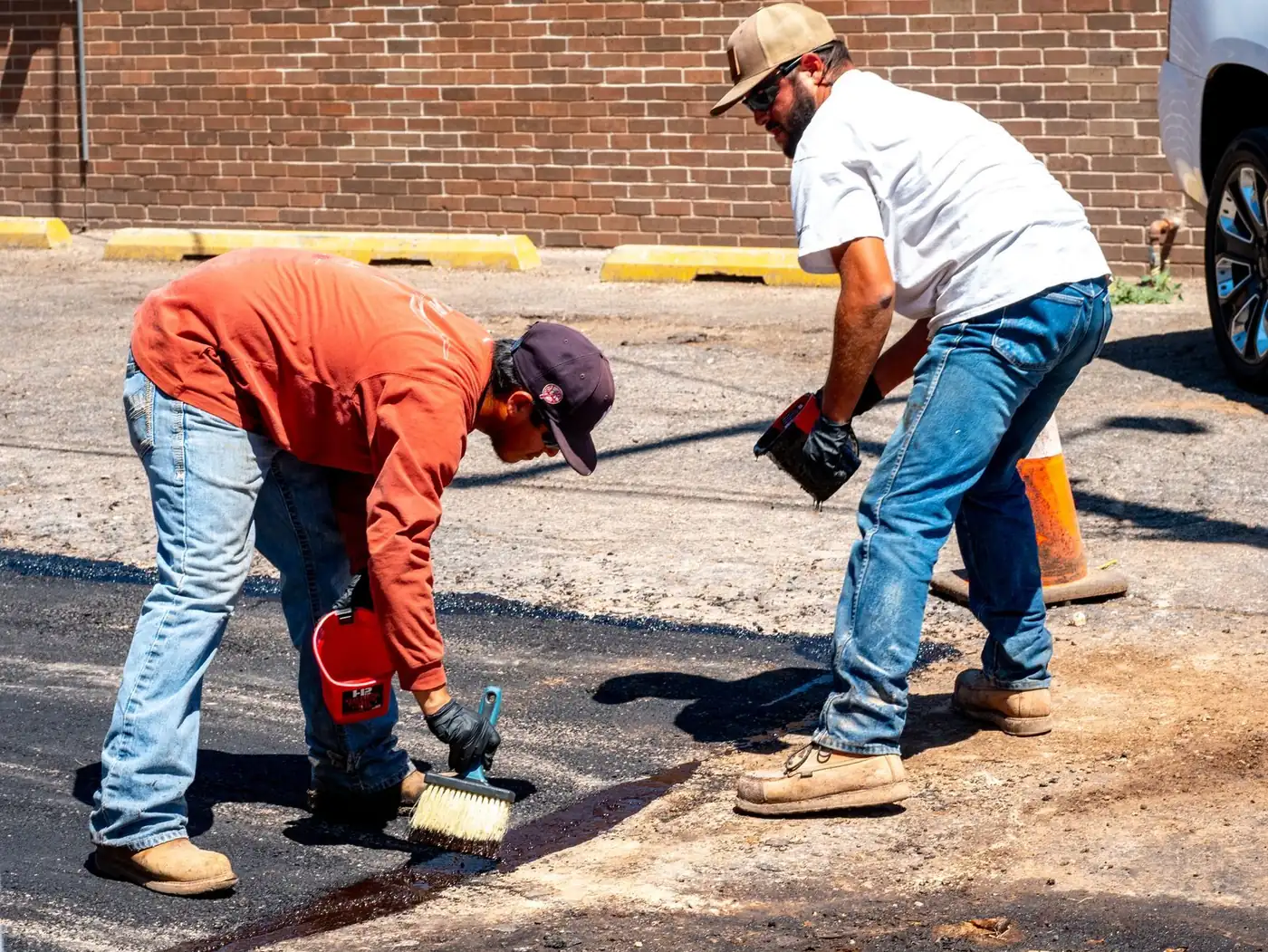
We use hot rubberized crack sealant. It's heated in a melter until it flows like a thick liquid. Applying it hot is what lets it run down into the crack and grab onto the walls.
Why rubberized? Because Las Vegas pavement never stops moving. It expands in the heat and contracts in the cold every single day. Hot rubberized sealant cures into a flexible material that stretches and compresses with the pavement and stays watertight through the whole cycle. Rigid fillers can't do that. They crack or pull away, and the seal is lost.
Step 4: Filling the Cracks
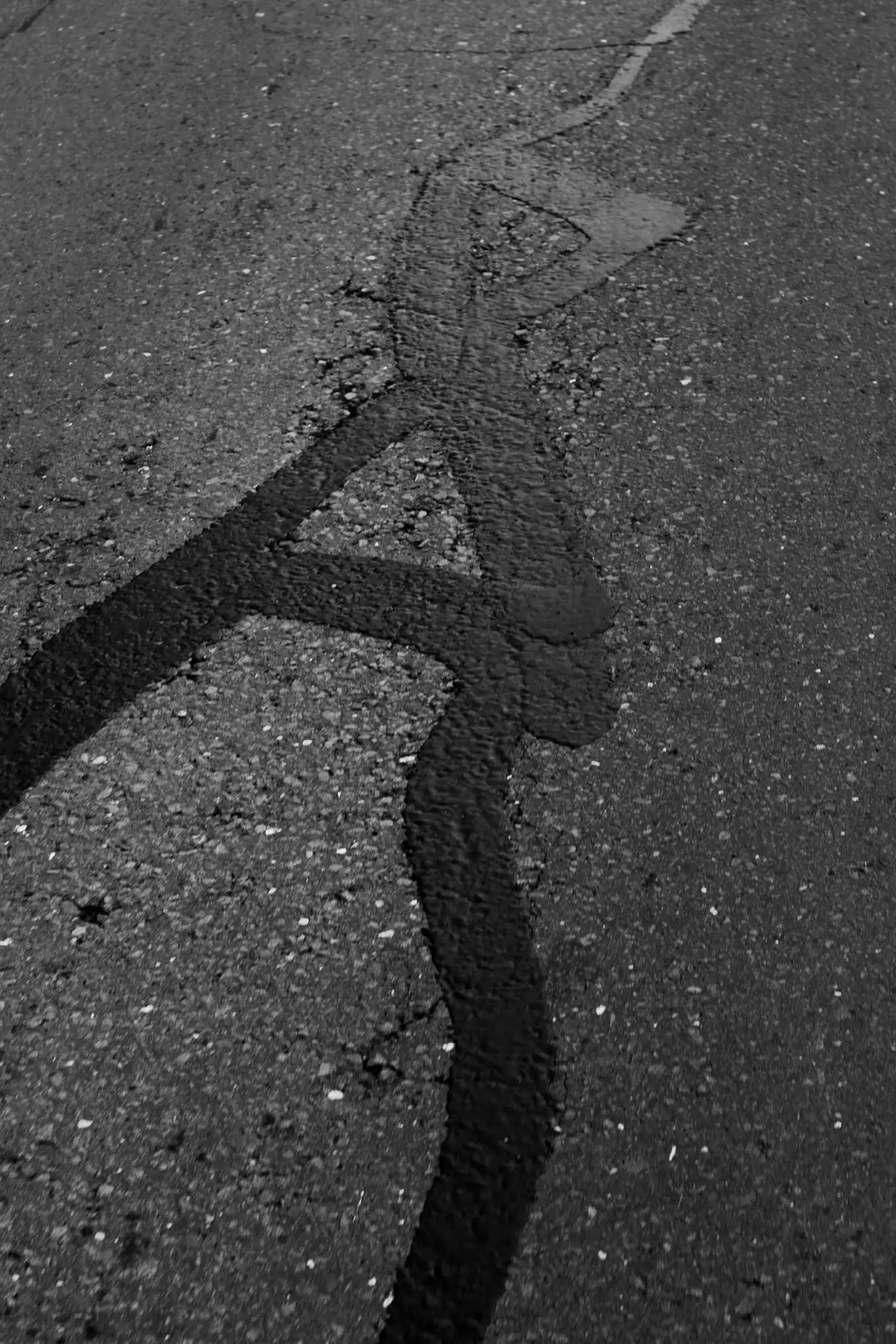
The hot sealant is applied directly into each crack, filling it and sealing the top. The goal is a complete fill with a neat finish: enough sealant to close the crack fully, without smearing a wide band across the surface. A clean application looks better and won't track.
Step 5: Handling Failed Areas
Crack sealing protects cracks. It doesn't fix base failure. Any areas with alligator cracking or potholes get cut out, the base repaired if needed, and fresh asphalt compacted in place. Those repairs are what stop a pothole from coming back in the same spot. We explain this in why pothole repairs fail in Las Vegas.
Step 6: Protecting the Whole Surface
Sealed cracks are protected, but the rest of the pavement is still facing the same UV and water that caused the cracks in the first place. That's why we usually recommend following crack sealing with a sealcoat. The sealcoat protects the whole surface, blends in the sealed cracks visually, and resets the clock on the 2 to 3 year maintenance cycle. See our sealcoating service.
On commercial and HOA lots, restriping follows the sealcoat so the lot reopens finished.
What We Watch For After the Job
A good crack seal job should hold up through heat, cold, and storms. Over the following months, the sealed cracks should stay closed and dark, with no gaps along the edges. New cracks can still form elsewhere as the pavement ages, which is why we recommend a quick inspection each year and sealing anything new before monsoon season.
When Is the Best Time for Crack Sealing?
Any time cracks appear. Las Vegas allows crack sealing year-round. Fall is excellent because cracks are wide open after summer. Winter works well and gets cracks closed before spring. Before monsoon season is critical. Read why winter is the perfect time for crack repair for the seasonal details.
The Details That Make a Seal Last
A few small things make a big difference in how long a crack seal holds:
- Dry cracks. Sealant won't bond to wet crack walls, so we work on dry pavement.
- The right temperature. The sealant has to be hot enough to flow into the crack and grab the walls.
- A complete fill. Partly filled cracks leave a channel where water can still collect.
- A tidy finish. Excess sealant smeared across the surface can track and wear unevenly.
Who We Do This For
We seal cracks on homeowner driveways, HOA community lots and streets, retail centers, office parks, casinos and resorts, apartment communities, and industrial and logistics yards across the valley. The process is the same. The scale and scheduling change. On large properties, we plan the work in sections so the property stays open.
What We'll Tell You Honestly
Sometimes a homeowner calls expecting crack sealing and we find widespread alligator cracking and a failed base. When that happens, we say so. Sealing cracks on pavement that has already failed doesn't protect anything, and we'd rather explain the real options than sell a job that won't hold. Other times, someone calls expecting to need a new driveway, and crack sealing plus sealcoat buys them years. We tell them that too.
Common Questions
How long does crack sealing take?
Many driveways take a short visit. Commercial lots vary by size and the amount of cracking.
Can I drive on it right away?
Hot rubberized sealant sets quickly. We'll give you specific timing, especially when sealcoat follows.
Will sealed cracks be visible?
They show as dark lines until a sealcoat goes over the top.
Why not just use the crack filler from the hardware store?
Many retail fillers harden and pull away from crack walls in our temperature swings. Hot rubberized sealant stays flexible.
How often should cracks be sealed?
Inspect at least once a year and seal new cracks as they appear.
See What Your Cracks Need
Seal It Up! Asphalt & Sealcoating is locally owned and serves Las Vegas, Henderson, Summerlin, North Las Vegas, Boulder City, Pahrump, Paradise, and Spring Valley. We'll walk your pavement and show you exactly which cracks need sealing and which areas need more.
Call 702-915-6591 or request a free estimate. Learn more about our crack and pothole repair service.
Get a straight answer on your pavement
Call 702‑915‑6591 or request a free estimate. We serve Las Vegas, Henderson, Summerlin, North Las Vegas, Boulder City, Pahrump, Paradise, and Spring Valley. Learn more about our crack & pothole repair service.