Ask anyone who has lived through a Las Vegas July what the sun does to a car dashboard, a patio cushion, or a garden hose left outside. It fades, cracks, and turns brittle. Your asphalt is going through the same thing, every single day, and it doesn't get to go inside.
Most pavement advice is written for places where winter is the main enemy. Here, the main enemy is the sun. Understanding exactly how UV and heat break asphalt down makes it a lot easier to see why maintenance timing matters so much in the desert.
What Asphalt Is Made Of
Asphalt pavement is mostly rock: crushed stone and sand, called aggregate. What holds it together is asphalt binder, a sticky, flexible petroleum product. The binder coats every stone and glues the whole mix into a surface that can flex slightly under traffic without breaking.
That flexibility is everything. As long as the binder stays flexible, the pavement can handle traffic loads and temperature changes. When the binder dries out and hardens, the pavement turns brittle and starts to crack.
How UV Breaks Down the Binder
Ultraviolet light attacks the binder at the surface through a process called oxidation. UV energy breaks down the chemical bonds in the binder, and oxygen reacts with it. The lighter, more flexible components break down or escape, and what's left is harder and more brittle.
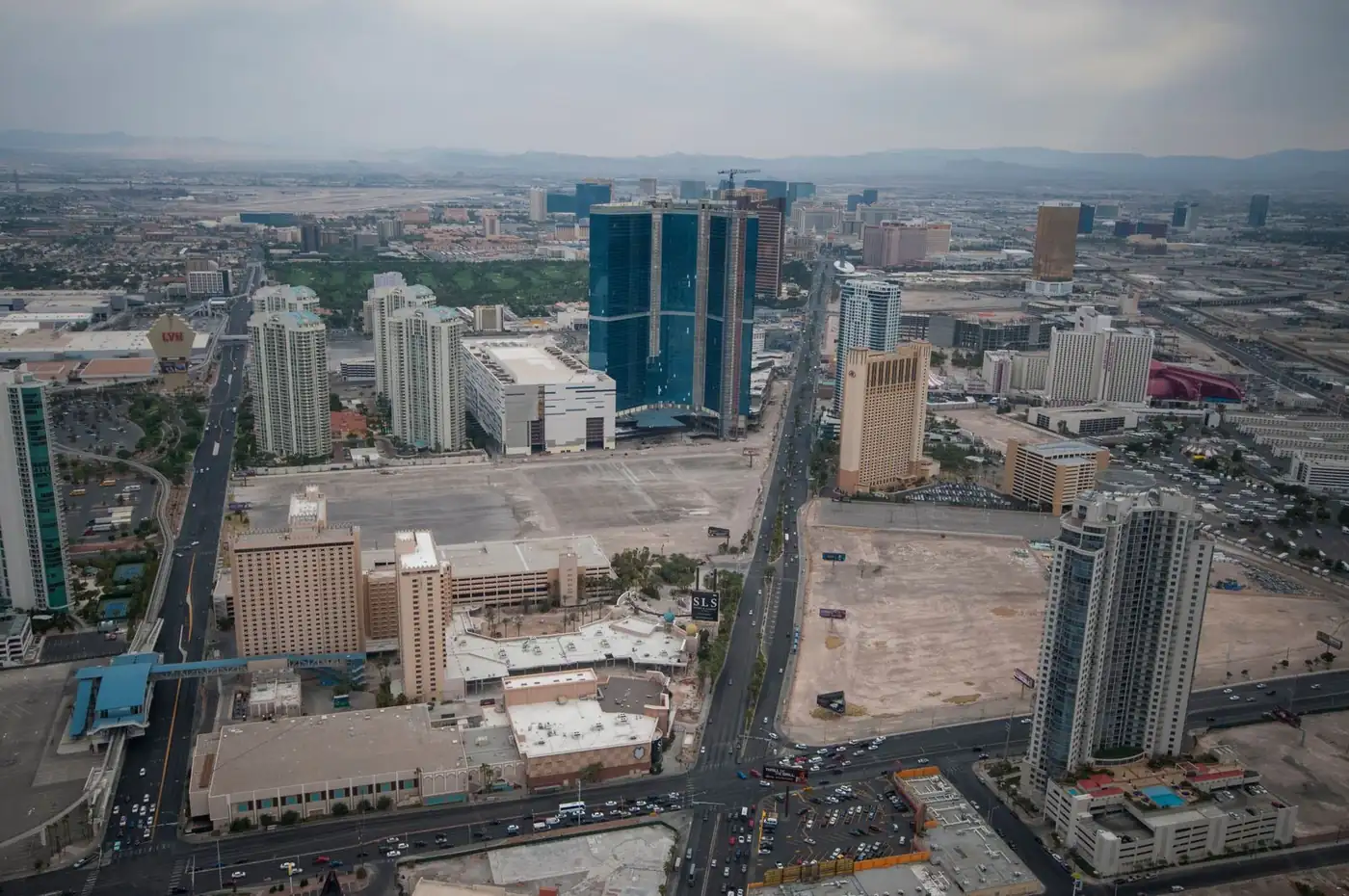
Las Vegas gets intense, year-round sunshine with very little cloud cover to filter it. Pavement here takes a heavy UV dose every day, not just in summer. That's why oxidation shows up quickly on unprotected asphalt.
You can see oxidation happening. The surface color shifts from deep black to charcoal, and eventually to a light, chalky gray. That gray color is the dried-out binder.
How Heat Speeds Everything Up
Summer air temperatures in Las Vegas regularly climb past 110 degrees, and asphalt surfaces in direct sun get much hotter than the air. That heat does two things:
- It speeds up oxidation. Chemical reactions run faster at higher temperatures, so UV damage accelerates on hot days.
- It softens the asphalt. Hot asphalt can deform under heavy loads, which is why you sometimes see ruts in truck lanes or dents where a trailer sat.
Heat also drives off the lighter oils in the binder over time, which is part of why sun-baked pavement eventually turns hard and brittle.
The Day-Night Swing
Heat alone isn't the whole story. Asphalt expands as it warms and contracts as it cools. In the Las Vegas Valley, especially in spring and fall, the gap between afternoon highs and nighttime lows is large. Higher areas like Summerlin and Pahrump see even bigger swings because nights get colder there.
Every daily cycle stretches and squeezes the pavement. Flexible asphalt handles that. Oxidized, brittle asphalt can't stretch, so it cracks. Then each cycle pulls the cracks a little wider.
Where Water Comes In
Las Vegas is dry most of the year, which makes it easy to forget about water. But monsoon storms bring short, heavy bursts of rain, and that water goes looking for every open crack.
Once water gets through cracks into the aggregate base, the base loses strength. Traffic flexes the surface over that weakened area. The result is alligator cracking and potholes. So the full chain looks like this:
UV and heat dry out the binder → brittle surface cracks under temperature swings → monsoon water enters the cracks → the base weakens → potholes form.
The Stages You'll See
Here's how UV and heat damage typically shows up on a Las Vegas driveway or lot:
- Year one or two unprotected: color starts fading from black.
- A few summers in: gray surface, loose stones, rough texture.
- Next: hairline cracks along edges, seams, and in traffic paths.
- Then: cracks widen; water reaches the base.
- Finally: alligator cracking, potholes, and failing edges.
The timeline varies with traffic, drainage, shade, and the original paving quality. But in the desert, the progression moves faster than most people expect.
How Sealcoating Stops the Chain
Sealcoating breaks the chain at the very first link. A sealcoat puts a new protective layer over the surface that:
- Absorbs and blocks UV before it reaches the binder
- Seals the surface so water sheds instead of soaking in
- Resists oil and fuel that soften asphalt
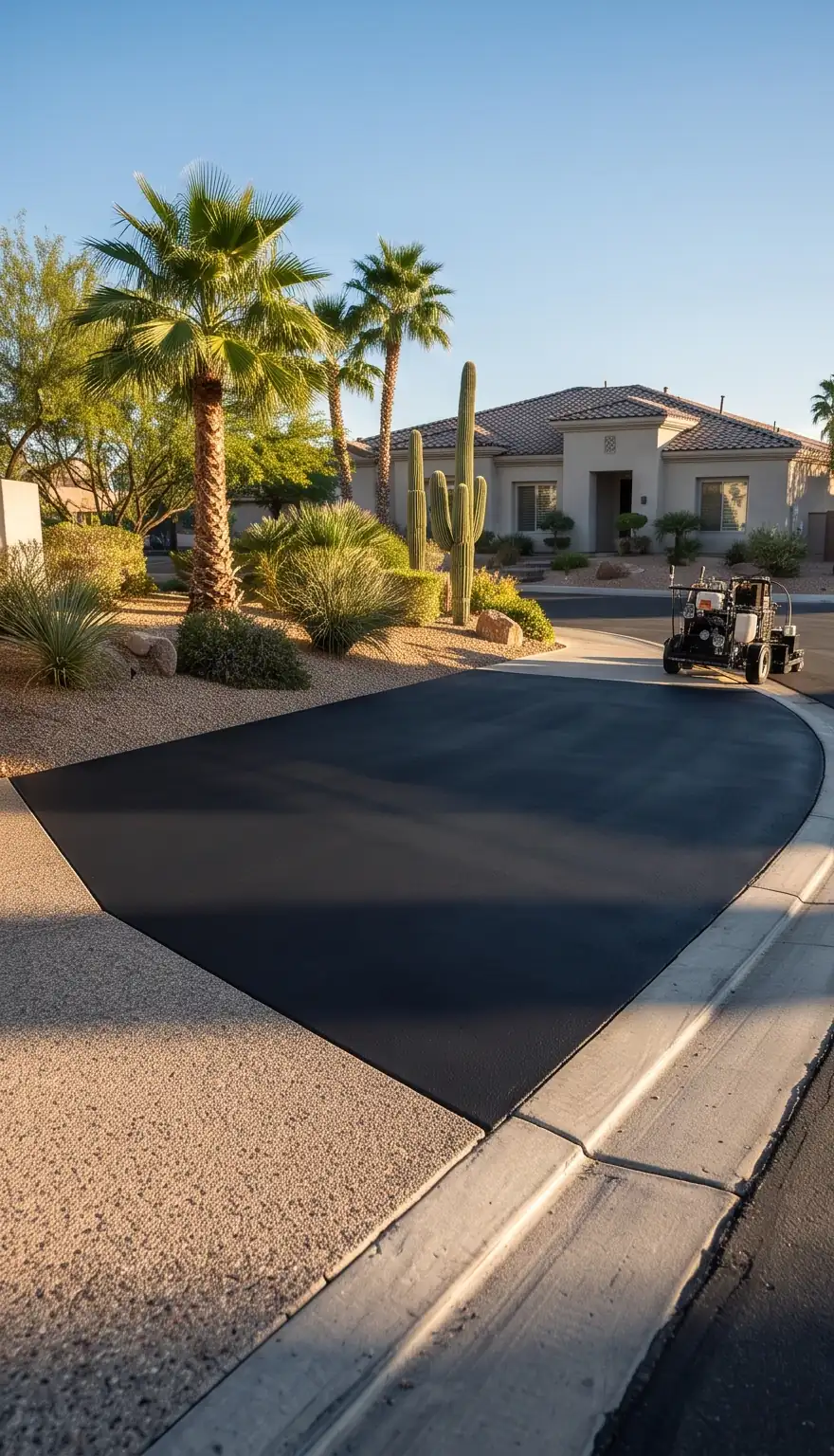
- Restores the deep black color of fresh pavement
That's why we call it sunscreen for your pavement. Like sunscreen, it wears off and needs reapplying. In Las Vegas, plan on every 2 to 3 years, and more often for busy commercial lots.
The material matters. We use UV-resistant sealants formulated for desert conditions. A generic product designed for a mild climate doesn't hold up to our sun and wears through before the cycle is up.
Don't Forget the Cracks
Sealcoat protects the surface, but it doesn't bridge open cracks on its own. Cracks need to be cleaned out and filled with hot rubberized crack sealant first. That sealant stays flexible through the day-night temperature swings and keeps water out of the base. Learn more on our crack and pothole repair page.
Heat Damage Looks Different Across the Valley
The sun is the same everywhere in the valley, but the way pavement responds to it varies by neighborhood and property type.
- Summerlin and Pahrump sit higher and see colder nights. That bigger day-to-night swing means more expansion and contraction, so cracks open and widen faster through fall and winter.
- North Las Vegas industrial lots combine summer heat with heavy truck traffic. Softened asphalt can rut and shove in truck lanes, especially where the base wasn't built for the load.
- Paradise and the Strip corridor have lots that never close. Constant traffic wears through sealcoat and paint faster, so the protective layer needs renewing more often.
- Henderson hillside driveways shed water fast during monsoon storms, which pushes runoff into any open crack along the slope.
- Boulder City and other open, unshaded lots take full sun from morning to evening with no break.
Knowing which of these applies to your property helps set the right maintenance schedule. Our location pages cover what we see in each part of the valley.
Common Questions About Sun Damage
Does shade help?
Yes. Shaded areas oxidize more slowly. But most Las Vegas driveways and lots get full sun for much of the day.
Is there a season when asphalt isn't being damaged?
No. UV exposure continues year-round here. Summer is the worst, but winter sun still does damage.
Will sealcoating fix a gray driveway?
It restores color and protects the surface. If the gray surface has cracks or failed areas, those need repair as part of the job.
How do I know if my asphalt is oxidized?
Look at the color and texture. Gray, rough, and sandy with loose stones means the surface binder has broken down.
For a seasonal strategy, read sealcoating in Las Vegas: how to beat the desert heat.
Protect It Before the Next Summer
Seal It Up! Asphalt & Sealcoating is locally owned and serves Las Vegas, Henderson, Summerlin, North Las Vegas, Boulder City, Pahrump, Paradise, and Spring Valley. We'll show you where your pavement is in the damage chain and what it takes to stop it.
Call 702-915-6591 or request a free estimate.
Get a straight answer on your pavement
Call 702‑915‑6591 or request a free estimate. We serve Las Vegas, Henderson, Summerlin, North Las Vegas, Boulder City, Pahrump, Paradise, and Spring Valley. Learn more about our sealcoating service.