We talk to a lot of homeowners, HOA board members, and property managers every year. Most of them have heard something about sealcoating before they call us, from a neighbor, a forum, a previous contractor, or a product label. Some of what they've heard is accurate. A lot of it isn't, and the bad information usually leads to one of two expensive mistakes: skipping sealcoat when it would have saved the pavement, or paying for sealcoat when the pavement needed something else.
Here are the five myths we hear most often in Las Vegas, and the truth behind each one.
Myth 1: "Sealcoating Is Just Cosmetic Black Paint"
This is the big one. Because a fresh sealcoat makes pavement look new, a lot of people assume that's all it does.
The truth: sealcoat is a protective layer with a job to do. In Las Vegas, the biggest threat to asphalt is the sun. UV breaks down the binder that holds the pavement together, and summer heat dries it out. As the binder oxidizes, the surface turns gray, brittle, and cracked.
A sealcoat:
- Blocks UV from reaching the binder
- Sheds water so monsoon rain runs off instead of soaking in
- Resists oil and fuel that soften asphalt
- Fills small surface voids on weathered pavement
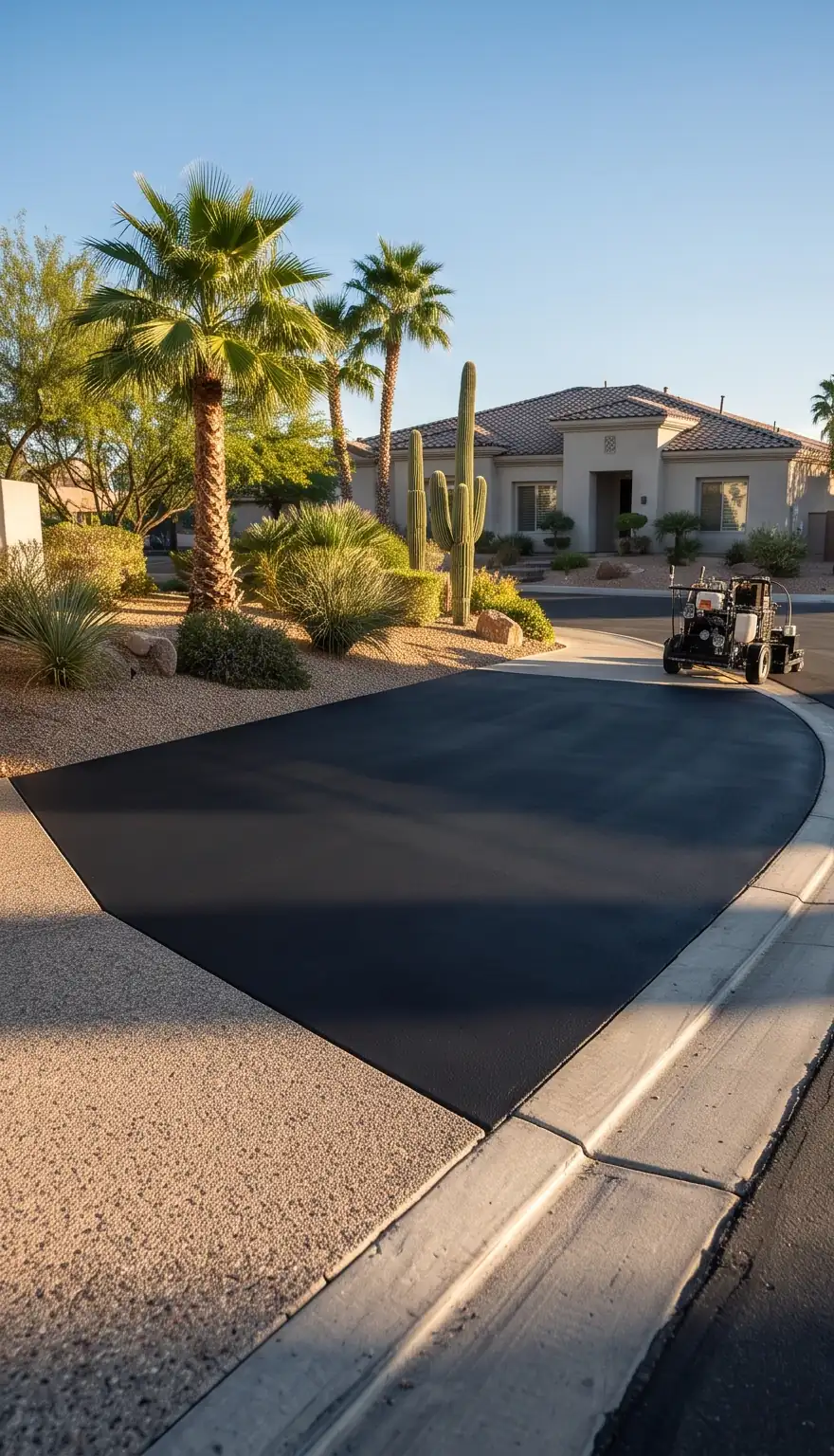
The deep black color is a bonus. The protection is the point. It's why we call sealcoating sunscreen for your pavement. Our sealcoating service page explains exactly what's included.
Myth 2: "New Asphalt Doesn't Need Sealcoat for Years"
New pavement looks perfect, so it's easy to believe it can go a long time without attention.
The truth: new asphalt does need time to cure before its first coat, but in Las Vegas it shouldn't go years unprotected. The sun starts oxidizing the surface right away. A few summers in, an unsealed new driveway is already fading, and the first hairline cracks often follow.
The right approach is to let the surface cure, then get the first sealcoat on before the asphalt has spent too long exposed. We cover the timing in detail in when to sealcoat new asphalt in Las Vegas.
Myth 3: "Sealcoating Fixes Cracks and Potholes"
Some people expect a sealcoat to fill cracks, cover potholes, and generally make all the problems go away.
The truth: sealcoat is a thin protective layer, not a structural repair. It doesn't bridge open cracks, and it definitely doesn't fix potholes or failed base. If you sealcoat over open cracks, they show right back through, often within weeks. If you coat over a pothole or alligator cracking, the failure keeps growing underneath.
The right order is:
- Repair failed areas, including the base where needed.
- Clean out cracks and fill them with hot rubberized crack sealant.
- Then apply the sealcoat over the whole surface.
A contractor who offers to sealcoat over obvious damage without repairing it first is selling you a short-term look, not protection. See our crack and pothole repair service for how repairs are done right.
Myth 4: "The More Coats, the Better"
If one coat protects, three coats must protect three times as much, right?
The truth: more isn't always better. Sealcoat applied too thick, or built up over many cycles without wearing through, can crack, peel, and flake. Excess buildup can also make the surface slick and lead to problems bonding the next coat.
The goal is the right amount, applied evenly, on a properly prepared surface, at the right interval. In Las Vegas, that's typically every 2 to 3 years for most driveways and lots. High-traffic areas like drive-thru lanes and entrances may need extra attention because they wear faster, but that's about targeting wear, not piling on coats everywhere.
Myth 5: "Sealcoating Is Too Expensive to Bother With"
Sealcoating shows up as a real expense, so some owners decide to skip it and deal with problems when they come.
The truth: skipping sealcoat doesn't save money. It moves the spending to bigger, later bills. Properly installed and maintained asphalt lasts 15 to 20 years. Unprotected asphalt in the desert ages much faster, and the path runs from fading to cracking to potholes to an early repave. Every step on that path costs more than the one before it.
Sealcoating, combined with crack sealing, costs a fraction of replacement and is the main reason pavement reaches the long end of its life. For a full breakdown of what drives price, read how much does sealcoating cost.
Bonus Myth: "Any Sealer Works the Same"
Product quality and formulation matter a lot here. Sealers built for mild climates often fade and wear through quickly under Las Vegas UV and heat. We use specialized UV-resistant sealants formulated for desert conditions so each coat lasts the full cycle.
Bonus Myth: "You Can Sealcoat Any Time of Year Without Thinking About It"
Las Vegas gives us a long working season, but timing still matters. Extreme surface heat can make sealer flash dry before it levels. Monsoon storms can wash fresh sealer away before it sets. Spring and fall offer the best conditions, and professional crews plan around surface temperature and the forecast. Read sealcoating in Las Vegas: how to beat the desert heat for the details.
Why These Myths Stick Around
Most sealcoating myths come from two places. Some come from information written for other climates, where asphalt ages slowly and maintenance timing is more forgiving. Others come from bad experiences with jobs that skipped prep: a coat applied over dirt and cracks that peeled off fast leaves people thinking sealcoat doesn't work. In reality, the coat wasn't the problem. The shortcuts were.
What the Truth Looks Like in Practice
Put all of these together and a realistic Las Vegas sealcoating plan looks like this: let new asphalt cure, then seal it. Walk the pavement once a year and seal any new cracks before monsoon season. Repair failed spots properly when they appear. Sealcoat again every 2 to 3 years with a desert-formulated product, applied evenly over a clean surface. It isn't complicated, but each step matters.
How to Spot a Good Sealcoating Recommendation
A trustworthy recommendation usually includes:
- A walk-through before a price
- A clear explanation of which areas need repair first
- Crack sealing with hot rubberized sealant
- A desert-appropriate sealant
- Honest guidance on timing and cure time
- A willingness to tell you when sealcoat isn't the right fix
Common Questions
Is sealcoating worth it on an older driveway?
If the base is still solid, yes. It extends the life of the pavement. If the base has failed widely, repairs or replacement come first.
How long does sealcoat take to dry?
Plan on 24 to 48 hours before driving on it.
How often should I sealcoat in Las Vegas?
Every 2 to 3 years for most driveways and lots, more often for heavy-traffic areas.
Can sealcoat go on in winter?
Often, on mild days. Crack sealing and repairs happen year-round in the valley.
Does sealcoating make asphalt last forever?
No pavement lasts forever, but maintenance helps asphalt reach its full 15 to 20 year life instead of failing early.
Get the Facts About Your Pavement
Seal It Up! Asphalt & Sealcoating is locally owned and serves Las Vegas, Henderson, Summerlin, North Las Vegas, Boulder City, Pahrump, Paradise, and Spring Valley. We'll tell you what your pavement actually needs, myth-free.
Call 702-915-6591 or request a free estimate.
Get a straight answer on your pavement
Call 702‑915‑6591 or request a free estimate. We serve Las Vegas, Henderson, Summerlin, North Las Vegas, Boulder City, Pahrump, Paradise, and Spring Valley. Learn more about our sealcoating service.