Las Vegas heat plays two roles in the life of your pavement. It's the main reason asphalt here ages so fast, and it's one of the trickiest parts of applying a sealcoat correctly. Get both sides right and your driveway or lot stays black and protected through summer after summer. Get either side wrong and the desert wins.
Here's how to think about sealcoating in Las Vegas with the heat in mind: why it matters, when to schedule, how the work should be done, and how to take care of the surface afterward.
Heat Is the Enemy of Unprotected Asphalt
Asphalt is held together by a flexible petroleum binder. The desert attacks that binder from several directions:
- UV breaks it down at the surface through oxidation.
- High surface temperatures speed up oxidation and drive off the lighter oils.
- Day-to-night swings expand and contract the pavement, and brittle asphalt cracks.
On a summer afternoon, an asphalt surface in direct sun gets far hotter than the air around it. That's a lot of heat cycling through your pavement every day. Over a few summers, an unprotected surface goes from black to charcoal to chalky gray, and cracks follow.
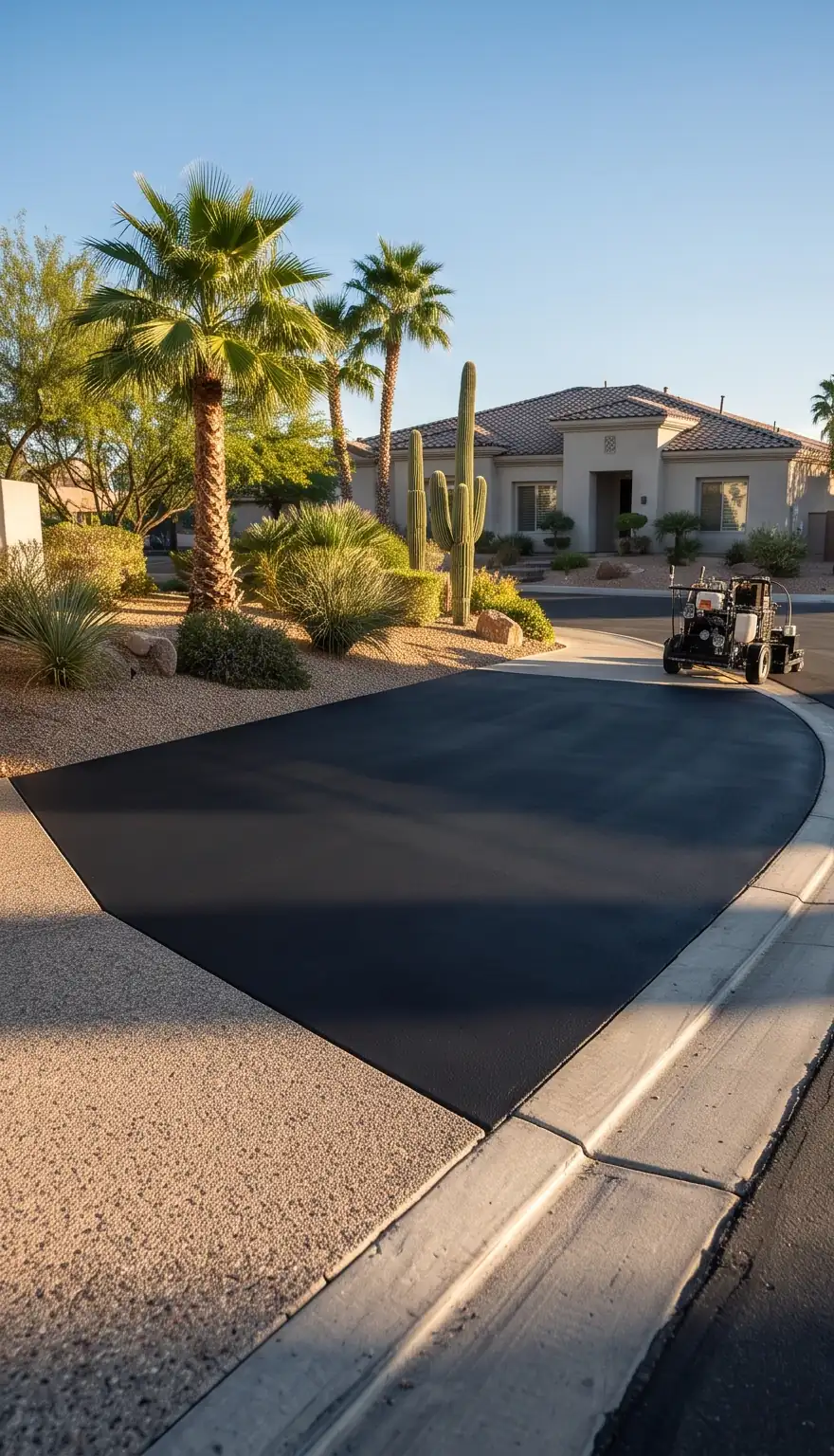
Sealcoating is sunscreen for your pavement. It puts a fresh, UV-resistant layer between the sun and the binder underneath.
Why Generic Sealers Lose to the Desert
Plenty of sealers are designed for places where the main threats are snow and rain. In Las Vegas, those products often wear thin in tire paths and fade long before the next scheduled coat. That defeats the purpose.
We use specialized UV-resistant sealants and materials formulated for desert conditions. It's the difference between a coat that lasts the full 2 to 3 year cycle here and one that looks tired after its first summer.
Heat Makes Application Tricky
Warm conditions help sealer cure. That's an advantage. But extreme surface heat can cause problems during application:
- Flash drying. Sealer that hits a scorching surface can dry before it levels, leaving streaks, lap marks, and thin areas.
- Poor bonding. If the sealer skins over too fast, it may not bond as well to the surface.
- Uneven appearance. Areas that dry at different rates can look patchy.
Professional crews manage this by watching surface temperature, adjusting timing, and applying the sealer so it has a chance to level and bond before it sets.
The Best Times to Sealcoat in Las Vegas
Spring and fall offer the most comfortable conditions: warm enough to cure well, cool enough to avoid the worst surface heat, and usually before or after the main monsoon storms.
Fall in particular is a strong window. The pavement has just taken a full summer of UV, cracks are often at their widest and easiest to seal, and getting protection on before winter's colder nights helps prevent more cracking. Our article on why September is the last good window to sealcoat your driveway digs into this.
Summer work is possible with careful planning around surface temperatures and storms. Many crews start early in the day to avoid peak heat.
Winter in the valley is mild compared to most of the country. Crack sealing and repair happen year-round, and sealcoating can often be scheduled on warmer days.
Watch Out for Monsoon Season
From roughly midsummer into early fall, monsoon storms can roll in quickly. Fresh sealer needs time to set before it gets rained on. Professional crews watch the forecast closely and reschedule if a storm threatens, rather than risk sealer washing into the gutter.
Monsoon season is also exactly why cracks need sealing before summer. Those storms drive water into every open crack and down to the base.
Prep Matters Even More in the Heat
Heat doesn't forgive shortcuts. On a hot surface, sealer bonds only as well as the surface underneath allows:
- Clean thoroughly. Desert sand and dust collect fast and prevent bonding.
- Treat oil spots. Heat makes oil stains even softer and harder to coat over.
- Seal cracks with hot rubberized sealant. It stays flexible through the big temperature swings.
- Repair failed areas first. Heat softens weakened pavement and makes failures spread faster.
See the complete sequence in inside the professional sealcoating process.
Aftercare in Hot Weather
After the coat goes down, a few habits protect it while it cures:
- Stay off it for 24 to 48 hours. Heat helps it cure, but early traffic leaves tire marks.
- Avoid turning wheels while stopped. Power steering turns scuff fresh sealcoat, especially on hot days.
- Keep sprinklers off. Water on fresh sealer can leave marks and slow curing.
- Watch heavy point loads. Trailer jacks, kickstands, and dumpsters can dent softened surfaces in summer heat.
How Often to Reseal in Las Vegas
For most driveways and lots, every 2 to 3 years. High-traffic commercial lots, drive-thru lanes, and entrances often need it sooner. A quick yearly look at the color and cracks tells you a lot: if the surface is fading toward gray or cracks are opening, it's time.
For more on lifespan, read how long does sealcoating really last.
A Year in the Life of Las Vegas Pavement
It helps to think about the whole year, not just the day the sealer goes down:
- Spring: comfortable temperatures and dry weather. A great time to seal cracks and sealcoat before summer.
- Early summer: heat builds and UV peaks. Unprotected asphalt starts oxidizing hard.
- Monsoon season: short, heavy storms push water into every open crack. This is when base damage begins.
- Fall: heat breaks, cracks are at their widest, and conditions are ideal for repairs and sealcoat.
- Winter: colder nights, especially in Summerlin and Pahrump, widen any crack left open. Repairs still happen year-round in the valley.
The goal is to have cracks sealed and the surface protected before the two hardest stretches: peak summer UV and monsoon season. Timing your maintenance around that calendar gets the most out of every coat.
Heat and Different Property Types
- Homeowners see heat damage first along the street edge and in tire paths.
- HOAs see it across shared lots and community streets with full sun exposure.
- Businesses see it fastest in drive-thru lanes and entrances.
- Industrial properties see heat-related rutting in truck lanes.
Each needs a slightly different schedule, and we'll help you set the right one.
Common Questions
Can you sealcoat in July?
Yes, with careful timing around surface temperature and storms. Spring and fall are more comfortable windows.
Will heat make my sealcoat soft?
Cured sealcoat handles normal summer heat. Fresh sealcoat needs its full cure time before heavy use.
Does sealcoat make pavement hotter?
Fresh asphalt and fresh sealcoat are both dark surfaces. The purpose of sealcoat is protecting the asphalt from UV, water, and fluids.
How do I know the sealer is right for the desert?
Ask. A contractor should be able to tell you their sealant is UV-resistant and suited to Las Vegas conditions.
What if I missed the fall window?
Call anyway. Crack sealing and repair happen year-round here, and many winter days work for sealcoating.
Beat the Heat Before Next Summer
Seal It Up! Asphalt & Sealcoating is locally owned and serves Las Vegas, Henderson, Summerlin, North Las Vegas, Boulder City, Pahrump, Paradise, and Spring Valley. Learn more about our sealcoating service, then call 702-915-6591 or request a free estimate.
Get a straight answer on your pavement
Call 702‑915‑6591 or request a free estimate. We serve Las Vegas, Henderson, Summerlin, North Las Vegas, Boulder City, Pahrump, Paradise, and Spring Valley. Learn more about our sealcoating service.