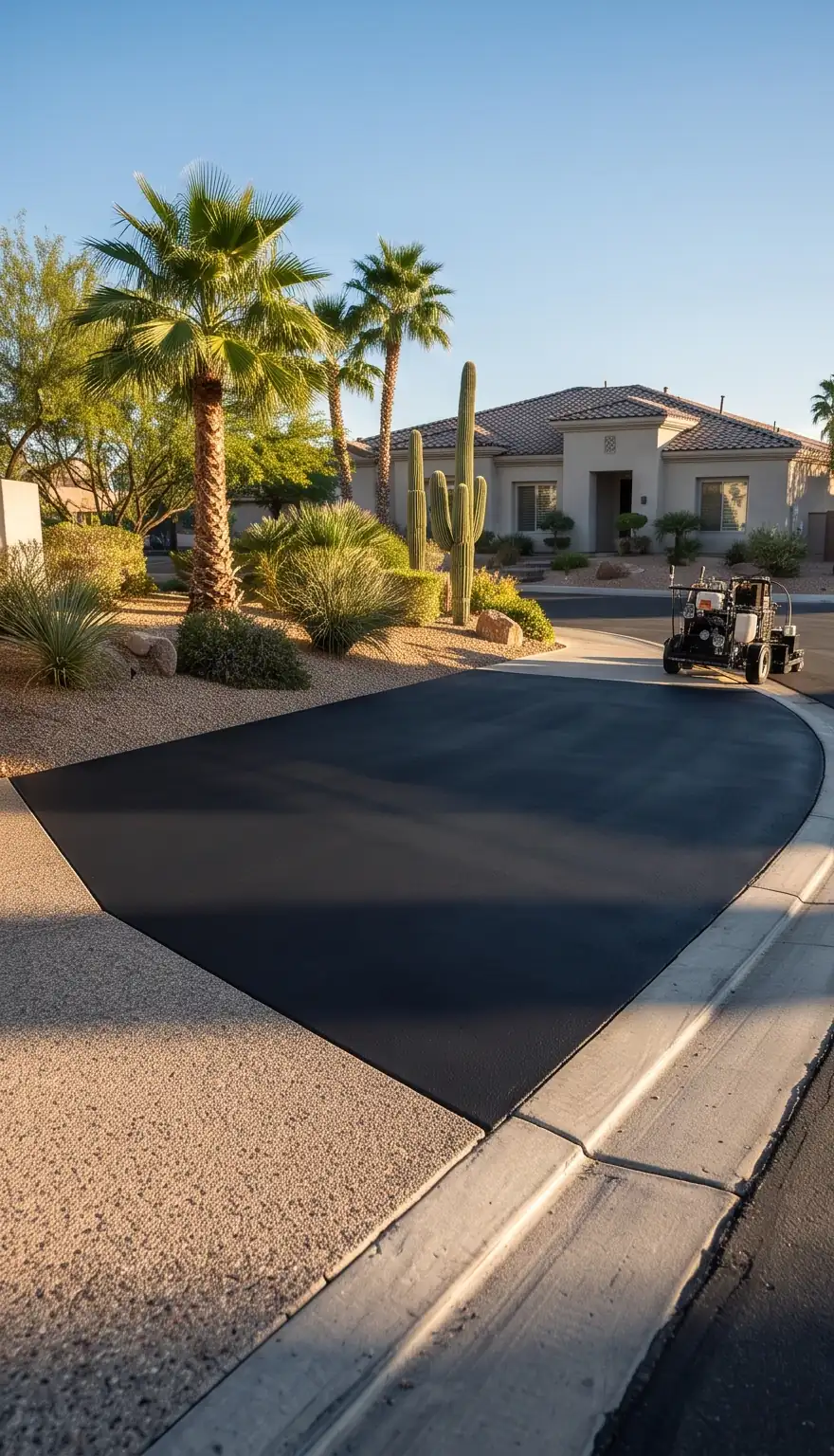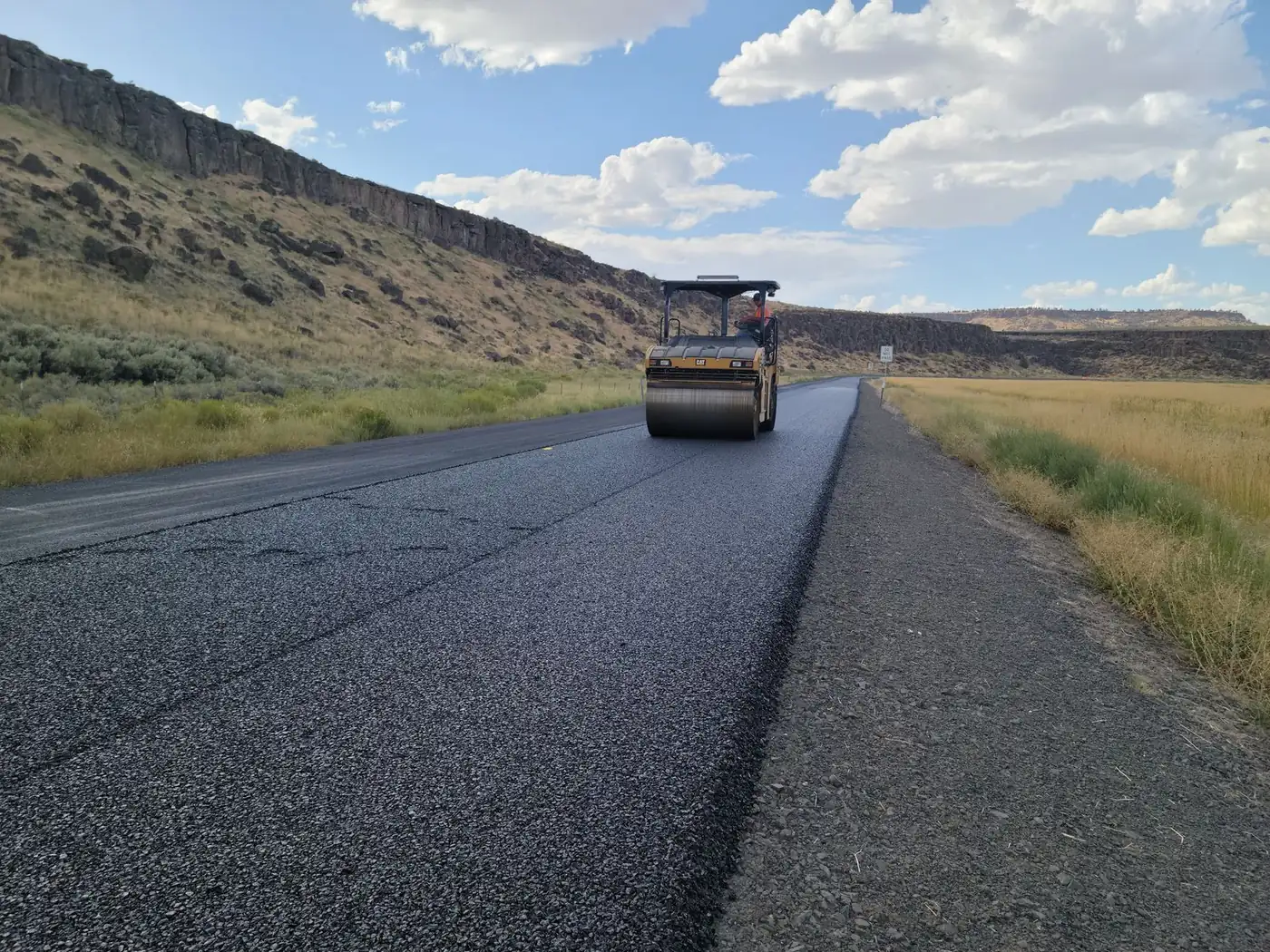
There's nothing like a freshly paved driveway or parking lot. The surface is deep black, smooth, and tight. It's natural to assume something that new doesn't need anything for years.
That assumption is where a lot of Las Vegas pavement starts losing ground. New asphalt does need time before its first sealcoat, but it doesn't need years. Get the timing right and you lock in that fresh surface. Get it wrong in either direction and you give some of its life away.
Here's how to think about the first sealcoat on new asphalt in the desert.
Why New Asphalt Needs Time to Cure
Hot mix asphalt contains light oils that keep it workable during paving. After it's laid and compacted, those oils need time to work their way out of the surface as the asphalt cures and hardens. During that period, the surface is a little softer and more flexible than it will be later.
If you seal it too soon, you trap those oils under the coating. The asphalt stays soft longer, the sealcoat can have trouble bonding properly, and the surface is more prone to scuffing and marking. That's why reputable contractors don't sealcoat brand-new pavement right after it's laid.
Why Waiting Too Long Is the Bigger Mistake
The more common problem in Las Vegas is the opposite: waiting far too long. A new driveway looks perfect, so the homeowner forgets about it. A new lot looks great, so the property manager moves on to other priorities. A few summers go by.
Meanwhile, the desert gets to work. UV breaks down the binder at the surface. Summer heat dries the asphalt out. By the time someone notices the color fading from black to charcoal, the surface has already started oxidizing, and the first hairline cracks often aren't far behind.
New asphalt isn't immune to the sun. It's just starting with a full tank. The first sealcoat is about protecting that while it's still full.
So When Is the Right Time?
Industry guidance generally calls for letting new asphalt cure for several months before the first sealcoat. Heat speeds curing, which works in our favor in Las Vegas, but every project is different. Mix, thickness, season, shade, and traffic all play a part.
Rather than relying on a calendar date, we look at the surface itself. A few signs the pavement is ready:
- The surface has firmed up and doesn't scuff easily under turning tires
- The deep, oily black of fresh paving has started to settle into a more uniform color
- Water beads less and soaks in a bit more at the surface
- There's no softness or marking where vehicles park and turn
For most Las Vegas properties, the goal is to get that first protective coat on within the first year or so, and before the asphalt goes through a full summer unprotected if the curing timeline allows.
What the First Sealcoat Does
The first coat on new asphalt does a few important things:
- Blocks UV before the binder starts breaking down
- Seals the surface so monsoon water sheds instead of soaking in
- Resists oil and fuel that would otherwise soften the fresh asphalt
- Keeps the color deep black and uniform, which matters for curb appeal and HOA standards
From there, the standard Las Vegas cycle kicks in: reseal every 2 to 3 years, more often for high-traffic commercial lots, with crack sealing as cracks appear. That's how properly installed asphalt reaches its full 15 to 20 year life.
Caring for New Asphalt Before the First Coat
The months between paving and the first sealcoat matter. A few habits protect new pavement:
- Wait before driving on it. Foot traffic is fine the same day. Give it 48 to 72 hours before vehicle traffic.
- Avoid sharp turns in place. Turning the steering wheel while stopped scuffs soft asphalt, especially on hot days.
- Watch heavy loads. Trailers, RVs, dumpsters, and moving trucks can leave dents in new asphalt during summer heat.
- Protect from kickstands and jacks. Point loads sink into soft asphalt. Put a board under them.
- Clean up spills quickly. Fuel and oil soften fresh asphalt.
- Keep water moving. Make sure sprinklers and downspouts don't soak the edges.
Commercial Lots and HOAs
For new commercial and HOA pavement, plan the first sealcoat along with the first restriping cycle. Initial striping on new asphalt holds up for a while, but pairing the first sealcoat with fresh line striping keeps the lot looking new and makes the job efficient. Getting it on the maintenance calendar from day one prevents the lot from quietly drifting past its ideal window.
If you're planning new paving, our asphalt paving page explains how we build the base and surface to last.
What If Your "New" Asphalt Is Already a Few Years Old?
If your pavement was installed a few years ago and has never been sealed, don't worry about having missed a window. Look at it honestly:
- Still mostly black with no cracks: seal it now. You're still in good shape.
- Fading gray with some hairline cracks: seal the cracks and coat it soon.
- Gray, raveling, and cracked in places: crack sealing and possibly some repair, then sealcoat.
Our article on signs your driveway needs asphalt repair walks through each stage.
A Simple First-Year Timeline
Here's how the first year of a new Las Vegas driveway or lot usually looks when it's handled well:
- Day one: foot traffic only. Keep vehicles off.
- First few days: light vehicle traffic after 48 to 72 hours. No sharp turns in place.
- First few weeks: watch for scuffs on hot afternoons and keep heavy loads, trailers, and dumpsters off the surface.
- First several months: let the surface cure. Clean up spills promptly and keep sprinklers off the edges.
- When the surface is ready: apply the first sealcoat, and restripe commercial lots at the same time.
- Every 2 to 3 years after: reseal, and seal any new cracks as they appear.
Following that timeline gives new asphalt the best possible start in the desert.
Common Questions About Sealing New Asphalt
Can I sealcoat a brand-new driveway right away to keep it black?
No. New asphalt needs time to cure. Sealing too early traps oils and can leave the surface soft and prone to marking.
Will my new driveway turn gray without sealcoat?
Yes. In Las Vegas, UV and heat start oxidizing the surface within the first few summers.
Does new asphalt need crack sealing?
Usually not at first. But small cracks can appear at edges and seams over time, and they should be sealed as soon as they show up.
Is the first sealcoat different from later ones?
The process is similar. The main difference is that new asphalt rarely needs much prep or repair, so the first coat is usually straightforward.
Get the Timing Right
If you've recently paved, or you're about to, we'll look at your surface and tell you when the first coat makes sense. Seal It Up! Asphalt & Sealcoating is locally owned, uses UV-resistant sealants formulated for desert conditions, and serves Las Vegas, Henderson, Summerlin, North Las Vegas, Boulder City, Pahrump, Paradise, and Spring Valley.
Call 702-915-6591 or request a free estimate and protect your new pavement before the sun takes its first bite.
Get a straight answer on your pavement
Call 702‑915‑6591 or request a free estimate. We serve Las Vegas, Henderson, Summerlin, North Las Vegas, Boulder City, Pahrump, Paradise, and Spring Valley. Learn more about our sealcoating service.