Every property with asphalt eventually faces the same choice. The pavement is showing its age, and you have to decide: protect what's there, or tear it out and start over?
In hot, dry climates like Las Vegas, the answer matters more than almost anywhere else, because the sun ages pavement fast and the gap between "worth saving" and "too far gone" closes quickly. Here's how to think about sealcoating versus repaving, and why maintenance is usually the smarter money move as long as the pavement is still sound.
What Each Option Actually Is
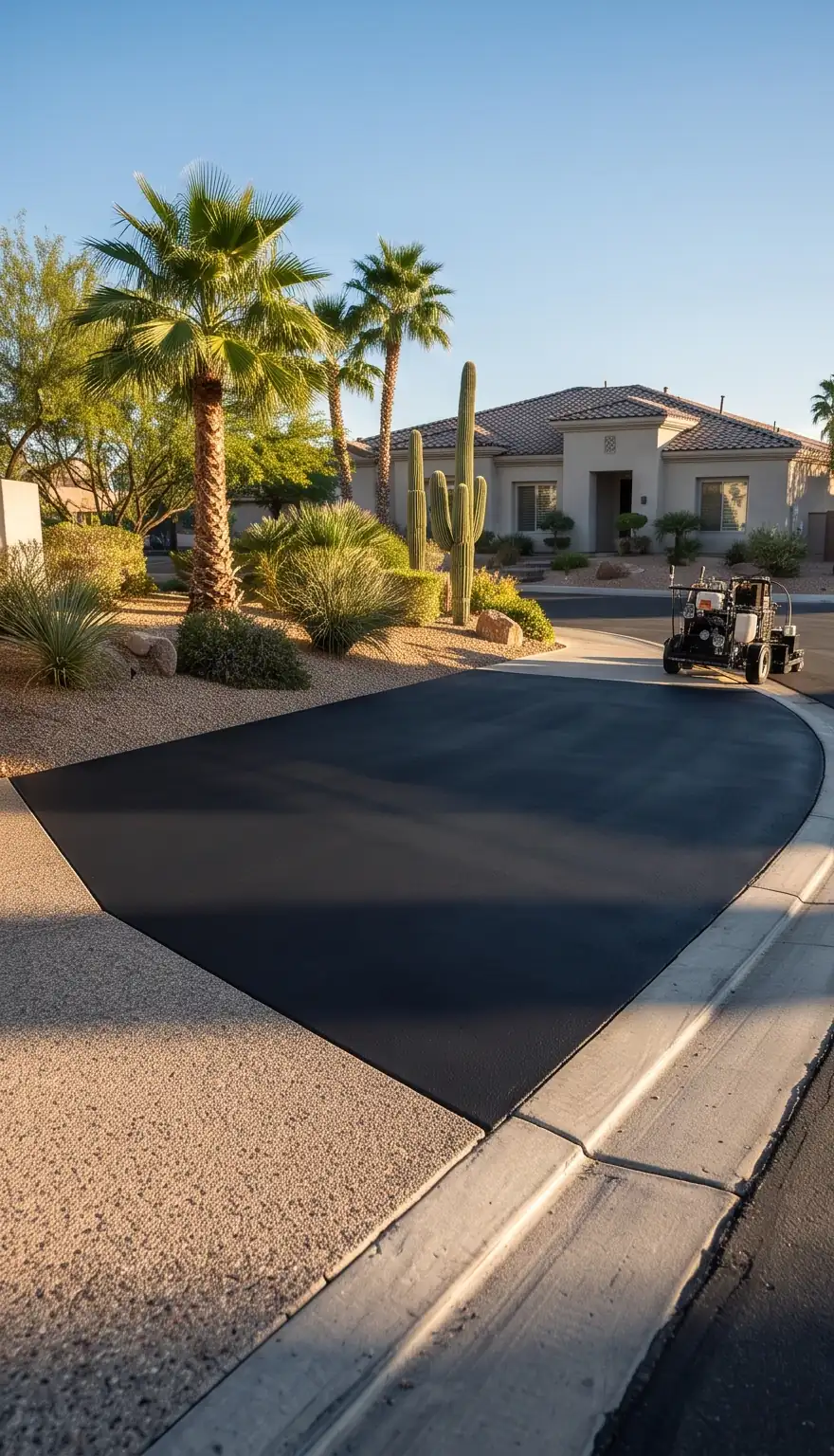
Sealcoating is a protective coating applied over existing asphalt after cracks are sealed and failed spots are repaired. It blocks UV, sheds water, resists oil and fuel, and restores the deep black color. It doesn't add structural strength. It protects the strength that's already there. See our sealcoating service.
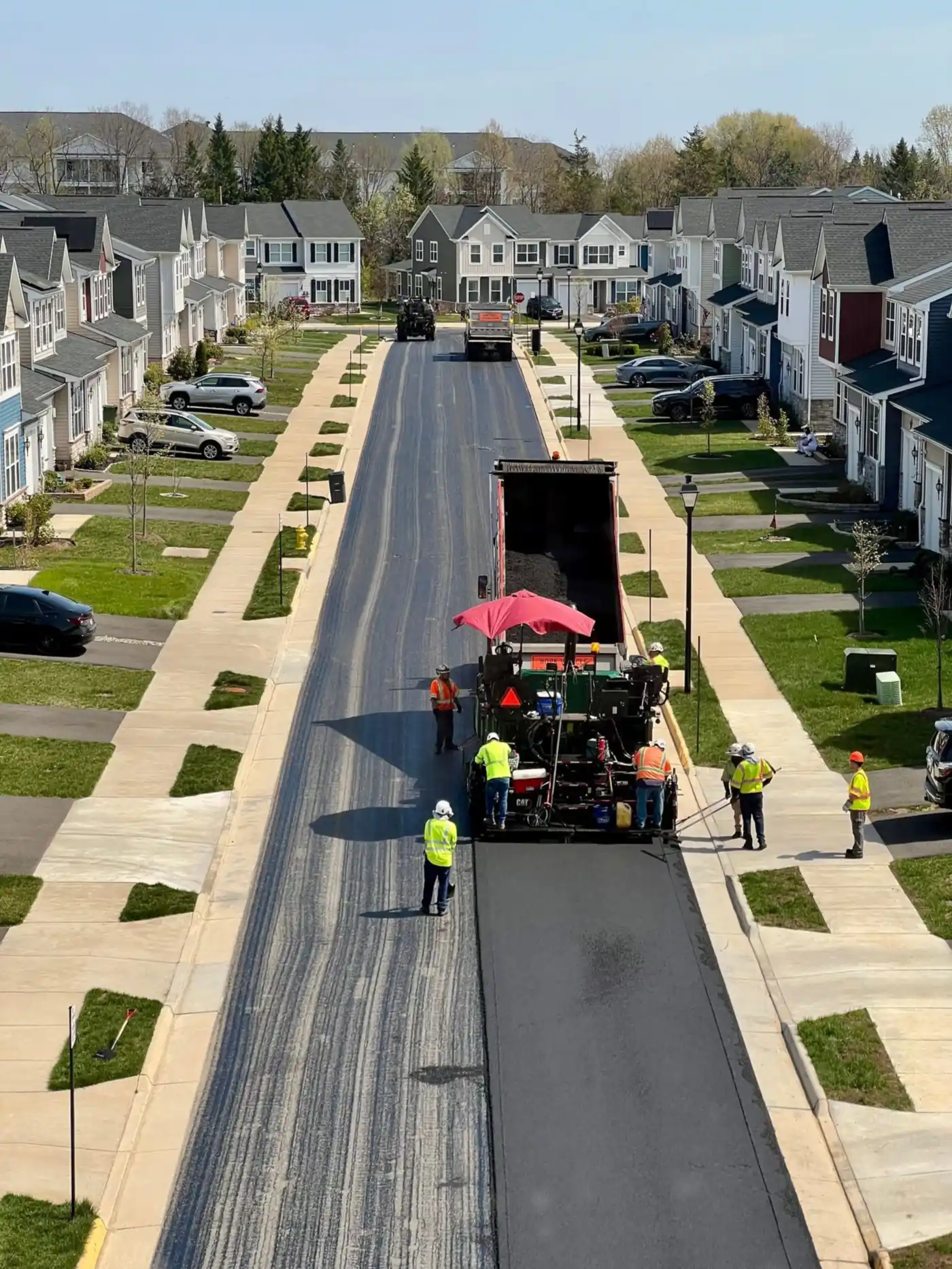
Repaving means putting down new asphalt, either as an overlay on top of the existing surface or as a full replacement where the old pavement is removed, the base is repaired or rebuilt, and new asphalt is laid. See our asphalt paving service.
Why the Desert Changes the Math
In hot, dry climates, the main enemy of asphalt is the sun:
- UV oxidizes the binder that holds asphalt together.
- Extreme surface heat dries the asphalt out and drives off its lighter oils.
- Big day-to-night temperature swings crack brittle pavement.
- Short, heavy storms like the Las Vegas monsoon push water into those cracks and soften the base.
Unprotected asphalt here moves from black to gray to cracked to failing much faster than in milder climates. That speed cuts both ways. It makes repaving come sooner if you do nothing. And it makes the protection from sealcoating pay off faster, because you're blocking the main cause of damage.
The Cost Comparison
Sealcoating, combined with crack sealing, costs a fraction of repaving. Repaving is one of the largest exterior expenses a property faces, whether it's a home driveway or a commercial lot.
Properly installed and maintained asphalt lasts 15 to 20 years. Regular sealcoating every 2 to 3 years is a major reason pavement reaches that range. Every cycle of protection pushes the repaving bill further into the future. Skip the protection, and that bill shows up years early.
So the real comparison isn't "sealcoat cost vs. repave cost." It's "a series of small, predictable maintenance costs" versus "a large replacement cost that arrives much sooner than it had to."
When Sealcoating Is the Smart Move
Sealcoating is the right call when the pavement is structurally sound:
- The surface is fading but still holds its shape
- Cracks are hairline to moderate and can be sealed
- There are only isolated failed spots that can be repaired
- Water drains off reasonably well
- There's no widespread rutting or alligator cracking
At this stage, every dollar spent on sealcoat and crack sealing protects pavement that still has years of life in it.
When Repaving Is the Smart Move
Repaving makes more sense when maintenance would just be chasing failures:
- Alligator cracking covers large areas
- Potholes keep reopening
- The surface ruts or shoves under traffic
- Water pools across big sections
- The base has failed under much of the pavement
Sealcoating over that is a cosmetic fix on a structural problem, and the problems will show through quickly. Our guide to resurfacing vs. replacement helps sort out which kind of repaving fits.
The Middle Path
Plenty of pavement falls between those two lists. Most of the surface is sound, but a few areas have failed. The smart move there is usually targeted full-depth repairs of the failed sections, followed by crack sealing and sealcoat over the whole surface. You fix what's broken without rebuilding what isn't.
The Hidden Costs of Waiting
When owners delay maintenance hoping to "just repave later," a few things happen:
- Cracks widen and turn into repair areas.
- Potholes create trip hazards and vehicle damage.
- Repeat patching adds up.
- The pavement crosses from "maintainable" to "needs replacement" sooner.
We break these down in the asphalt maintenance budget items homeowners miss and, for commercial properties, the hidden costs of skipping asphalt maintenance.
What a Smart Long-Term Plan Looks Like
- Pave it right. Proper grading, a compacted aggregate base, and well-compacted hot mix asphalt.
- Let it cure, then seal it. Get the first sealcoat on before the sun takes its toll.
- Seal cracks as they appear. Hot rubberized sealant keeps water out of the base.
- Reseal every 2 to 3 years. Tighter for high-traffic commercial areas.
- Repair failures properly. Fix the base, not just the hole.
- Repave when the pavement has truly earned it, at the end of a full, long life.
Two Owners, Same Driveway
Picture two neighbors in Henderson who had their driveways paved the same year by the same crew.
The first neighbor lets the new asphalt cure, gets it sealed, and then reseals every few years. When hairline cracks show up along the garage edge, they get sealed that season. Fifteen years later, the driveway is still doing its job, and the owner is just starting to think about when replacement might make sense.
The second neighbor never seals it. A few summers in, it's gray. A few more and it's cracked along the edges and in the tire paths. After some monsoon seasons, a pothole opens near the street and gets patched with bagged cold patch, then patched again. Well before the first neighbor even starts thinking about it, the second neighbor is paying to replace the whole driveway.
Same asphalt, same climate, same starting point. The only difference was maintenance.
Thinking About It Like Any Other Asset
Nobody waits for a roof to leak through the ceiling before doing anything, or skips oil changes until the engine seizes. Pavement is the same kind of asset: a large up-front investment that lasts much longer with small, regular care. The difference is that pavement damage is easy to ignore until it's obvious, and by then the cheap options are gone.
What About Appearance?
Owners sometimes repave because the pavement looks bad, not because it has failed. In many of those cases, crack sealing and a fresh sealcoat give a dramatic visual improvement for far less money. A deep black, freshly striped surface looks close to new. See how sealcoating improves curb appeal.
Common Questions
Can sealcoating replace repaving entirely?
No pavement lasts forever. Sealcoating extends asphalt's life so repaving happens much later.
Is it ever too late to start sealcoating?
If the base has widely failed, yes. Repairs or repaving come first, then maintenance starts on the new surface.
Should I sealcoat right after repaving?
Not immediately. New asphalt needs to cure first, then it should get its first coat.
How do I know which one I need?
A walk-through. We check the surface and the signs of base failure, and tell you honestly.
What's the biggest mistake owners make?
Waiting too long to start maintenance, then paying for repaving years early.
Make the Smart Money Move
Seal It Up! Asphalt & Sealcoating is locally owned and serves Las Vegas, Henderson, Summerlin, North Las Vegas, Boulder City, Pahrump, Paradise, and Spring Valley. We'll tell you whether your pavement is a maintenance candidate or truly needs repaving, with no upsell either way.
Call 702-915-6591 or request a free estimate.
Get a straight answer on your pavement
Call 702‑915‑6591 or request a free estimate. We serve Las Vegas, Henderson, Summerlin, North Las Vegas, Boulder City, Pahrump, Paradise, and Spring Valley. Learn more about our sealcoating service.