When a driveway or parking lot reaches the point where sealcoat and crack filling aren't enough, property owners usually hear two words: resurfacing and replacement. Both put new asphalt on top. Both give you a fresh black surface. But they're very different jobs with very different price tags, and picking the wrong one either wastes money or buys you a surface that fails early.
The deciding factor is almost never what you can see on top. It's what's underneath.
What Resurfacing Means
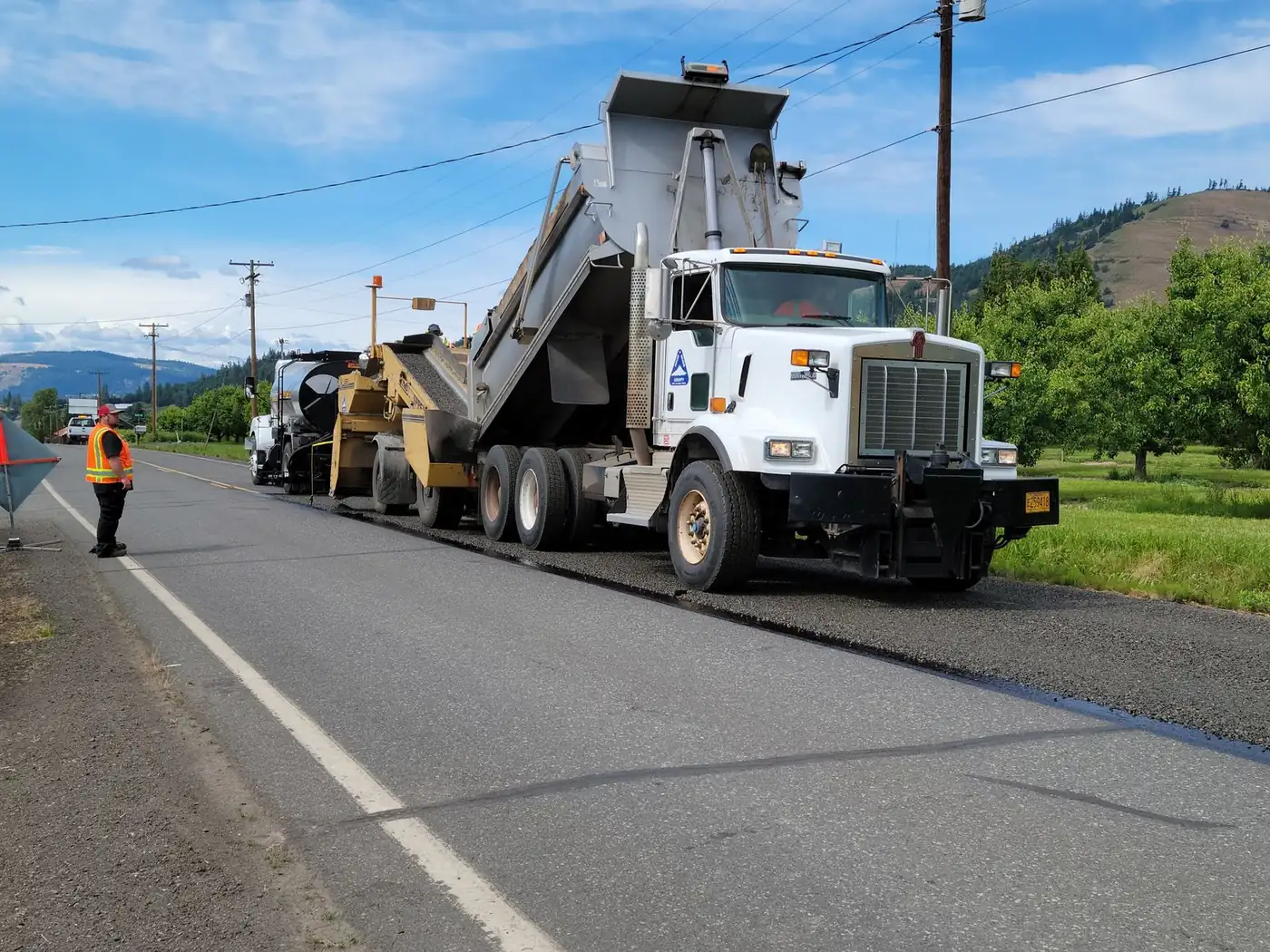
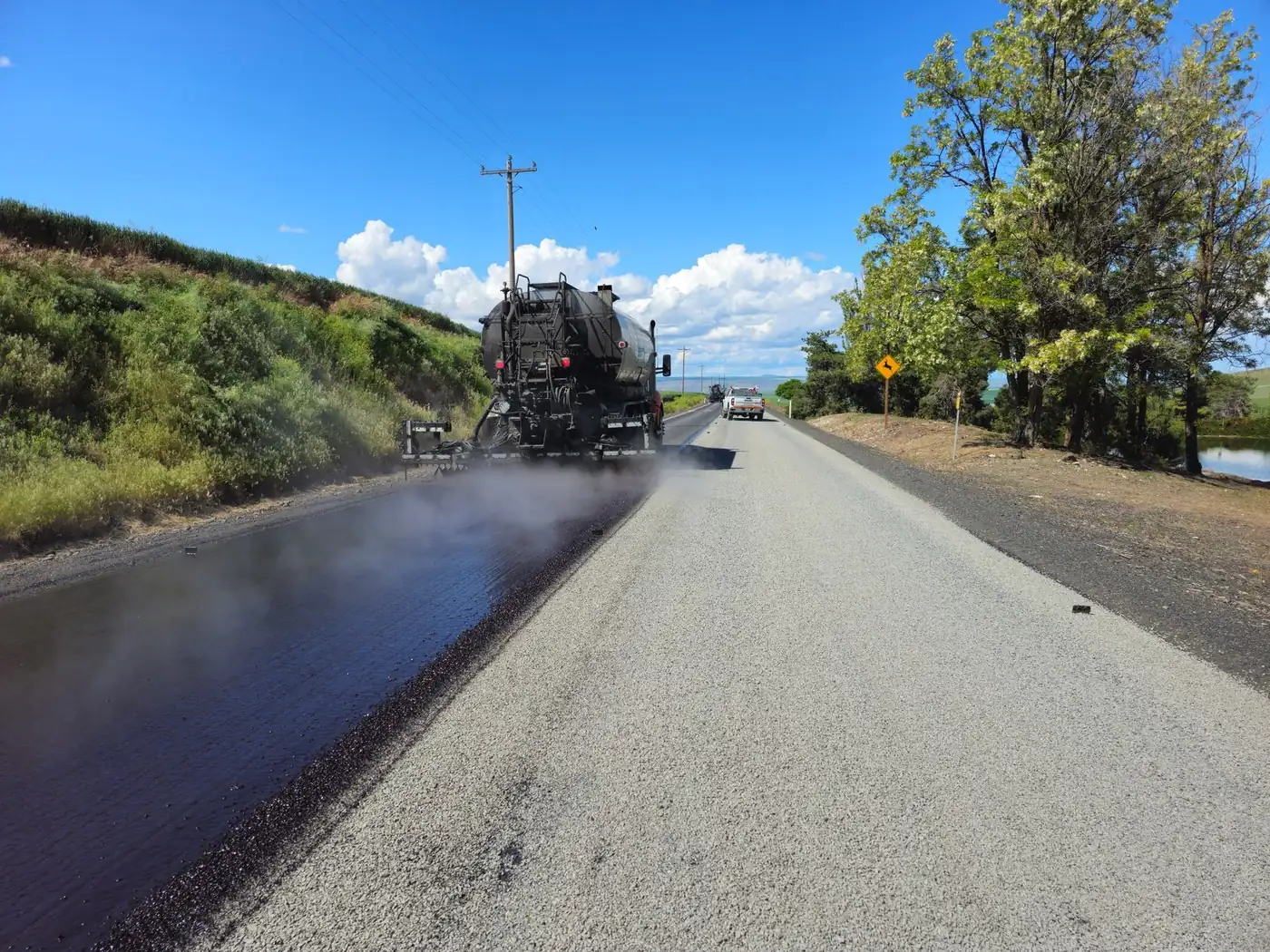
Resurfacing, often called an overlay, adds a new layer of hot mix asphalt over the existing pavement. The old asphalt stays in place and becomes part of the foundation for the new layer. Before the overlay goes down, the existing surface is cleaned, cracks are sealed, failed spots are repaired, and sometimes the surface is milled down to keep heights at garages, gutters, and sidewalks where they need to be.
Done right, resurfacing gives you a new wearing surface for less than a full replacement, because you're not removing and rebuilding everything below.
What Replacement Means
Replacement, sometimes called full-depth reconstruction, removes the old asphalt entirely. The base underneath is inspected and repaired or rebuilt, the site is regraded for drainage, a compacted aggregate base is installed or restored, and new hot mix asphalt is laid and compacted.
It costs more because it's more work, but it fixes problems an overlay can't touch. You can read about our full process on the asphalt paving page.
The Rule That Decides It: Is the Base Sound?
An overlay is only as good as what it sits on. If the existing pavement and the base below it are structurally sound, an overlay can work well. If the base has failed, new asphalt on top will crack and fail in the same places, often quickly. This is called reflective cracking: the old cracks telegraph right up through the new layer.
So the first question isn't "how bad does it look?" It's "how solid is the foundation?"
Signs Resurfacing Can Work
Resurfacing is usually a candidate when:
- The surface is oxidized, gray, and rough, but holds its shape
- Cracking is mostly surface-level, not widespread alligator cracking
- Potholes are few and isolated, and can be properly repaired first
- The pavement drains reasonably well, with no major low spots
- Grades and heights at garages, curbs, and drains allow for added thickness, or milling can fix them
Signs Replacement Is the Better Value
Replacement usually makes more sense when:
- Alligator cracking covers large areas of the surface
- Potholes keep reopening in the same spots
- The surface ruts, shoves, or sinks under traffic, especially in summer heat
- Water pools across the pavement after storms
- The original base was too thin or poorly compacted for the traffic it carries
- Previous overlays have stacked up and cracked through again
In those cases, an overlay just puts a new face on the same problems.
Why Las Vegas Changes the Equation
Two desert factors push this decision one way or the other:
Monsoon water and drainage. Pavement that pools water during summer storms has a drainage problem. An overlay doesn't change the grade much. If water sits on the surface or runs under the edges, those areas will keep failing. Replacement lets the grade be corrected.
Heat and heavy loads. Hot asphalt softens. On lots with heavy trucks, like warehouses and logistics yards in North Las Vegas, a thin or weak section ruts and shoves in summer. If the base can't carry the load, adding a thin overlay won't fix it. See how heavy traffic impacts asphalt.
The Middle Ground: Targeted Repair Plus Overlay
Many properties fall in between. Most of the pavement is sound, but a few areas have failed: a soft spot near a dumpster pad, alligator cracking at an entrance, potholes along one edge. In those cases, the best value is often to cut out and rebuild the failed areas full-depth, then overlay or sealcoat the whole surface.
That approach fixes the real problems where they are without paying to rebuild pavement that's still doing its job.
Don't Forget Maintenance Still Matters
Whichever way you go, the new surface faces the same desert. Once it's cured, plan on sealcoating it and sealing cracks as they appear. Properly installed and maintained asphalt lasts 15 to 20 years. Skipping maintenance on a new overlay or a new lot shortens that, just like it did the first time.
For timing on fresh asphalt, read when to sealcoat new asphalt in Las Vegas. For a comparison of sealcoat and overlay as maintenance options, see sealcoating vs. overlay.
How We Make the Call
When we look at pavement for a resurfacing or replacement decision, we check:
- Crack type and pattern. Surface cracks versus alligator cracking.
- Failed areas. How many, how big, and whether they keep coming back.
- Drainage. Where water goes during storms, and where it pools.
- Deformation. Ruts, shoving, dips, and soft spots.
- Heights and transitions. Garages, gutters, sidewalks, and drains.
- Traffic. Cars, delivery trucks, or heavy industrial loads.
Then we tell you plainly which option makes sense and why. If resurfacing will do the job, we won't push replacement. If an overlay would fail, we'll explain why before you spend money on it.
Questions to Ask Before You Approve an Overlay
If a contractor recommends resurfacing, a few questions will tell you whether the recommendation is solid:
- What happens to the cracks first? Cracks should be cleaned and sealed before an overlay, or they reflect through quickly.
- Which areas will be cut out and rebuilt? Any spot with alligator cracking or recurring potholes needs full-depth repair before new asphalt goes over it.
- How will heights work at the garage, gutters, and drains? Adding thickness without a plan creates lips, trip edges, and drainage problems.
- Will the surface be milled? Milling removes some of the old surface so the new layer ties in cleanly at transitions.
- How thick is the new layer? Too thin, and it won't hold up to the traffic it carries.
- What's the maintenance plan after? A new overlay still needs sealcoat once it cures.
If the answers are vague, or if nobody mentions the base at all, slow down. A good recommendation always starts with what's underneath.
Picture Two Driveways
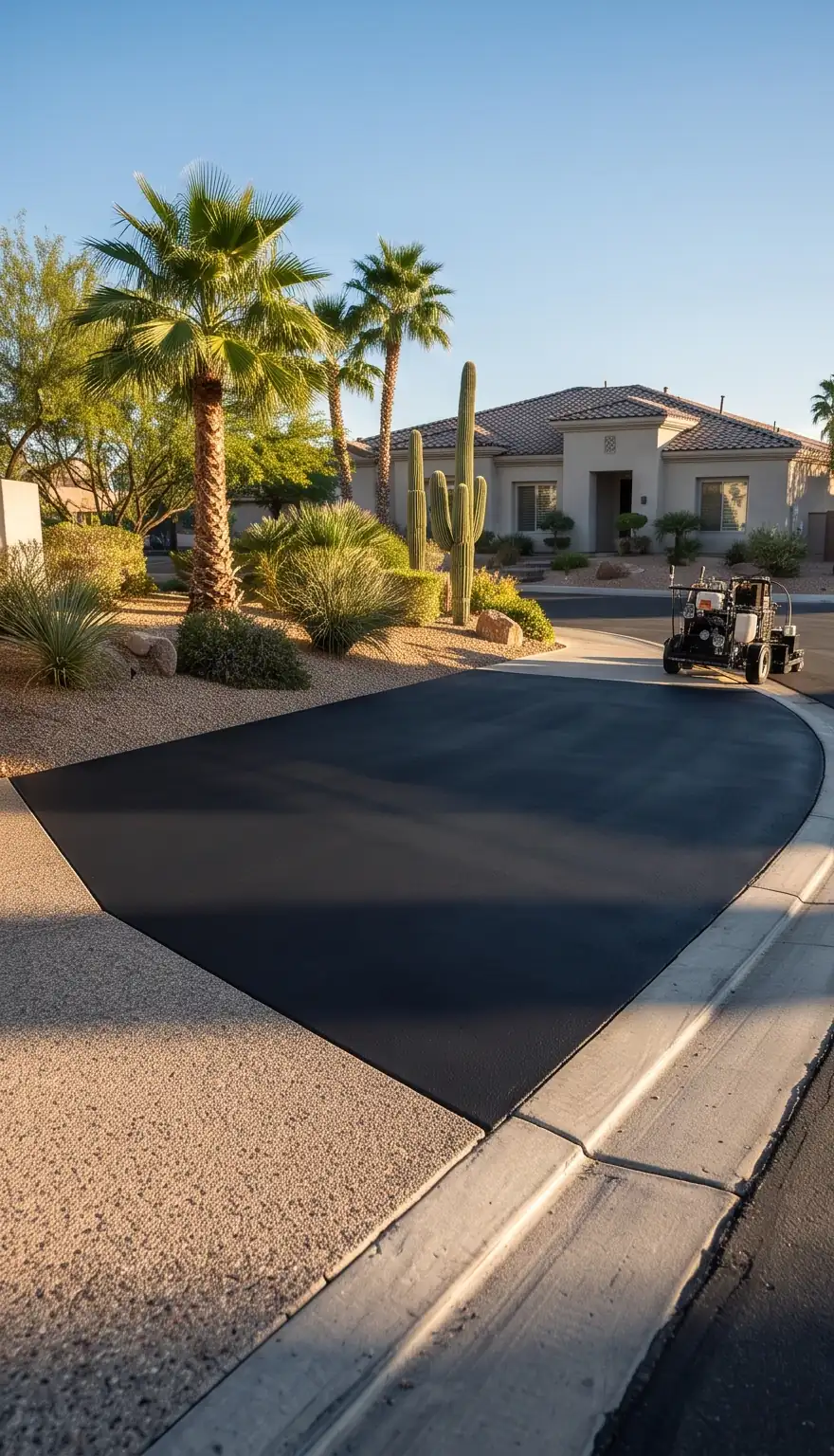
Picture two gray Las Vegas driveways that look about the same from the street. The first has surface cracks and a few loose stones, but no soft spots and no standing water. The second has alligator cracking in both tire paths, a pothole near the street, and a puddle that sits for a day after every storm.
The first one is a resurfacing or even a crack-seal-and-sealcoat candidate. The second one needs the failed areas rebuilt and the drainage corrected, and depending on how widespread the failure is, it may need full replacement. Same look on top, completely different answer underneath.
Common Questions
Is resurfacing always cheaper?
Up front, usually. But an overlay on a failed base that cracks through in a short time isn't cheaper in the long run.
How long does an overlay last?
It depends on the base, drainage, traffic, and maintenance. A good overlay on a sound base, kept sealed, can give you many years of service.
Can my driveway be resurfaced if it's lower than the garage slab?
Heights matter. Sometimes milling solves it. Sometimes replacement is needed to keep transitions smooth.
Do I need to sealcoat a new overlay?
Yes, once it cures. It faces the same UV and heat as any other asphalt.
Get an Honest Recommendation
Seal It Up! Asphalt & Sealcoating serves homeowners, HOAs, and businesses across Las Vegas, Henderson, Summerlin, North Las Vegas, Boulder City, Pahrump, Paradise, and Spring Valley. We'll look below the surface and give you a straight recommendation.
Call 702-915-6591 or request a free estimate.
Get a straight answer on your pavement
Call 702‑915‑6591 or request a free estimate. We serve Las Vegas, Henderson, Summerlin, North Las Vegas, Boulder City, Pahrump, Paradise, and Spring Valley. Learn more about our asphalt paving service.