Both of these services leave you with a fresh, black surface. Both are far less expensive than tearing out pavement and starting over. So it's easy to see why property owners mix them up, and why they sometimes get recommended interchangeably.
They're not interchangeable. Sealcoating and overlays solve different problems at different stages of pavement life. Picking the right one saves money. Picking the wrong one either wastes money on more than you need or buys a fix that won't hold. Here's how to tell them apart.
What Sealcoating Is
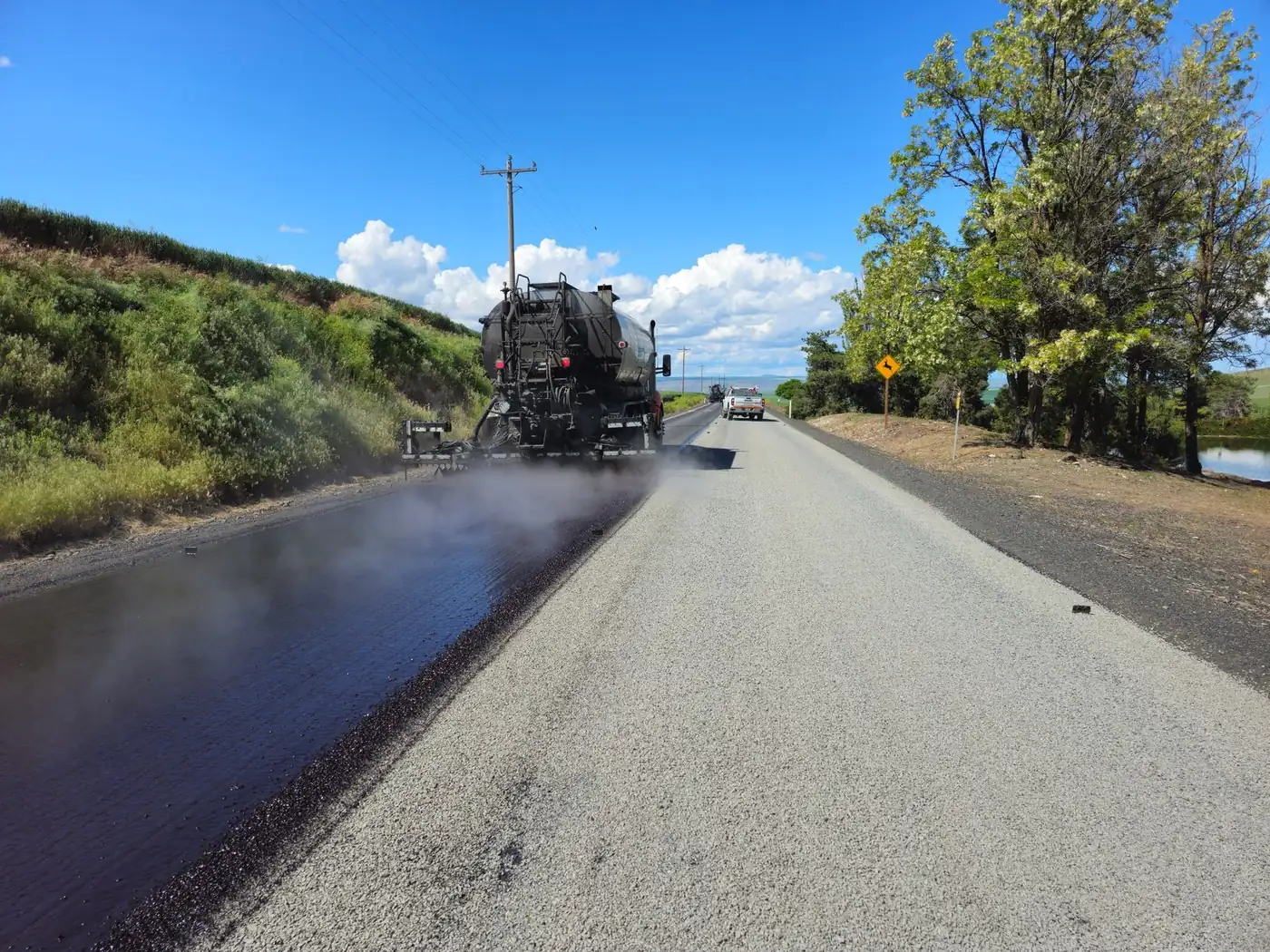
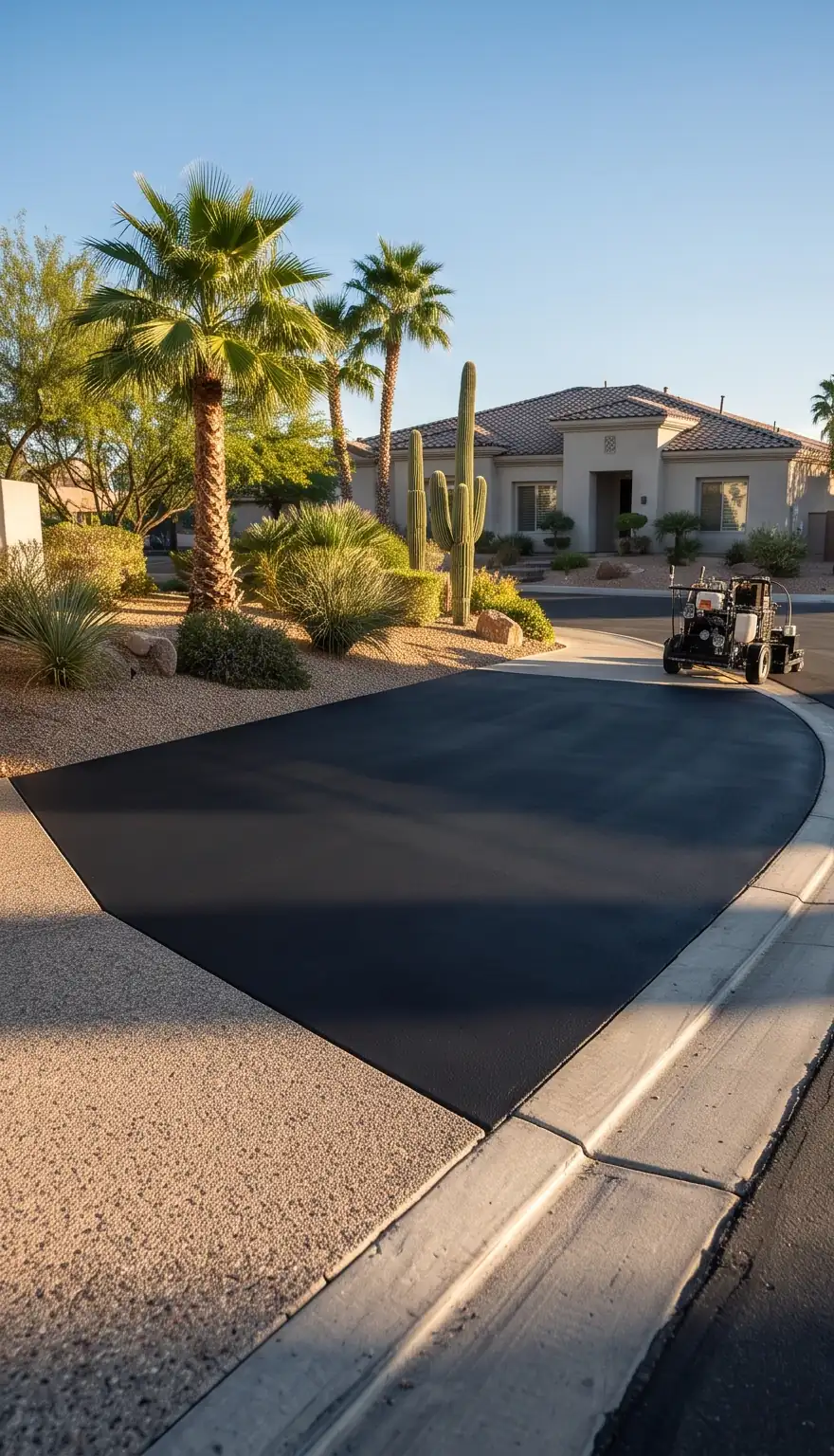
Sealcoating is a thin, protective liquid coating applied over existing asphalt. It doesn't add structural strength. Its job is protection:
- Blocking UV from breaking down the asphalt binder
- Sealing the surface so water sheds instead of soaking in
- Resisting oil and fuel spills
- Restoring the deep black color
In Las Vegas, sealcoating is the routine maintenance step, done every 2 to 3 years for most driveways and lots. Before it goes on, cracks are filled with hot rubberized sealant and failed spots are repaired. See our sealcoating service.
What an Overlay Is
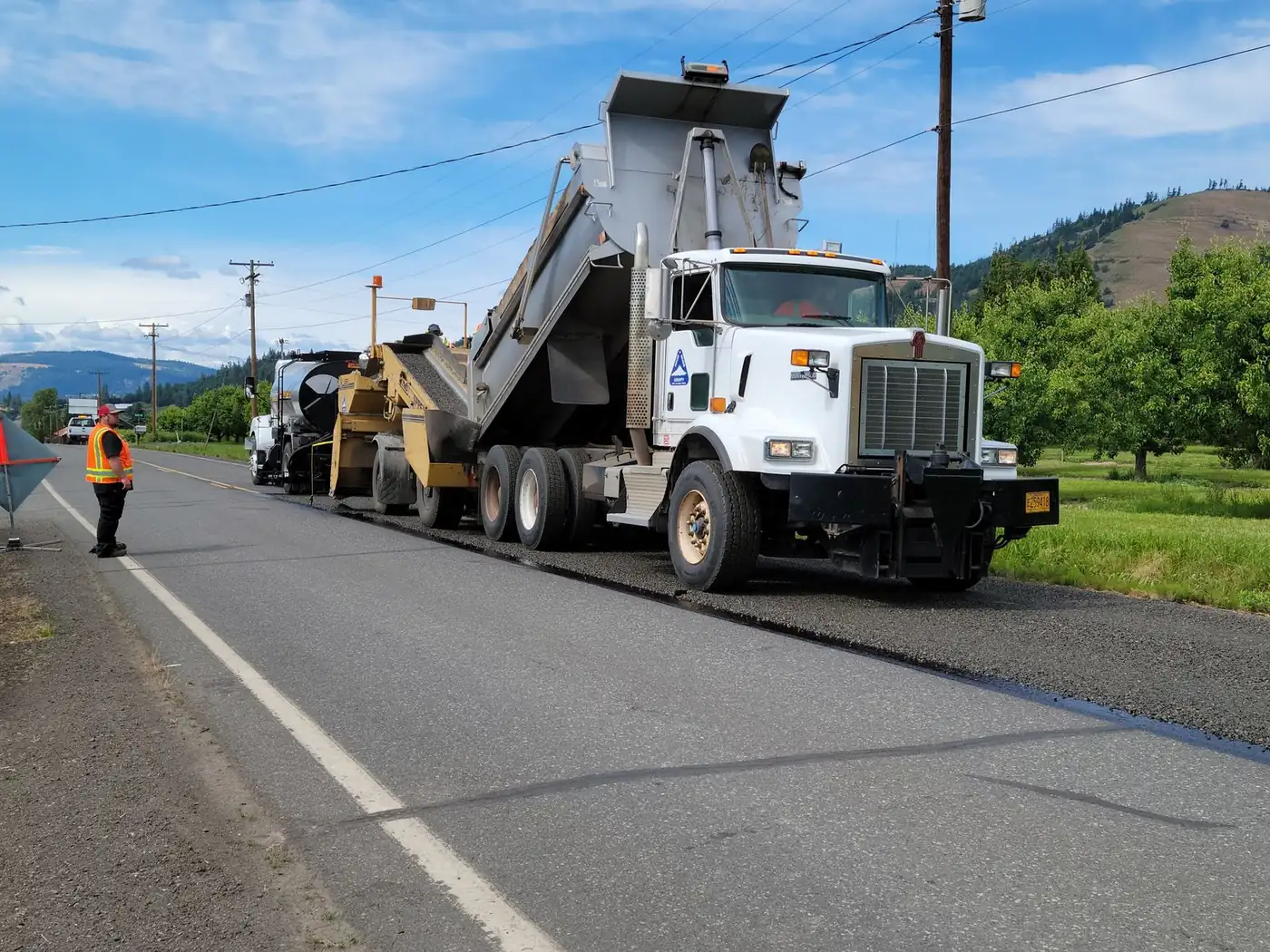
An overlay is a new layer of hot mix asphalt paved over the existing surface. It's a real paving job: the surface is cleaned, cracks are sealed, failed areas are repaired, sometimes the old surface is milled down at edges and transitions, then new asphalt is laid and compacted with rollers.
An overlay does add thickness and creates a brand-new wearing surface. It can smooth out a rough, worn surface and add some strength, as long as the base underneath is sound.
The Simple Difference
Think of it this way:
- Sealcoating protects a surface that's still in good structural shape.
- An overlay replaces a worn-out surface on top of a structure that's still in good shape.
- Reconstruction rebuilds the structure itself when the base has failed.
All three depend on what's underneath. If the base has failed, neither sealcoat nor an overlay will fix it.
When Sealcoating Is the Right Call
Sealcoating is usually right when:
- The pavement is fading from black to gray
- There are hairline to moderate cracks that can be sealed
- The surface is still smooth enough and holds its shape
- Failed areas are few and can be repaired individually
- Drainage works reasonably well
At this stage, sealcoating is the best-value move you can make. It locks in the life the pavement still has.
When an Overlay Makes More Sense
An overlay is usually right when:
- The surface is heavily worn, rough, and raveled across large areas
- There are many cracks across the surface, but the base is still stable
- Previous sealcoats have built up or worn unevenly
- The surface needs a smoother ride or better appearance than sealcoat can give
- Minor surface irregularities need to be leveled
When Neither Is Enough
Sometimes the honest answer is reconstruction. Signs include:
- Widespread alligator cracking
- Potholes that keep reopening
- Ruts and shoving under traffic, especially in summer heat
- Water pooling across large areas
- A base that was too thin or poorly compacted to begin with
An overlay on a failed base will crack through in the same places, a problem called reflective cracking. Our guide on asphalt resurfacing vs. replacement covers this decision in depth.
Cost and Disruption Compared
Sealcoating is the least expensive and least disruptive. A driveway is usually done in a few hours, a typical commercial lot in about a day, and you're back on it after 24 to 48 hours.
An overlay is a paving project. It costs more and involves paving equipment, rollers, and trucks. New asphalt is ready for foot traffic the same day, and you should wait 48 to 72 hours before driving on it.
Reconstruction costs the most and takes the longest because the old pavement and base work come first.
The Desert Factor
In Las Vegas, UV and heat age asphalt faster than in milder climates. That means pavement moves through these stages faster too. A lot that only needed sealcoat a few years ago can need an overlay if it's left unprotected through several summers. And a lot that needed an overlay can slide toward reconstruction if monsoon water gets into the base through unsealed cracks.
That's why the cheapest long-term strategy is to stay at the sealcoat stage as long as possible.
After an Overlay, Sealcoating Still Matters
An overlay gives you new asphalt, and new asphalt in the desert needs protection. Once the overlay has cured, it should get its first sealcoat and then go on the regular 2 to 3 year cycle. Skipping maintenance after an overlay sends it down the same path the old surface took. For timing, see when to sealcoat new asphalt in Las Vegas.
Picture the Same Lot at Three Stages
Imagine a retail parking lot across a long stretch of years.
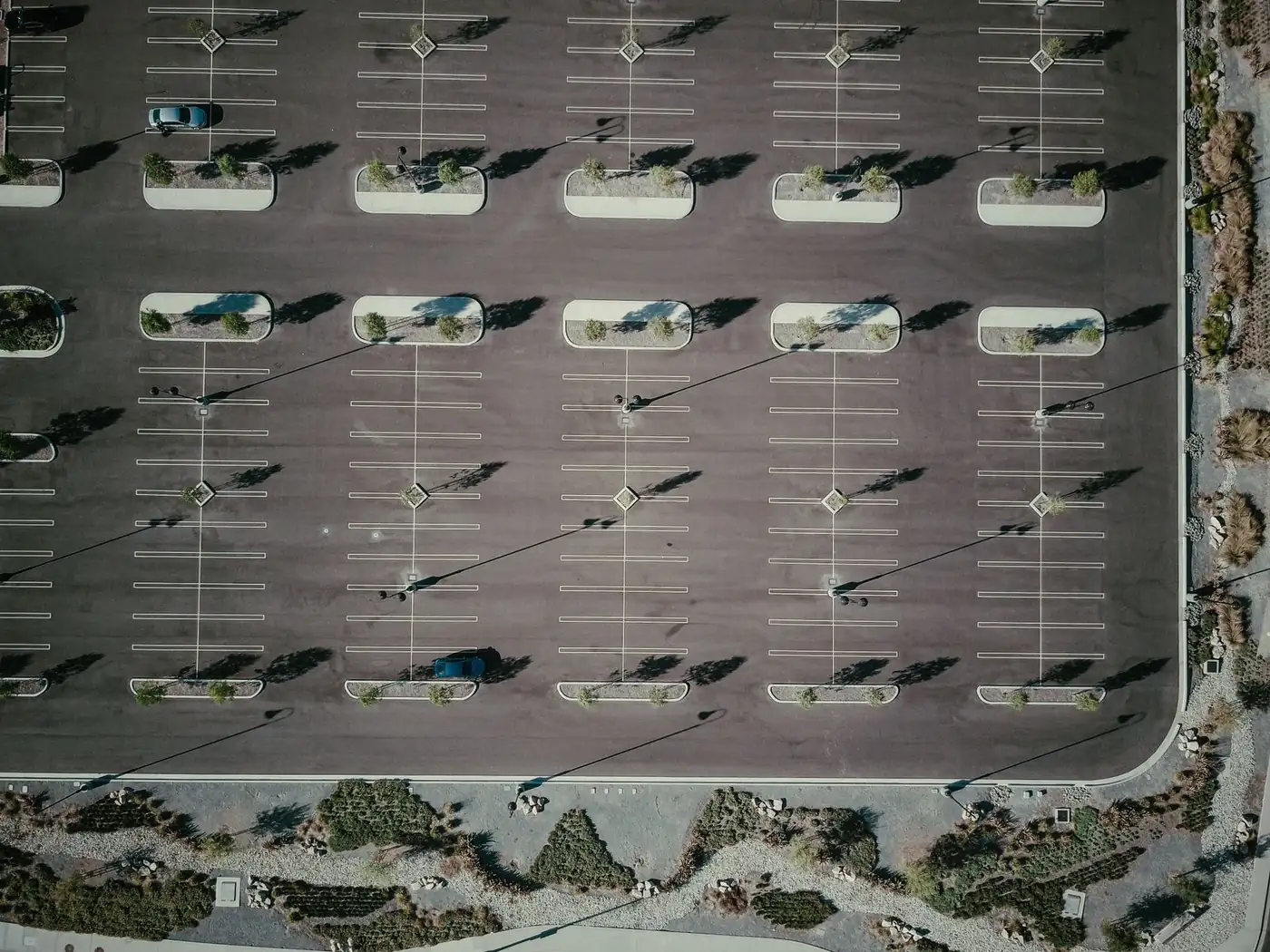
Early on, the surface has faded to charcoal and a few hairline cracks run along the curbs. The base is solid, water drains well, and there are no potholes. This lot needs crack sealing and a sealcoat. An overlay would be spending money on new asphalt the lot doesn't need yet.
Later, after maintenance was skipped, the surface is gray, rough, and raveled across most of the drive aisles, with cracks throughout. But the base is still holding: no ruts, no soft spots, just a few isolated failures near the dumpster. This lot is a good overlay candidate, after the failed areas are repaired and cracks are sealed.
Much later, still without maintenance, alligator cracking covers large areas, potholes reopen after every monsoon season, and water pools in the main aisle. Now neither sealcoat nor an overlay will hold. The failed sections need reconstruction.
The goal is to keep your pavement in the first stage for as long as possible.
Questions to Ask Your Contractor
- What condition is the base in, and how do you know?
- Which areas need full-depth repair first?
- If you recommend an overlay, how will heights work at garages, gutters, and drains?
- If you recommend sealcoat, how long do you expect it to protect this surface?
- What's the maintenance plan after the work?
Common Questions
Can I sealcoat instead of doing an overlay to save money?
If the surface is badly worn, sealcoat won't give you the result you want and won't last. If the surface is still in decent shape, sealcoat is the better value.
Does an overlay fix cracks?
Cracks are sealed and repaired before an overlay. On a sound base, the new layer covers them. On a failed base, cracks reflect through.
How long does an overlay last?
It depends on the base, traffic, drainage, and maintenance. Kept sealed, an overlay on a sound base can provide many years of service.
Is an overlay the same as resurfacing?
Yes, the terms are often used interchangeably.
Which is better for an HOA lot?
It depends on the lot's condition. Many HOA lots stay on a sealcoat cycle for years, with targeted repairs, and only need an overlay much later.
Find Out Which One You Need
Seal It Up! Asphalt & Sealcoating is locally owned and serves Las Vegas, Henderson, Summerlin, North Las Vegas, Boulder City, Pahrump, Paradise, and Spring Valley. We'll check the surface and the base and tell you plainly whether sealcoat, an overlay, or something else is the right call.
Call 702-915-6591 or request a free estimate. Learn more about our asphalt paving work.
Get a straight answer on your pavement
Call 702‑915‑6591 or request a free estimate. We serve Las Vegas, Henderson, Summerlin, North Las Vegas, Boulder City, Pahrump, Paradise, and Spring Valley. Learn more about our asphalt paving service.