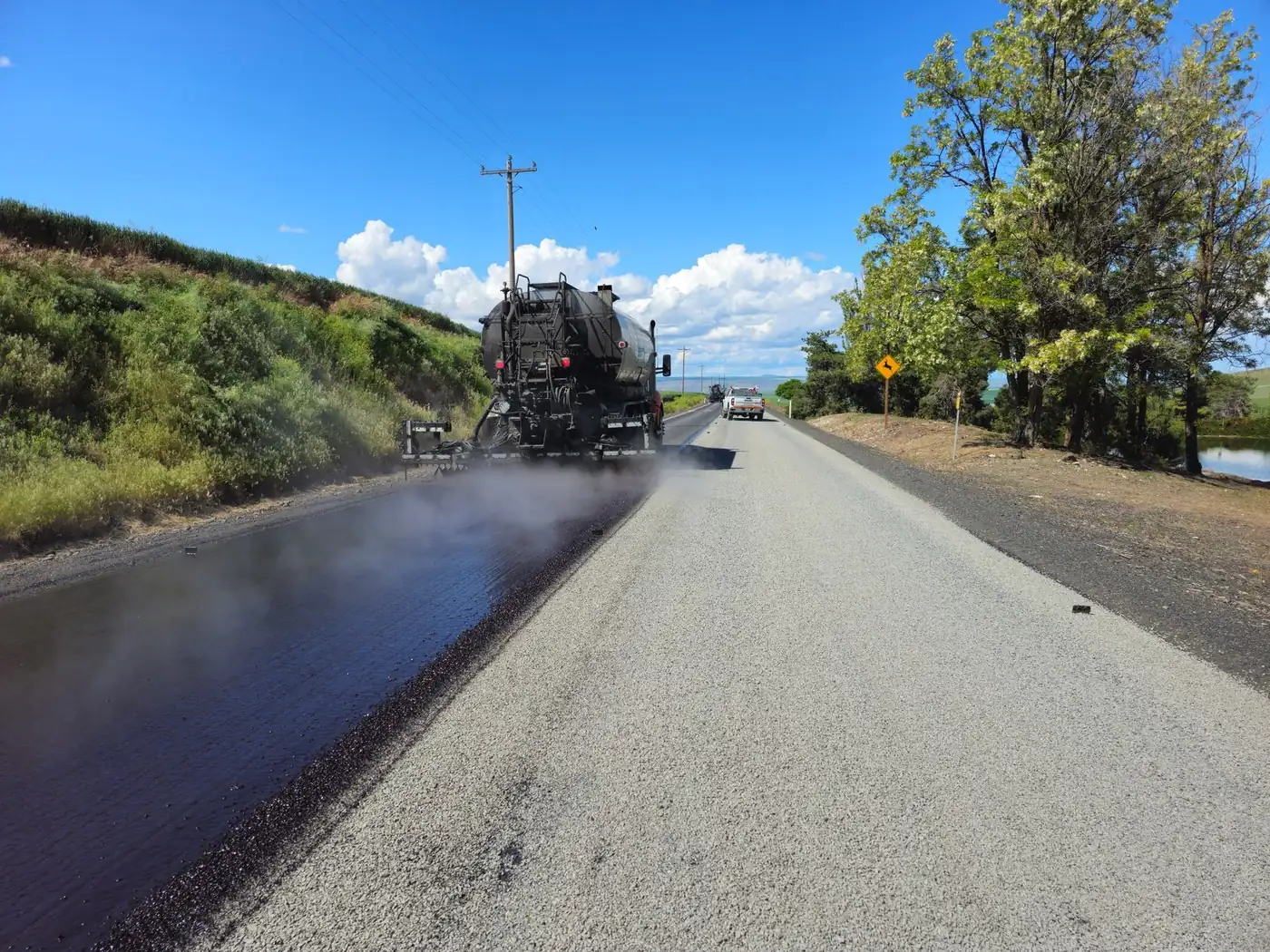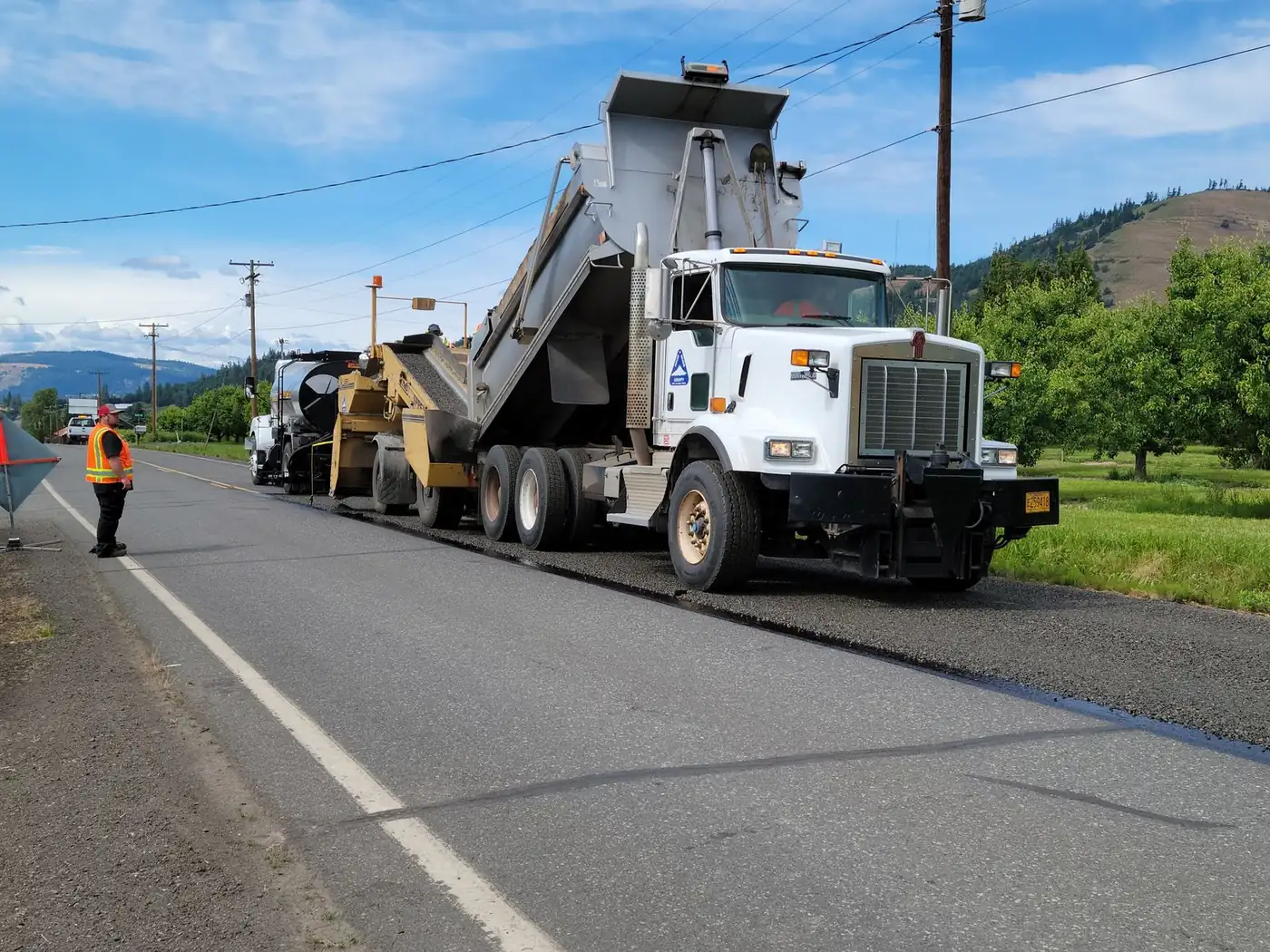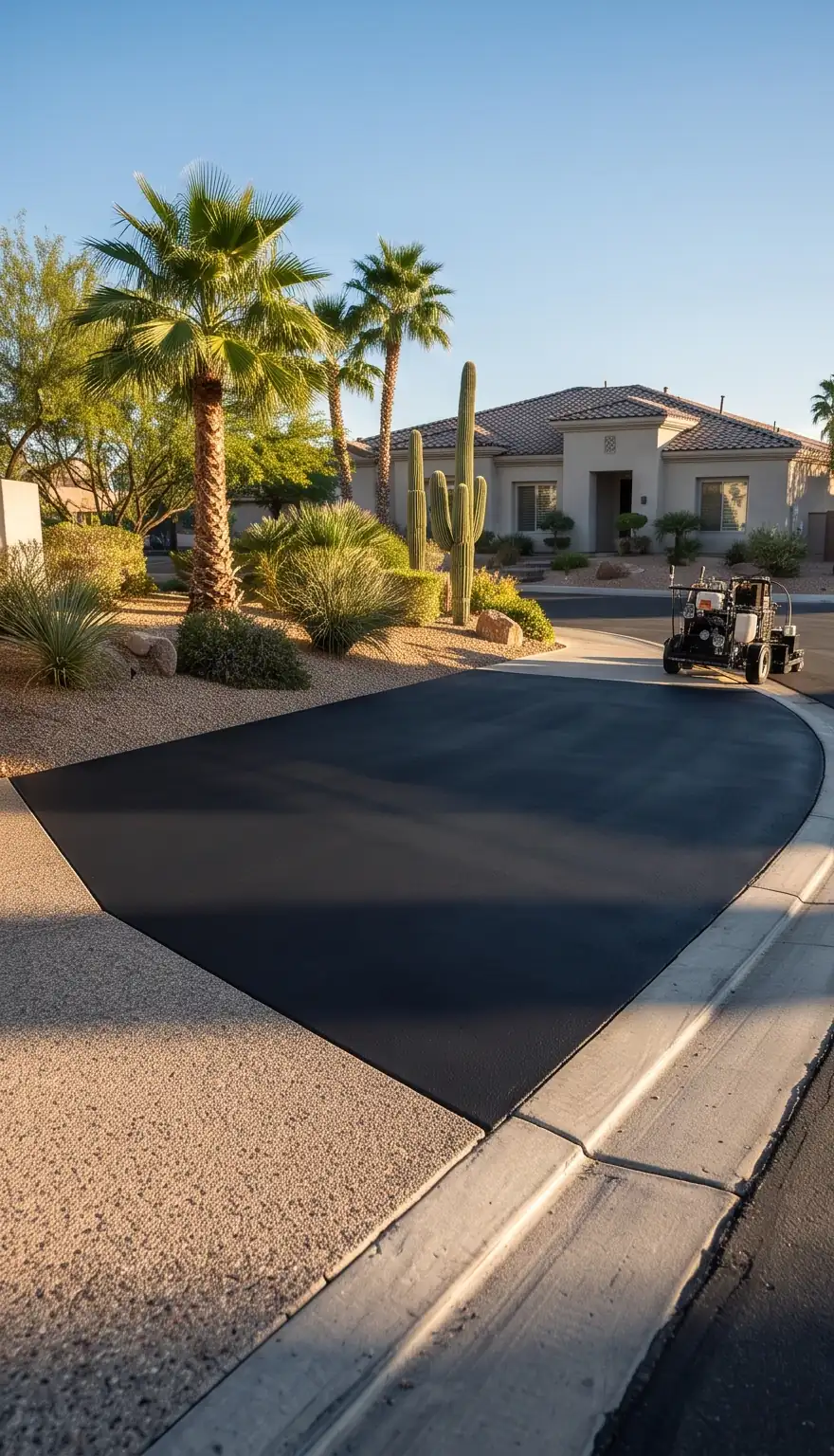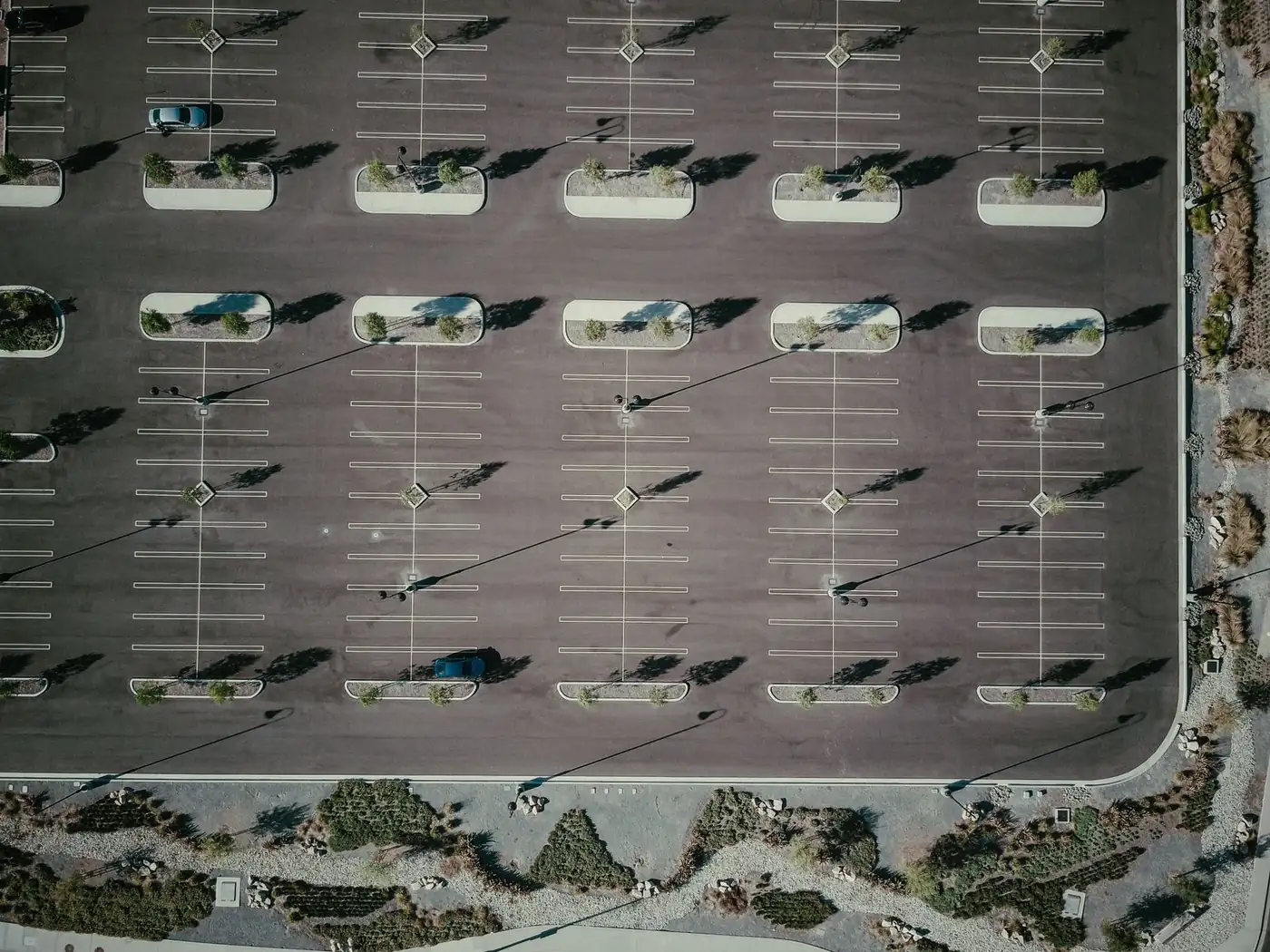
Not all pavement lives the same life. A driveway sees a couple of cars a day. A grocery store lot sees thousands. A distribution yard in North Las Vegas sees loaded semis turning, stopping, and backing into docks all day long. The same asphalt that would last decades on a quiet driveway can fail in a few years under that kind of traffic if it isn't built and maintained for it.
Here's how heavy traffic damages asphalt, why Las Vegas heat makes it worse, and what it takes to keep high-traffic pavement in service.
How Asphalt Carries a Load
Asphalt is a flexible pavement. When a vehicle rolls over it, the surface flexes slightly and spreads the load down into the aggregate base and the soil below. A properly built section, with a strong, compacted base and enough asphalt thickness for the traffic, spreads that load so well that the pavement barely notices.
Problems start when the load is more than the section was designed for, or when the base underneath has weakened. Then every pass flexes the pavement a bit too much, and that flexing adds up.
Damage Pattern 1: Fatigue Cracking
Repeated flexing eventually tires the asphalt out, the same way bending a paperclip back and forth eventually breaks it. On pavement, that shows up as fatigue cracking, usually in the wheel paths where vehicles travel most. Over time, those cracks connect into the pattern called alligator cracking.
Alligator cracking is a sign the pavement can no longer carry the load in that area. It needs full-depth repair, not just a coating.
Damage Pattern 2: Rutting
Rutting is a depression that forms in the wheel paths. It's common in lanes where heavy trucks follow the same path over and over. In Las Vegas, heat plays a big role. Asphalt softens on hot summer afternoons, and heavy loads push the softened material down and to the sides.
Ruts collect water during monsoon storms, which then soaks into the pavement and base and speeds up every other kind of damage.
Damage Pattern 3: Shoving and Corrugation
Where vehicles brake, accelerate, or turn sharply, the asphalt surface can get pushed into waves or bulges. You'll see it at stop bars, entrances, drive-thru lanes, and loading dock approaches. Heat makes it worse, because softer asphalt is easier to push around.
Damage Pattern 4: Turning Damage
Turning tires twist the surface. Tight radius turns at entrances, dumpster pads, and in drive aisles scuff and tear the top of the asphalt. Power steering turns while stopped, common in parking lots, grind the surface in place. Over time, those areas ravel, crack, and break apart sooner than the rest of the lot.
Damage Pattern 5: Point Loads
Not all heavy loads are moving. Dumpster bins, trailer jacks, RV stabilizers, and parked equipment concentrate a lot of weight into a small area. On a hot day, they can punch dents and depressions into asphalt. Dumpster pads in particular take both point loads and the impact of trucks lifting and setting bins.
Why Las Vegas Heat Multiplies the Damage
Every pattern above gets worse when the asphalt is hot. In the valley, summer surface temperatures climb well beyond the air temperature, and pavement softens. Heavy loads on soft asphalt create ruts, shoves, and dents that wouldn't form on cooler pavement.
Then UV and heat dry out the binder over time, making the surface more brittle in cooler months. So high-traffic Las Vegas pavement gets hit from both sides: soft and deformable in summer, brittle and prone to cracking in winter.
Building for Heavy Traffic
Most heavy-traffic failures start with a section that wasn't built for the load. A strong design for a truck court, bus lane, or busy commercial lot includes:
- Proper grading and drainage so water never sits on or under the pavement
- A thick, well-compacted aggregate base sized for the actual vehicles
- Enough hot mix asphalt thickness to spread the load
- Thorough compaction with heavy rollers so the asphalt is dense and resists rutting
Our asphalt paving process starts with planning the base for the traffic that will actually use the pavement. A home driveway section in a logistics yard won't last.
Maintaining High-Traffic Pavement
Even well-built pavement needs extra attention when it carries heavy traffic:
- Seal cracks early. Water in the base under heavy loads accelerates failure dramatically.
- Repair failed areas full depth. Patching the surface over a failed base under truck traffic rarely holds.
- Sealcoat on a tighter cycle. High-traffic lots wear through coatings faster than the typical 2 to 3 years.
- Watch the hot spots. Entrances, dumpster pads, loading approaches, and drive-thru lanes fail first.
- Restripe to control traffic. Clear lanes and markings keep vehicles in predictable paths.
Learn more about protecting commercial surfaces in parking lot sealcoating in Las Vegas: extending pavement life.
Reading the Warning Signs on Your Lot
You can learn a lot about how traffic is treating your pavement just by walking it. Look for:
- Cracks running lengthwise in wheel paths. These are early fatigue cracks, and they mean the load is working the pavement hard.
- Shallow depressions that hold water after storms. Early rutting or settlement.
- Waves or ripples near stop bars and entrances. Shoving from braking and accelerating.
- Scuffed, raveling patches in parking stalls. Damage from turning tires in place.
- Dents and depressions at dumpster enclosures or trailer parking. Point loads on soft summer asphalt.
- Broken edges where trucks cut corners. Pavement edges without support crumble under wheels.
Catching these early gives you more repair options and lower costs. Waiting until the area is a pothole leaves only the expensive ones.
Planning Around Your Traffic
Sometimes the best fix isn't only in the pavement. Small changes in how traffic moves can reduce damage:
- Restriping lanes so trucks follow wider, gentler turning paths
- Moving dumpster locations to areas built for heavy trucks
- Marking dedicated truck routes away from passenger car parking
- Adding clear signage for loading zones so trucks don't stop on weaker pavement
Combined with proper construction and regular maintenance, traffic planning helps busy pavement last much longer.
Where Concrete Fits
Some properties use concrete pads in the most punishing spots, like dumpster enclosures and truck aprons, because those areas take point loads and constant turning. Even then, the surrounding asphalt needs to be built and maintained to handle the transitions and approaches.
Common Questions
Why does my lot rut in summer but crack in winter?
Heat softens asphalt so heavy loads deform it in summer. UV and heat also dry the binder over time, so the same pavement turns brittle and cracks in cooler weather.
Can an overlay fix rutting?
If the base is sound and rutting is limited to the surface layer, milling and overlay can help. If the base is deforming, it needs to be rebuilt. See resurfacing vs. replacement.
Will sealcoating stop rutting?
No. Sealcoat protects against UV and water. Rutting is a structural issue.
Do trash trucks really damage lots?
Yes. Heavy trucks that stop, turn, and lift bins in the same spot every week concentrate damage at dumpster areas.
How often should a truck yard be inspected?
At least annually, and after monsoon season, with attention to wheel paths, turning areas, and dock approaches.
Get Your Heavy-Traffic Pavement Assessed
Seal It Up! Asphalt & Sealcoating serves warehouses, logistics yards, retail centers, casinos, resorts, HOAs, and businesses across Las Vegas, Henderson, Summerlin, North Las Vegas, Boulder City, Pahrump, Paradise, and Spring Valley. We'll look at how traffic actually moves across your pavement and recommend the right repair or build.
Call 702-915-6591 or request a free estimate.
Get a straight answer on your pavement
Call 702‑915‑6591 or request a free estimate. We serve Las Vegas, Henderson, Summerlin, North Las Vegas, Boulder City, Pahrump, Paradise, and Spring Valley. Learn more about our asphalt paving service.