Walk the paint aisle of any big box store in the valley and you'll find a whole wall of asphalt products. Driveway sealer in five-gallon buckets. Squeeze bottles of crack filler. Bags of cold patch. Some come bundled as kits with a squeegee and a brush, promising a professional-looking driveway in an afternoon.
We've already written about the labor side of professional sealcoating vs. DIY. This article focuses on the products themselves: what's actually in those buckets and bags, how they behave in Las Vegas conditions, and why the material gap matters as much as the labor gap.
What's in a Typical Retail Driveway Sealer
Most retail driveway sealers are water-based emulsions: a mix of asphalt or coal-tar-free binder, water, fillers, and additives. They're designed to be easy for a homeowner to apply. That design goal shapes the product:
- They're often thin. A thin product spreads easily with a squeegee, but leaves less protective material on the surface.
- They're general-purpose. They're formulated to sell across the whole country, from rainy coasts to snowy mountains to deserts.
- They prioritize quick drying. That's convenient, but in our heat a fast-drying product can flash off before it levels, leaving streaks and thin spots.
None of that makes retail sealer useless. It means it's built for convenience and broad appeal, not for the specific beating asphalt takes in Southern Nevada.
Why "General Purpose" Struggles in the Desert
Las Vegas pavement deals with conditions most products aren't optimized for:
- Intense UV, year-round, that breaks down the binder at the surface
- Summer surface temperatures far above the air temperature
- Large day-to-night temperature swings that keep the pavement expanding and contracting
- Monsoon storms that dump concentrated water across the surface
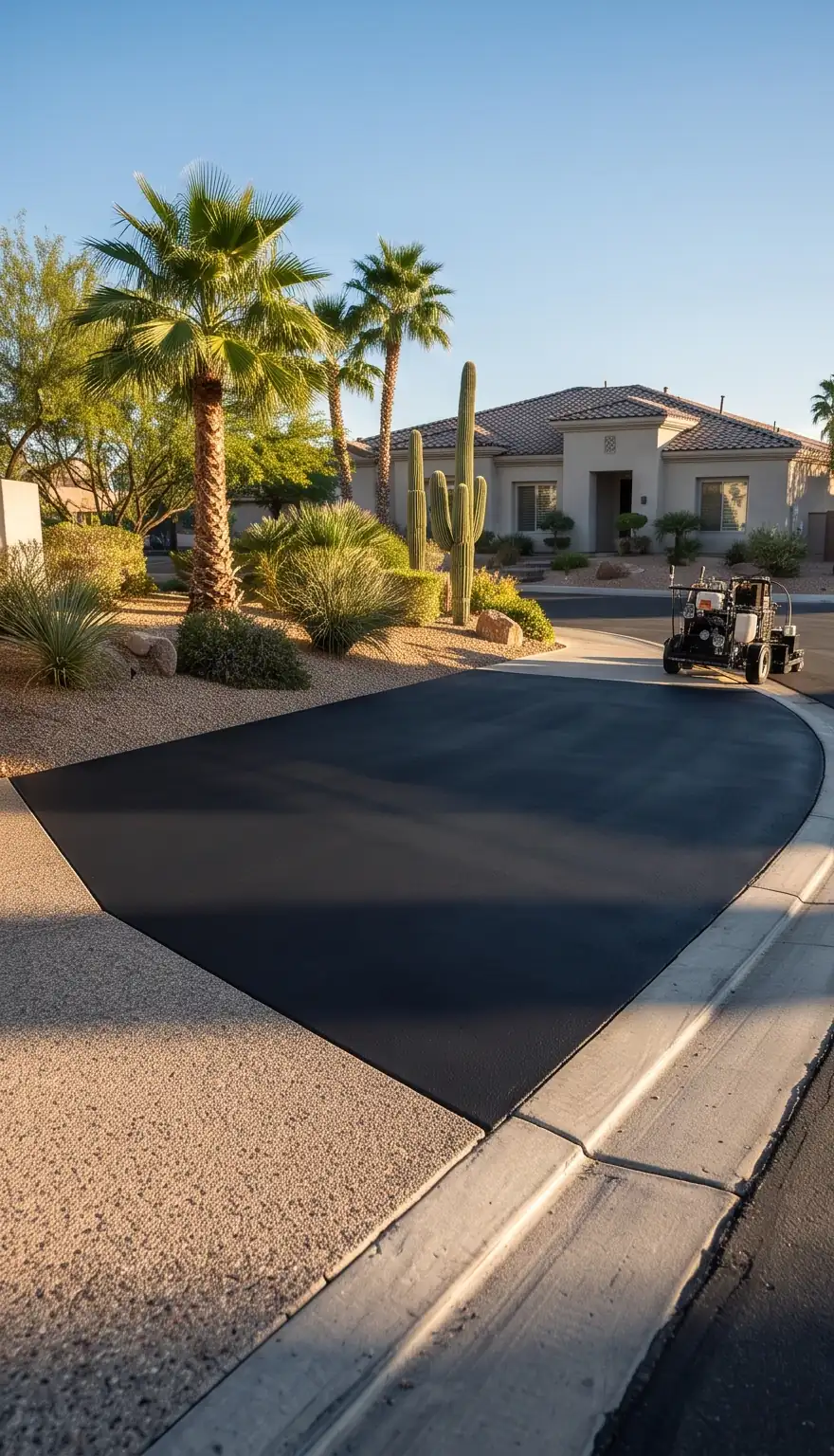
A coating that holds up nicely in a mild climate can wear through in tire paths and fade within a single Las Vegas summer. That's why we use specialized UV-resistant sealants and materials formulated for desert conditions. The goal is a coat that actually lasts the full 2 to 3 year cycle here.
Crack Filler: The Biggest Gap
If there's one product where the difference between retail and professional really shows, it's crack filler.
Retail crack fillers are usually cold-pour liquids or caulk-style tubes. They're easy to use, but many of them cure into a relatively rigid material that shrinks as it dries. In a climate where pavement expands every afternoon and contracts every night, rigid filler can't keep up. It pulls away from the crack walls, and water flows right back in.
Hot rubberized crack sealant is what professional crews use. It's heated in a melter and applied hot, so it flows into the crack and bonds to clean crack walls. It cures into a flexible, rubbery seal that stretches and compresses as the pavement moves. That flexibility is what keeps cracks watertight through a full desert year.
Since water in the base is what leads to potholes, the crack filler is arguably the most important product on the whole driveway.
Cold Patch: A Temporary Product Sold as a Fix
Bagged cold patch is marketed as a pothole fix. In practice, it's a temporary material. It never fully cures like hot mix asphalt and doesn't bond to the surrounding pavement. It also sits on top of whatever caused the pothole in the first place, usually a weakened base.
In Las Vegas temperature swings, cold patch often loosens and crumbles out within weeks. We explain the full picture in why pothole repairs fail in Las Vegas. Cold patch has its place as an emergency stopgap. It's not a repair.
Coverage Claims vs. Reality
Bucket labels list coverage in square feet. Those numbers assume a smooth, tight surface. A Las Vegas driveway that has gone gray and rough absorbs much more sealer, sometimes far more than the label suggests. Homeowners often run short halfway through, apply the remainder too thin to stretch it, or end up making a second trip to the store.
Professional crews estimate material based on the actual surface condition and apply it with consistent thickness across the whole area, including the edges.
Tools Matter Too
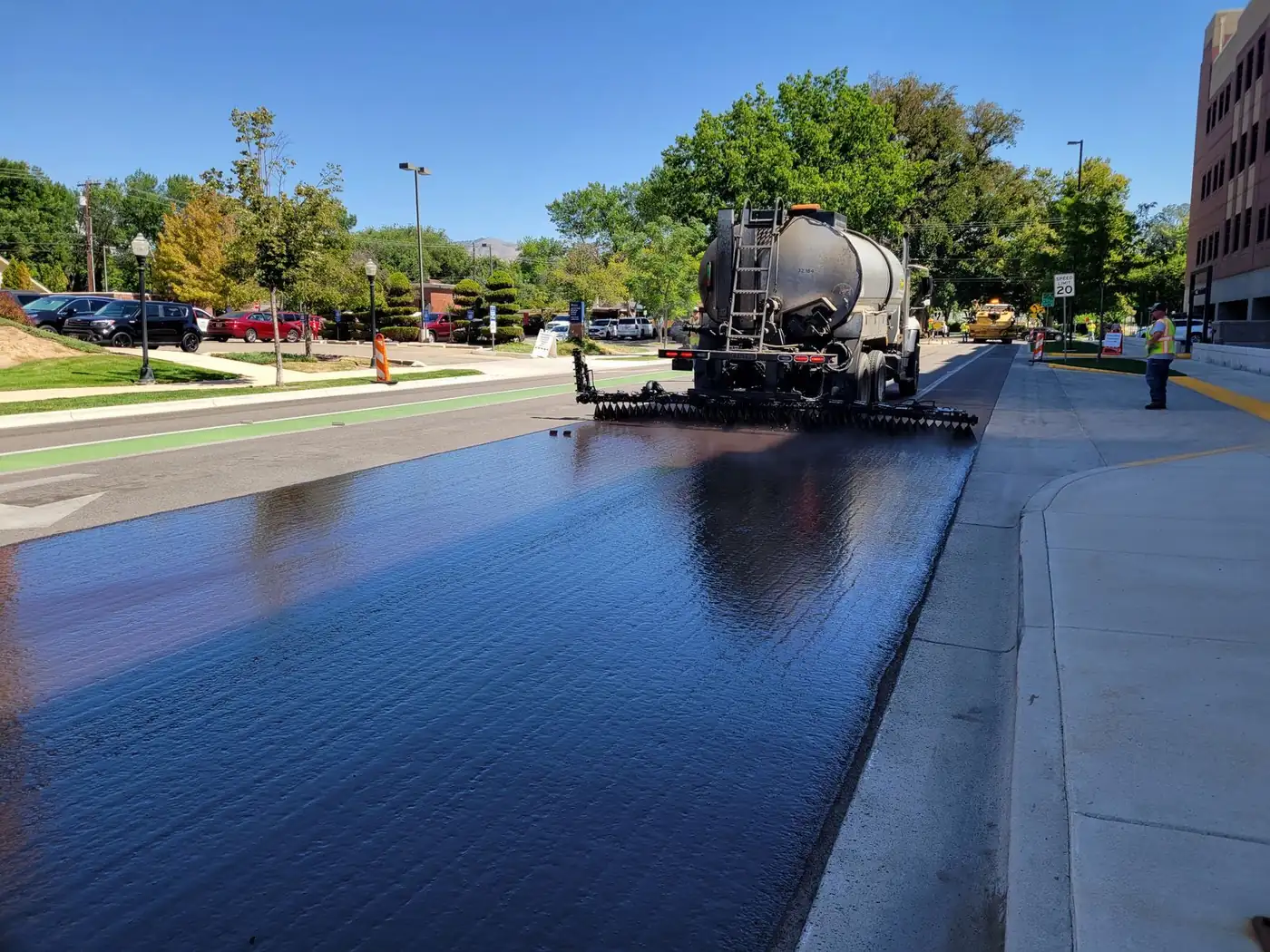
A kit squeegee and brush work, but they make even application hard on a full driveway, especially in heat. Professional crews use commercial squeegees, spray equipment, and edging tools that lay down a consistent coat quickly, before the surface heat has a chance to flash it dry.
Where Kits Make Sense
To be fair, there are situations where a DIY product is reasonable:
- A small, structurally sound driveway with no open cracks
- A quick cosmetic refresh before an event, with realistic expectations about how long it lasts
- A homeowner comfortable with careful prep and willing to redo it sooner
Where Kits Fall Short
Kits are a poor fit when:
- Cracks are wider than a hairline, or keep reopening
- There are potholes, crumbling edges, or alligator cracking
- You want protection that lasts the full 2 to 3 year cycle in desert sun
- The property is an HOA, rental, or business where appearance and liability matter
In those cases, the job needs crack and pothole repair and a desert-formulated coat, not a thinner product spread over the same problems.
The Real Cost of a Kit
The price on the shelf is the smallest part of the cost. Add the extra buckets for a thirsty surface, the crack filler that needs redoing, the cold patch that comes back out, and the full weekend of hard work in the heat. Then add the shorter lifespan of the coat. Over a few years, many homeowners find they've spent more on kits than a professional job would have cost, with less protection to show for it.
For a clear look at what affects the price of professional work, see how much does sealcoating cost.
Reading a Product Label
If you do go the DIY route, read the label carefully. Look for the recommended temperature range for application and compare it to the forecast surface temperature, not just the air temperature. Check cure time before foot and vehicle traffic. Note the coverage claim and plan on needing more for a rough, oxidized surface.
Common Questions
Are all retail sealers the same?
No. Quality varies a lot. But even the better retail products are formulated for broad use rather than desert conditions specifically.
Can I use a retail crack filler and have you sealcoat over it?
We can work with it if it's bonded well. If it has pulled away from the crack walls, we'll clean it out and use hot rubberized sealant instead.
Does a professional coat look different from a DIY coat?
Usually, yes. Professional application tends to give a more even, uniform black with clean edges and no lap marks.
How long does a professional coat last in Las Vegas?
Plan on resealing every 2 to 3 years, more often for high-traffic commercial lots.
Is cold patch ever the right choice?
As a short-term emergency fix to remove a hazard until a proper repair can happen, yes. As a permanent repair, no.
Get the Right Materials on Your Driveway
Seal It Up! Asphalt & Sealcoating is locally owned and uses UV-resistant sealants and hot rubberized crack sealant formulated for desert conditions. We serve Las Vegas, Henderson, Summerlin, North Las Vegas, Boulder City, Pahrump, Paradise, and Spring Valley.
Call 702-915-6591 or request a free estimate and we'll tell you honestly whether your driveway needs a pro or whether a kit will do.
Get a straight answer on your pavement
Call 702‑915‑6591 or request a free estimate. We serve Las Vegas, Henderson, Summerlin, North Las Vegas, Boulder City, Pahrump, Paradise, and Spring Valley. Learn more about our sealcoating service.