If you manage a commercial property, every line in the budget has to justify itself. Sealcoating shows up every few years as a significant number, and it's fair to ask whether it actually earns its keep or whether it's a nice-to-have that a lot could do without.
Here's the straight answer: for a structurally sound lot in Las Vegas, sealcoating is one of the best-value pavement expenses there is. For a lot that has already failed, it isn't, and a contractor who tells you otherwise is selling, not advising. Let's walk through both.
What You're Actually Paying For
A commercial sealcoat job is more than spreading black liquid across a lot. A proper job includes:
- Cleaning the entire surface and treating oil spots
- Sealing cracks with hot rubberized sealant
- Patching potholes and failed areas, with base repair where needed
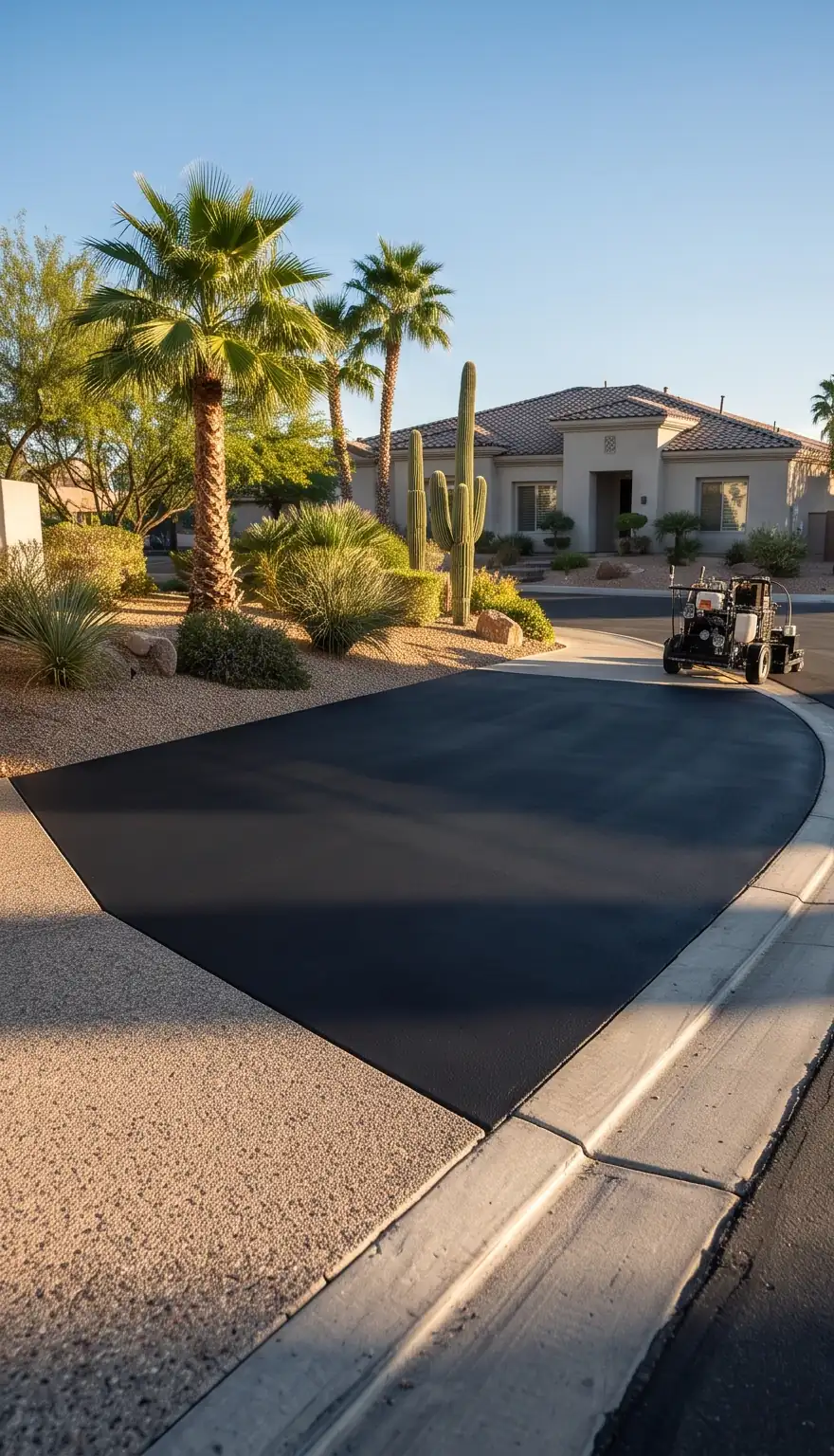
- Applying UV-resistant sealcoat formulated for desert conditions
- Restriping stalls, arrows, fire lanes, crosswalks, and accessible stalls
When you compare quotes, compare scopes. A low number that skips crack sealing or uses a thin, generic sealer isn't the same product.
What You Get Back
The return on sealcoating comes from several directions at once.
Longer pavement life. Properly installed and maintained asphalt lasts 15 to 20 years. Commercial lots in the desert that skip maintenance can fail well short of that. Every year of extra life is a year the property isn't paying for a repave, which is one of the largest exterior capital costs a property faces.
Fewer repairs. A sealed surface sheds water instead of absorbing it, so fewer cracks form and fewer potholes follow. That cuts reactive repair spending between coats.
Oil and fuel resistance. Stall areas and drive-thru lanes collect petroleum drips that soften asphalt. Sealcoat puts a barrier between those fluids and the pavement.
Lower liability. Fewer cracks, crumbling edges, and potholes mean fewer trip hazards and fewer vehicle damage complaints.
Appearance and operations. A black lot with fresh striping looks professional and keeps traffic and parking organized.
Why the Math Is Better in Las Vegas
In milder climates, unsealed asphalt ages slowly enough that some owners stretch maintenance a long way. Here, the sun and heat don't allow that. UV breaks down the binder year-round, summer surface temperatures dry the asphalt out, and big day-to-night swings widen cracks. Monsoon storms then drive water into those cracks.
Because the damage happens faster here, the protection pays back faster too. The standard recommendation is sealcoating every 2 to 3 years, and high-traffic commercial lots often need it more often.
When Sealcoating Is NOT Worth It
Sealcoat protects pavement. It doesn't rebuild it. Sealcoating is the wrong spend when:
- Large areas of the lot show alligator cracking
- Potholes keep reopening in the same spots
- The surface ruts or shoves under traffic
- Water pools across big sections after storms
- The base has failed under major portions of the lot
In those cases, the money is better spent on full-depth repair of failed areas, or on resurfacing or reconstruction. Sealing over a failed lot gives you a few months of black paint over the same problems. Our guide on asphalt resurfacing vs. replacement explains how to tell the difference.
The Best Value Window
Sealcoating delivers the most value when the lot is:
- Fading from black to gray
- Showing hairline to moderate cracks
- Structurally sound, with only isolated failed spots
At that point, crack sealing, spot repairs, and a sealcoat lock in the lot's remaining life and reset the clock. The longer a lot drifts past that window, the more of the budget shifts from protection to repair.
Different Lots, Different Payback
The value of sealcoating shows up differently depending on the property:
- Retail centers and restaurants see it in appearance and customer experience, plus fewer trip hazards near storefronts.
- HOAs and apartment communities see it in resident satisfaction and fewer surprise repair bills between budget cycles.
- Casinos, resorts, and hotels see it in a lot that stays safe and presentable under constant use.
- Industrial and logistics properties see it mostly in protected surfaces around employee parking and drive lanes, while truck courts often need base and paving attention more than coatings.
How to Compare Quotes
When you're reviewing sealcoating bids, ask:
- Is crack sealing included, and with what material? Hot rubberized sealant is the standard for lasting results.
- How are failed areas handled? Are they cut out and repaired, or just coated over?
- What sealant is being used? Is it formulated for desert UV and heat?
- How many coats, and where? High-traffic areas often benefit from extra attention.
- Is restriping included? And is the layout being refreshed or updated?
- How will the lot stay open? Can the work be sequenced in sections?
What Happens When You Skip a Cycle
Skipping one sealcoat cycle doesn't destroy a lot overnight. That's what makes it tempting. But here's what typically happens during the extra years without protection in Las Vegas:
- The surface oxidizes further and turns gray and rough, especially in drive aisles.
- Hairline cracks open along curbs, light pole bases, and seams.
- A monsoon season pushes water into those cracks and softens spots in the base.
- A few areas start alligator cracking, usually at entrances and dumpster pads.
When the next sealcoat finally happens, the scope is bigger: more crack sealing, more patching, sometimes base repairs that wouldn't have been needed. The savings from skipping the cycle usually get spent, with interest, on the next one.
Building a Multi-Year Plan
For properties that manage pavement across several years, a simple plan keeps costs steady:
- Year one: crack sealing, repairs of failed areas, full sealcoat, and restriping.
- In between: an annual walk-through and crack sealing of anything new before monsoon season.
- Next cycle: sealcoat and restripe again on the 2 to 3 year schedule, tighter for high-traffic zones.
That rhythm spreads spending evenly, keeps the lot looking sharp, and pushes the big repaving expense as far out as the pavement allows.
Keeping the Lot Open
A typical commercial lot can be sealed in about a day, and larger lots can be planned in sections so part of the property stays open. Each section needs 24 to 48 hours before traffic. We work through the schedule with you ahead of time so tenants, customers, and staff know what to expect.
Common Questions
How often should a commercial lot be sealcoated in Las Vegas?
Every 2 to 3 years for most lots, more often for high-traffic areas.
Can we sealcoat just part of the lot?
You can, but the protection and appearance are best when the whole lot is treated. Some properties prioritize the highest-wear areas first.
Does sealcoating help with ADA and fire lane markings?
Sealcoating restores the surface, and restriping afterward brings back clear markings for accessible stalls and fire lanes. See our line striping service.
What if our budget only covers part of the work this year?
We'll help you prioritize: usually crack sealing and repairs first, then sealcoat. For the full picture, see how sealcoating saves Las Vegas businesses money.
Get a Straight Assessment
Seal It Up! Asphalt & Sealcoating is locally owned and works with businesses, HOAs, property managers, casinos, resorts, and industrial properties across Las Vegas, Henderson, Summerlin, North Las Vegas, Boulder City, Pahrump, Paradise, and Spring Valley. We'll tell you honestly whether sealcoating is the right spend for your lot right now.
Call 702-915-6591 or request a free estimate.
Get a straight answer on your pavement
Call 702‑915‑6591 or request a free estimate. We serve Las Vegas, Henderson, Summerlin, North Las Vegas, Boulder City, Pahrump, Paradise, and Spring Valley. Learn more about our sealcoating service.