Asphalt Paving vs. Concrete - Which Is the Better Investment for Las Vegas Property Owners?
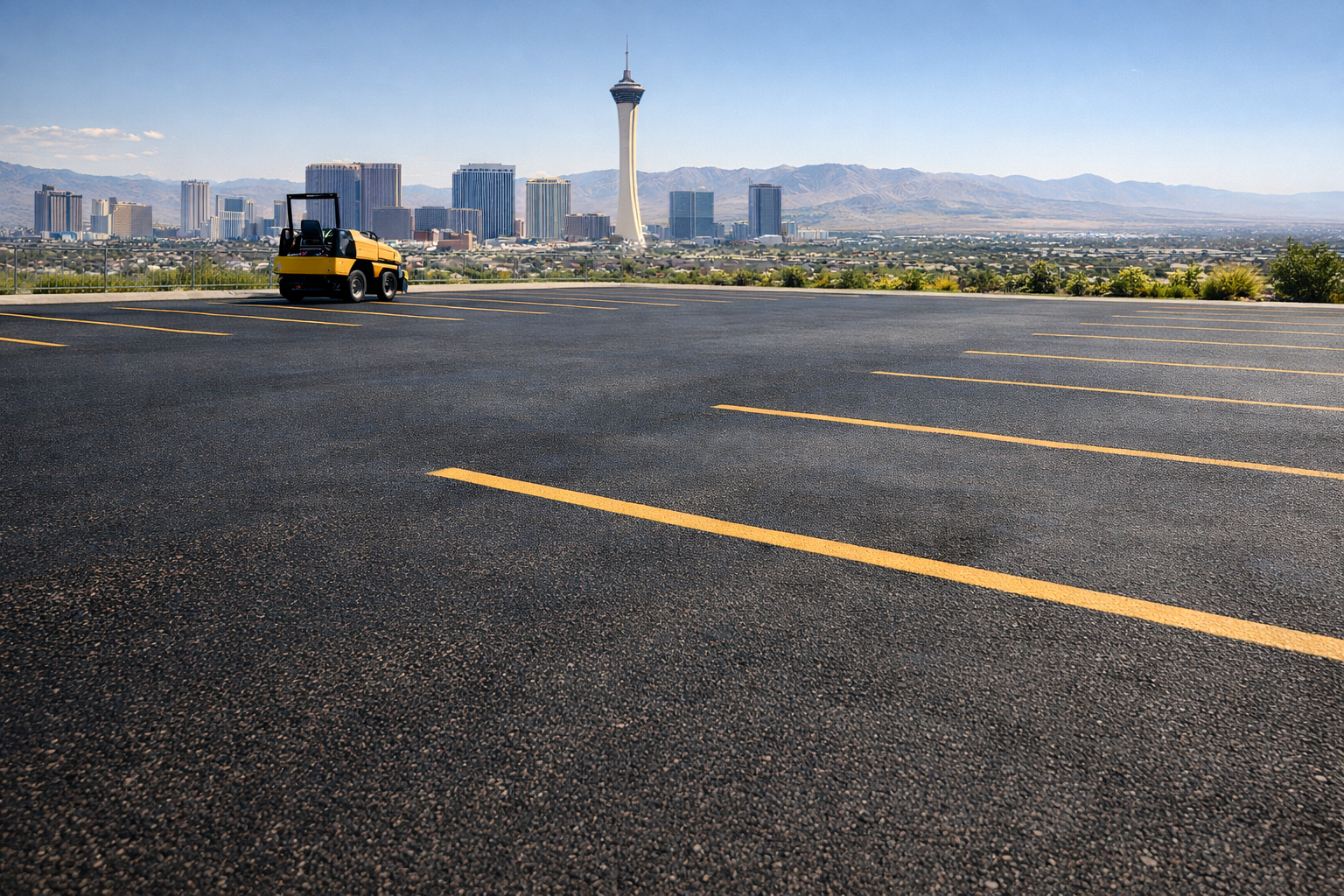
When property owners compare asphalt paving vs. concrete, the better investment usually depends on how the surface will be used, how much sun and heat it will face, how quickly it needs to be installed, and what long-term maintenance costs look like. In Las Vegas, asphalt is often the more budget-friendly choice upfront and can perform very well for large parking areas, private roads, and utility surfaces. Concrete typically costs more at the start, but it can offer a longer lifespan, a cleaner appearance, and strong value for driveways, walkways, and high-visibility areas when installed correctly.
For many Southern Nevada properties, the smartest answer is not that one material is always better. It is that the right investment comes from matching the surface to the property, traffic load, maintenance expectations, and desert climate.
Why Asphalt vs. Concrete Matters in the Las Vegas Climate
Las Vegas is hard on outdoor surfaces. Intense UV exposure, extreme summer temperatures, and constant expansion and contraction can shorten the life of paving materials when they are poorly installed or not maintained. That is why the decision between asphalt and concrete is not just about appearance. It is about durability, repairability, heat performance, and cost over time.
A surface that seems cheaper on day one may become more expensive if it cracks early, requires repeated patching, or creates drainage problems. On the other hand, paying more upfront does not always guarantee the best return if the surface is overbuilt for the application or neglected after installation.
For homeowners, commercial property managers, HOAs, and facility operators, choosing the right paving material can affect curb appeal, safety, maintenance budgets, and long-term property value.
Asphalt Paving Benefits for Cost, Speed, and Large Surface Areas
Asphalt is a popular choice because it is generally less expensive to install than concrete and can often be completed faster. That makes it attractive for large parking lots, access roads, private streets, and broad paved areas where controlling upfront cost matters.
Another advantage of asphalt is repairability. Cracks, surface wear, and isolated damage can often be addressed through patching, crack sealing, slurry applications, sealcoating, or resurfacing. In many cases, asphalt allows property owners to extend surface life without paying for a full replacement right away.
In Las Vegas, asphalt can perform well when it is properly designed for traffic loads and maintained on schedule. Sealcoating and crack sealing are especially important in desert conditions because they help protect the surface from oxidation, UV damage, and water intrusion after rare but intense storms.
Asphalt is often a strong investment for:
- Large commercial parking lots
- Apartment complexes and HOA roadways
- Private lanes and service roads
- Budget-conscious projects where appearance is secondary to function
Concrete Advantages for Longevity, Appearance, and Structural Stability
Concrete usually comes with a higher upfront price, but it offers several long-term advantages. It has a clean, finished look that many property owners prefer for front-facing areas. It also handles certain load conditions well when the base preparation, thickness, reinforcement, and joint layout are done correctly.
For residential driveways, walkways, patios, curbs, dumpster pads, and entry areas, concrete can provide a more polished appearance and a longer service life. It does not require sealcoating the way asphalt does, and it is less likely to soften during extreme heat.
In a Las Vegas setting, concrete can also reflect more sunlight than dark asphalt, which may slightly reduce surface heat in some applications. While both materials still get hot under direct sun, concrete is often chosen when aesthetics and a more rigid finished surface matter.
Concrete is often a better fit for:
- Residential driveways with strong curb appeal goals
- Sidewalks and walkways
- Decorative or front-entry hardscape surfaces
- Areas where long-term appearance is a priority
Common Problems That Change the True Cost of Paving
The real investment is not just the material. It is the total system, including grading, sub-base preparation, drainage, compaction, thickness, and maintenance planning. Poor installation can ruin both asphalt and concrete.
With asphalt, common issues include premature cracking, rutting, oxidation, and edge failure. These problems often happen when the base is weak, drainage is poor, or routine maintenance is delayed too long.
With concrete, common issues include surface cracking, spalling, settling, and joint failure. These are often linked to poor subgrade prep, incorrect mix design, weak reinforcement planning, or inadequate curing.
In other words, the cheaper bid is not always the better investment. A properly installed surface with the right maintenance plan usually saves more money than a low-cost installation that begins failing early.
Who Should Choose Asphalt and Who Should Choose Concrete?
Asphalt is often the better investment for property owners who need to cover more square footage at a lower initial cost and who are willing to maintain the surface over time. It is especially practical for commercial lots, community roads, and utility-focused paved areas.
Concrete is often the better investment for owners who want a longer-lasting finished look, are working on smaller or more visible surfaces, and are comfortable with a higher initial installation cost.
For example, a retail center parking lot may benefit from asphalt because of scale and ease of repair. A custom home driveway may benefit more from concrete because appearance matters more and the square footage is smaller. A mixed-use property may even use both materials in different areas.
How Desert Heat and UV Exposure Affect Long-Term Value
In Las Vegas, sun exposure is not a minor factor. It is one of the biggest reasons surface maintenance matters. Asphalt naturally absorbs more heat and can oxidize over time, which is why regular sealing and crack repair are important parts of protecting the investment. Concrete handles UV differently, but it is still vulnerable to surface wear, shrinkage cracking, and movement if the underlying base is unstable.
Drainage also matters more than many owners expect. Even in an arid climate, water that pools under or around paving can weaken support layers and accelerate cracking. Proper slope, grading, and runoff planning are part of what makes either asphalt or concrete worth the money.
What Professional Paving Service Looks Like
A professional paving contractor should start with the intended use of the surface, not just the material preference. Traffic type, turning loads, drainage patterns, sun exposure, and existing subgrade conditions all need to be evaluated before recommending asphalt or concrete.
Quality work should include clear site preparation, correct base compaction, proper material thickness, and a realistic maintenance plan. For asphalt, that may include crack sealing and sealcoating intervals. For concrete, it should include joint design, curing practices, and recommendations for long-term care.
For Las Vegas property owners, professional service also means understanding how desert conditions change material performance. A surface that might hold up in a milder climate may need a different approach here because of heat, UV, and soil movement.
How to Decide Which Paving Material Is the Better Investment
Start by looking at the total cost over the life of the surface, not just the installation estimate. Think about how the area is used, how visible it is, how long you plan to keep the property, and how much maintenance you are willing to do.
Ask these questions before choosing:
- Is this a high-traffic functional area or a curb-appeal surface?
- Do you want lower upfront cost or lower long-term maintenance frequency?
- Will the surface need easy spot repairs in the future?
- How important is appearance to tenants, customers, or guests?
The best paving investment is the one that fits the property instead of forcing one material into every application.
Asphalt Paving vs. Concrete FAQs
Is asphalt cheaper than concrete in Las Vegas?
In most cases, yes. Asphalt usually has a lower initial installation cost, especially on large surfaces. However, it may require more routine maintenance over time.
Does concrete last longer than asphalt?
Concrete often has a longer lifespan, but that depends heavily on installation quality, soil conditions, drainage, and use. Poorly installed concrete can fail early just like poorly installed asphalt.
Which is better for a driveway in Las Vegas?
It depends on your priorities. Asphalt can be cost-effective, while concrete often offers a cleaner appearance and strong long-term value for residential driveways.
Which paving material handles heat better?
Both are affected by desert heat, but in different ways. Asphalt absorbs more heat and can soften in extreme conditions, while concrete stays more rigid but can still crack if the base or joints are not done correctly.
Can asphalt be a good long-term investment?
Yes. When asphalt is properly installed and maintained with crack sealing and protective treatments, it can deliver excellent value, especially for larger paved areas.
Why Seal It Up Vegas Is a Smart Choice for Surface Protection and Long-Term Value
At Seal It Up Vegas, we understand what Southern Nevada weather does to paved surfaces. Desert sun, UV exposure, and extreme heat can turn small surface issues into expensive repairs when they are ignored. That is why practical guidance, timely maintenance, and the right treatment strategy matter.
Whether a property has asphalt that needs protection and preservation or paved surfaces that require a realistic maintenance plan, our team focuses on cost-efficient solutions that help owners protect what they already have. We believe the best investment is not just choosing a material. It is making sure the surface is maintained before minor wear becomes major damage.
Get Expert Help Choosing the Right Paving Strategy
If you are comparing asphalt paving vs. concrete and want a practical recommendation for your Las Vegas property, Seal It Up Vegas can help you evaluate the surface, the climate exposure, and the long-term maintenance picture. Contact Seal It Up Vegas today to protect your pavement investment and make a decision that holds up in the desert.