How UV Rays and Heat Break Down Asphalt in Nevada
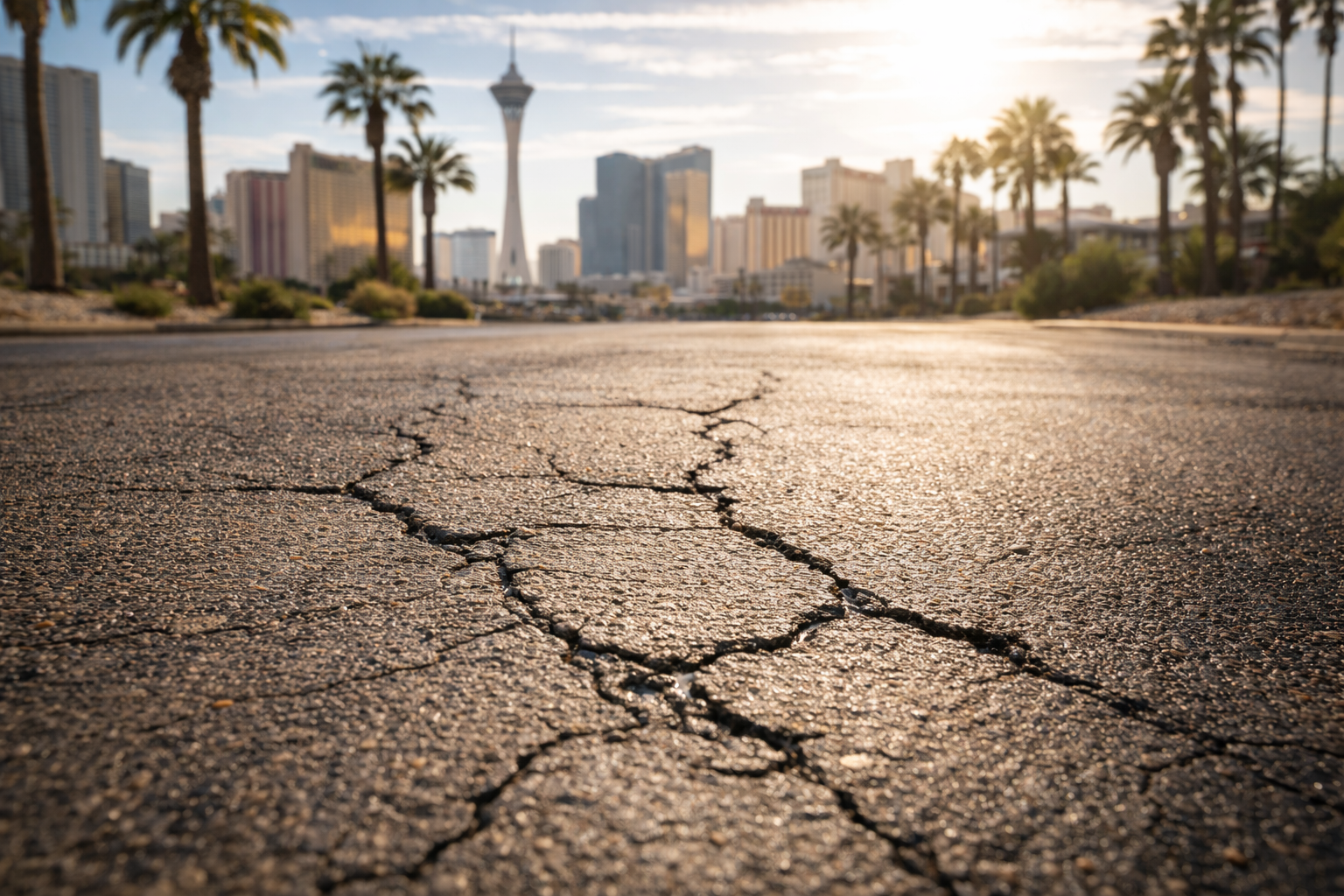
Nevada asphalt does not fail quietly. It dries, fades, cracks, and unravels under relentless sun and extreme heat. In desert climates like Las Vegas and surrounding areas, ultraviolet radiation and high surface temperatures are the primary forces that shorten asphalt lifespan. Understanding how these elements attack pavement explains why sealcoating is not optional in Nevada - it is essential.
Why Nevada Sun Exposure Is So Damaging to Asphalt
Asphalt relies on oils and binders to stay flexible. These components allow pavement to expand slightly under load and temperature change without cracking. Ultraviolet rays from constant sun exposure oxidize these oils over time. As oxidation increases, asphalt loses flexibility and becomes brittle.
In Nevada, the process happens faster because there is little cloud cover and minimal seasonal relief. Asphalt surfaces are exposed to UV radiation almost daily, often for most of the year. Once oxidation begins, deterioration accelerates quickly.
Common signs of UV damage in Nevada include:
•
Fading from rich black to dull gray
• Surface dryness and chalky residue
• Early hairline cracking
• Aggregate loosening at the surface
These issues are not cosmetic. They indicate structural weakening that leads to larger failures.
How Extreme Heat Accelerates Pavement Failure
Heat is the second major threat to asphalt in Nevada. During summer months, pavement surface temperatures can reach levels far higher than ambient air temperature. Asphalt softens under extreme heat during the day and then cools and contracts overnight.
This constant thermal cycling causes internal stress that leads to cracking, especially near edges, seams, and high-traffic areas. Over time, the asphalt loses its ability to recover, and cracks widen.
Heat-related damage often shows up as:
• Long linear cracks
• Edge deterioration
• Depressions in traffic paths
• Rapid progression of existing damage
Without protection, even newer asphalt can degrade far earlier than expected.
Why Desert Asphalt Ages Faster Than Designed
Many asphalt mixes are engineered for moderate climates. In desert regions, those assumptions no longer apply. Prolonged heat exposure accelerates oxidation while UV radiation attacks the surface daily. Together, they drastically shorten pavement lifespan.
Once cracks form, the problem compounds. Heat widens cracks, and occasional moisture intrusion undermines the base. At that point, repairs become more frequent and more expensive.
What Professional Sealcoating Does in High-Heat Environments
Sealcoating creates a protective barrier between asphalt and the sun. It blocks UV rays, reduces oxidation, and helps regulate surface temperature. In Nevada, sealcoating is less about appearance and more about survival.
Professional sealcoating helps by:
• Slowing oxidation caused by UV exposure
• Reducing heat absorption at the surface
• Sealing small cracks before they expand
• Extending pavement life by years
Seal It Up! applies sealcoating systems designed specifically for desert conditions, focusing on adhesion, durability, and cost efficiency.
How Often Nevada Asphalt Needs Sealcoating
Because of intense sun exposure, Nevada asphalt typically requires more frequent sealcoating than pavement in cooler regions. Waiting too long allows oxidation to advance past the point where surface protection alone is effective.
Regular maintenance prevents small surface issues from becoming structural failures that require milling or replacement.
Who Needs Sealcoating Most in Nevada
Sealcoating is critical for:
• Residential driveways exposed to full sun
• Commercial parking lots with heavy traffic
• HOA roads and shared pavement
• Properties looking to avoid early replacement costs
Any asphalt surface exposed to Nevada heat benefits from proactive protection.
What Proper Asphalt Protection Looks Like
Effective sealcoating is not a one-size-fits-all process. Surface preparation, crack repair, material selection, and application timing all matter. Poorly applied sealcoating can fail early and provide little benefit.
Seal It Up! approaches each project with a practical contractor mindset, ensuring asphalt is properly prepared and coated for maximum performance in desert conditions.
Why Nevada Property Owners Choose Seal It Up!
Seal It Up! understands Nevada heat, UV exposure, and the cost of neglect. Every project is focused on extending pavement life, reducing long-term expenses, and delivering reliable results in extreme conditions.
Schedule Your Asphalt Evaluation Today
If your asphalt is fading, drying out, or cracking, UV and heat damage are already at work.
Seal It Up! provides professional sealcoating
built for Nevada’s climate.
Schedule your service today and protect your pavement before damage becomes permanent.