HOW HEAVY TRAFFIC IMPACTS ASPHALT AND WHAT TO DO ABOUT IT
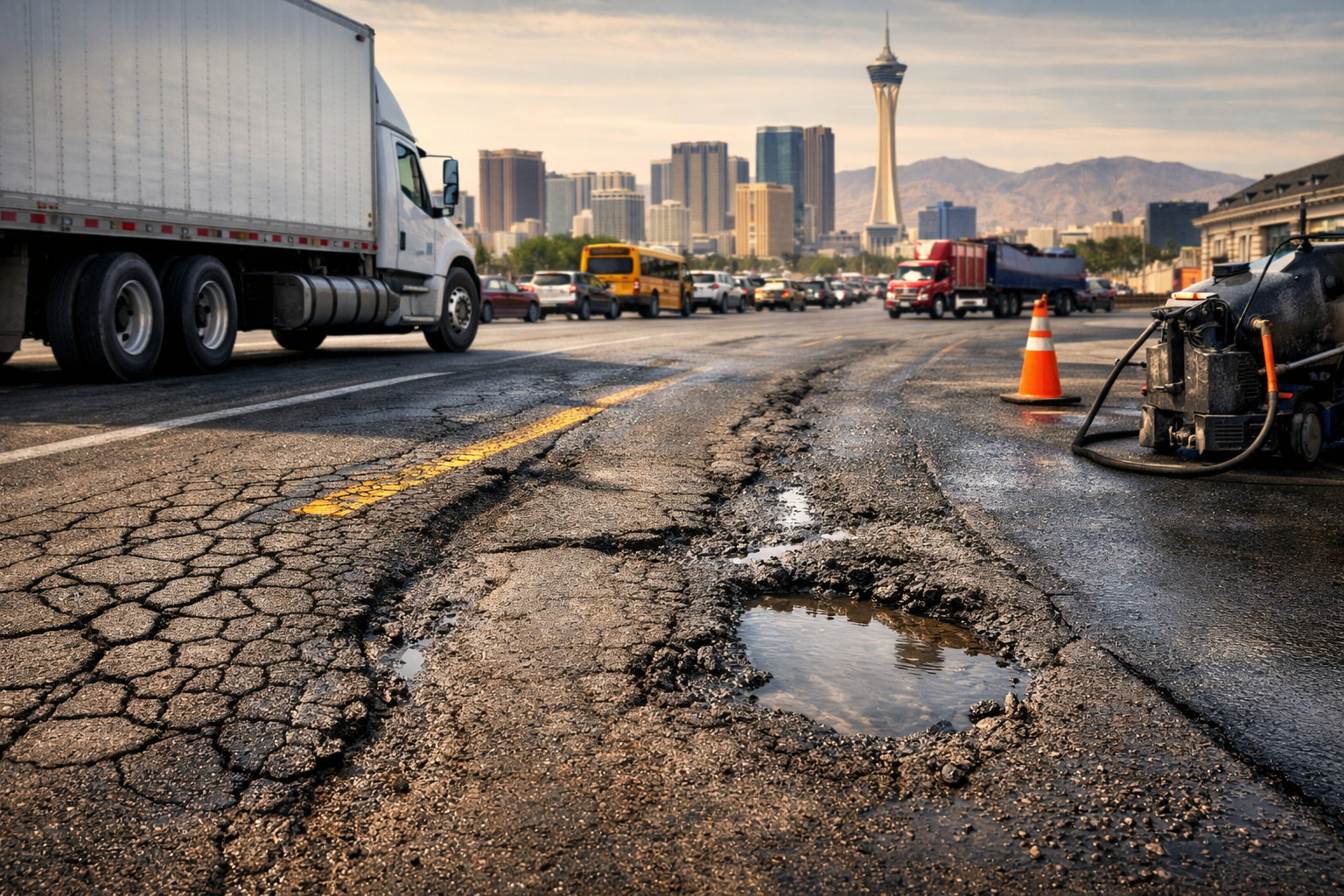
Asphalt is designed to be durable, but constant heavy traffic pushes any pavement system to its limits. In Las Vegas, where high temperatures, delivery vehicles, and steady commercial use are common, traffic stress is one of the leading causes of premature asphalt failure. Understanding how heavy traffic damages asphalt and what can be done to prevent it helps property owners protect their investment and avoid costly repairs.
Why Traffic Load Matters More Than Most Property Owners Realize
Every vehicle that drives over asphalt applies pressure. Passenger cars create minimal stress, but delivery trucks, service vehicles, buses, and repeated stop and turn movements generate far more force. Over time, that force compresses the asphalt surface and the base beneath it.
In hot desert conditions, asphalt becomes more flexible. While that flexibility helps prevent cracking, it also makes the surface more vulnerable to deformation under heavy loads. Without proper maintenance, this leads to visible damage that accelerates quickly.
The Most Common Traffic Related Asphalt Failures
Heavy traffic affects asphalt in predictable ways.
Some of the most common issues include:
• Rutting where tires repeatedly travel the same path
• Surface cracking from repeated weight stress
• Alligator cracking caused by base failure
• Edge deterioration in areas with turning traffic
• Polishing of the surface that reduces traction
Once these issues appear, water intrusion and heat exposure compound the damage.
Why Heat Amplifies Traffic Damage in Las Vegas
Las Vegas asphalt faces extreme surface temperatures for much of the year. High heat softens the asphalt binder, making it more susceptible to movement under weight. Heavy vehicles stopping, turning, or parking for extended periods create pressure points that cause depressions and cracking.
Without protection, these areas break down faster than lightly traveled sections of pavement.
How Sealcoating Helps Protect High Traffic Asphalt
Sealcoating adds a protective barrier that shields asphalt from heat, UV exposure, and surface wear. While it does not increase structural strength, it significantly slows oxidation and surface degradation.
For high traffic areas, sealcoating reduces friction damage, limits moisture intrusion, and helps maintain flexibility during extreme temperature swings. Regular applications extend pavement life and delay major repairs.
When Crack Sealing Becomes Critical
Traffic forces exploit even the smallest cracks. Once cracks open, water penetrates the pavement structure, weakening the base and accelerating failure.
Crack sealing stops this process early. Addressing cracks before they spread prevents traffic loads from turning surface issues into structural damage.
Why Traffic Patterns Matter in Repair Planning
Not all asphalt wears evenly. Loading zones, drive lanes, entrances, and turning areas experience far more stress than open parking stalls. Effective maintenance targets these zones with reinforced repairs, thicker sealcoating applications, and timely crack treatment.
Ignoring traffic patterns often leads to repeated failures in the same locations.
What Professional Asphalt Maintenance Looks Like
Professional asphalt maintenance begins with evaluating traffic type, volume, and movement patterns. The pavement condition is assessed, problem areas are identified, and a plan is built around protecting the most vulnerable sections first.
Rather than waiting for visible failure, proactive maintenance schedules are designed to keep asphalt performing under heavy use.
Actionable Steps to Reduce Traffic Damage
Property owners can extend asphalt life by:
• Limiting heavy vehicle access where possible
• Rotating traffic flow to avoid constant rutting
• Scheduling sealcoating before oxidation sets in
• Repairing cracks immediately when they appear
• Reinforcing high load areas with targeted repairs
These steps significantly reduce long term repair costs.
Why Seal It Up! Is Built for Heavy Traffic Conditions
Seal It Up! understands how desert heat and heavy traffic work together to damage asphalt. Every maintenance plan is designed with real world traffic demands in mind, focusing on durability, timing, and cost efficiency.
Schedule an Asphalt Evaluation in Las Vegas
If your asphalt sees heavy traffic, waiting will only increase repair costs.
Contact Seal It Up! today to schedule a professional evaluation and protect your pavement before traffic damage spreads.